How UK gambling licences work
Any business offering gambling to people in Great Britain needs a licence from the Gambling Commission. This explainer covers the main licence types, how an application is assessed and what holding a licence commits an operator to.

To offer gambling to consumers in Great Britain legally, a business needs an operating licence from the Gambling Commission. The licence names the activities it may carry out, attaches conditions it must meet and can be suspended or revoked if it falls short. Offering gambling without one is a criminal offence.
The system rests on the Gambling Act 2005, which created the Commission and the licensing framework, and on the Gambling (Licensing and Advertising) Act 2014, which changed the test for online gambling. Before 2014, an online operator based in certain overseas jurisdictions could serve British customers without a British licence. Since then, the rule has been based on the point of consumption: if you offer remote gambling to people in Great Britain, you need a Commission licence wherever your company is based.
The three kinds of licence
The Gambling Act sets up three layers of licensing, each with a different purpose.
- Operating licences are issued by the Commission to the business itself. They are split by activity, such as casino, general betting, pool betting, bingo, gaming machines and lotteries, and between remote (online, telephone) and non-remote (premises-based) versions.
- Personal licences are issued by the Commission to individuals. People in senior management roles, such as those responsible for finance, compliance or marketing, typically need a personal management licence, and some staff in land-based casinos, such as croupiers and cashiers, need a personal functional licence.
- Premises licences are issued by local licensing authorities, not the Commission, for physical venues such as betting shops, casinos, bingo halls and adult gaming centres.
Businesses that supply the industry rather than consumers are licensed too. A company that makes or supplies online casino games, or the software that runs them, needs a gambling software licence, and gaming machine manufacturers and suppliers need their own licence. Our explainer on how B2B suppliers power the gambling industry looks at that side of the market.
How an application is assessed
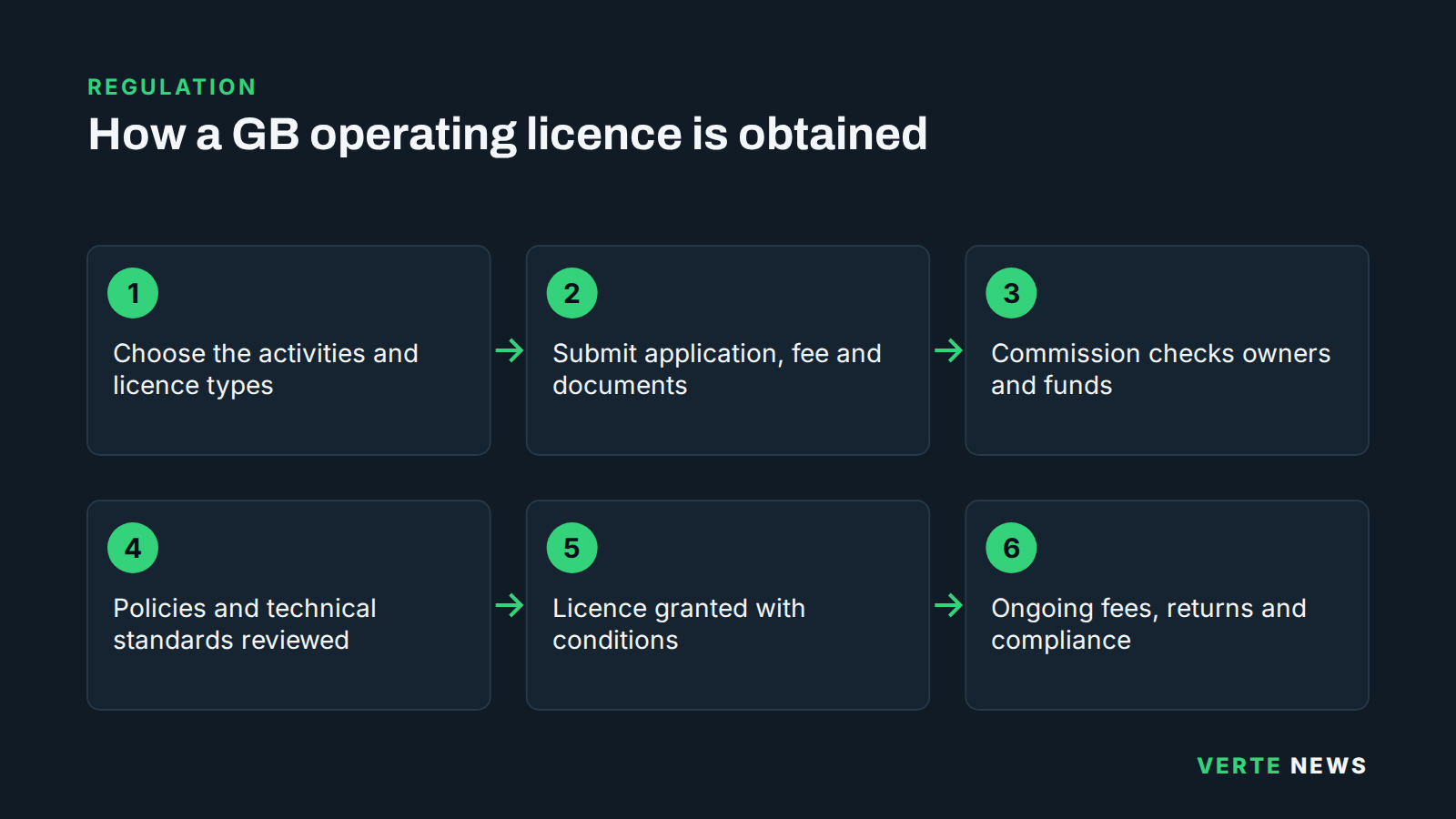
Applications are made to the Commission online, with a fee that depends on the type of licence and the expected size of the business, measured mainly by gross gambling yield. The Commission's central question is suitability: can this applicant be trusted to run gambling in a way that is fair, crime-free and protects vulnerable people?
In practice, that means examining the ownership and control structure down to the ultimate beneficial owners, the source of the funds used to set up the business, the identity, integrity and competence of key people, the business plan and financial resources, and the policies and procedures the applicant will use for areas such as anti-money laundering, age verification, customer funds, complaints and safer gambling. Online applicants must also show that their systems and games meet the Commission's technical standards, and games and software must be tested by a Commission-approved test house.
The Commission can ask for further information, interview key people and refuse applications it is not satisfied with. Processing takes months rather than weeks for a new online operator, so businesses planning to enter the market build that into their timelines, as described in how gambling operators enter new markets.
What a licence commits an operator to
A licence is not a one-off permission. It comes with ongoing duties set out in the Licence Conditions and Codes of Practice (LCCP) and the remote technical standards, and the Commission updates those rules through public consultation. Among the most significant obligations:
- verifying customers' age and identity before they gamble, and carrying out further checks where needed (our KYC explainer covers this);
- participating in the GamStop self-exclusion scheme for online operators;
- monitoring customers for signs of harm and intervening, including by assessing affordability;
- complying with advertising codes and marketing rules;
- protecting and disclosing the level of protection of customer funds;
- offering a complaints process with access to an approved dispute resolution service;
- paying an annual fee and submitting regular regulatory returns.
Operators must also notify the Commission of key events, such as changes in ownership or control, and must keep their licensed individuals and policies up to date. Failure can lead to enforcement action, from warnings and extra licence conditions to financial penalties or the loss of the licence. The broader commercial effect of these rules is explored in how regulation affects gambling operators.
Licences and other jurisdictions
Many online operators hold several licences at once. A company might be licensed by the Malta Gaming Authority to serve some European markets and by the Gambling Commission to serve Great Britain. A licence from another regulator does not permit an operator to target British consumers: for Great Britain, only a Commission licence will do.
What it means for consumers
For customers, the licence is the practical guarantee that British rules apply. Every licensed operator appears on the public register maintained by the Commission, which lists the licence number, the activities covered and the trading names or websites used. A licensed site should display its licence details, usually in the page footer, and the register on the Gambling Commission website is the place to confirm them.