How B2B suppliers power the gambling industry
Behind most betting and casino brands sits a layer of business-to-business suppliers providing platforms, games, odds, data and payments. They rarely deal with the public, but they shape much of what customers see and are regulated in their own right.

B2B suppliers are the companies that sell technology, content and services to gambling operators rather than to the public. An online bookmaker or casino may present a single brand to its customers, but behind it there is often a stack of specialist suppliers: one providing the core account platform, others supplying games, odds and sports data, and more handling payments, identity checks and fraud prevention. Operators decide what to build themselves and what to buy, and many buy a great deal.
Customers rarely see supplier names, but suppliers influence the games people play, the betting markets available and the prices on offer. They are also a significant industry in their own right, with several listed companies among them.
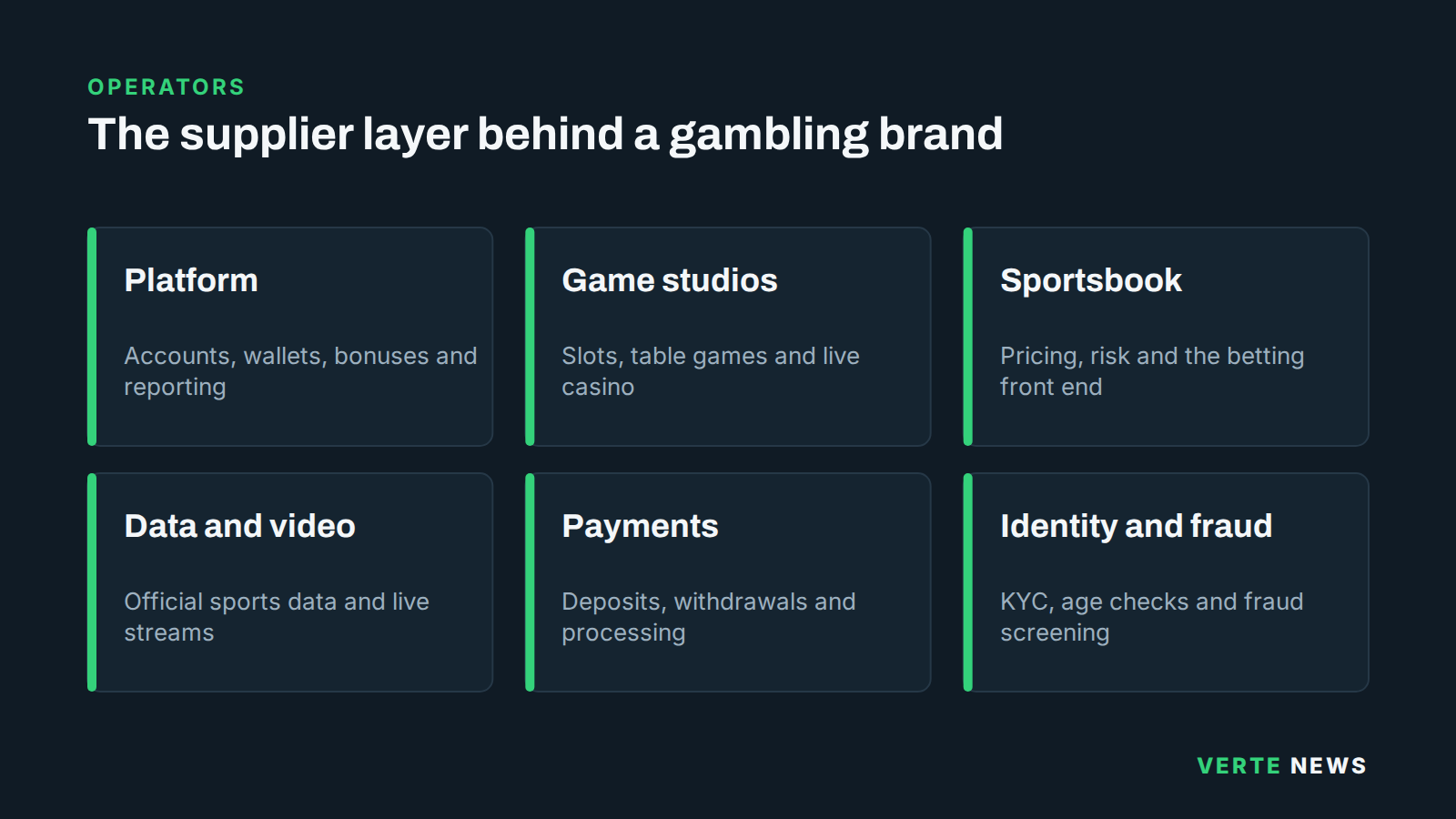
The main types of supplier
- Platform providers. The player account management platform is the operator's core system. It handles registration, customer accounts, wallets, bonuses, reporting and the connections to every other supplier. Some operators build their own; many licence one.
- Game studios and aggregators. Online casino games are mostly made by specialist studios, which design slots, table games and live dealer products and supply them to many operators at once. Aggregators bundle games from many studios into a single connection. Our explainer on how casino game providers work covers this part of the market.
- Sportsbook and trading providers. Some suppliers provide a complete sportsbook, including pricing, risk management and the betting front end, which an operator can run under its own brand. Kambi, which is listed in Stockholm, is a well-known example.
- Data and streaming. Official sports data and live video feed in-play betting. Companies such as Sportradar and Genius Sports hold rights agreements with sports leagues and federations and sell the resulting data and services to operators.
- Payments, identity and fraud. Payment processors, identity verification services and fraud-screening tools help operators take deposits, pay out winnings and meet their anti-money laundering and age verification duties.
How suppliers are paid
Commercial models vary by service. Game studios and complete sportsbook providers are commonly paid a share of the gross gaming revenue their products generate for the operator, which aligns their income with the operator's performance. Platform providers may charge set-up fees, fixed licence fees, revenue share or a combination. Data, identity and payment services are often charged per transaction, per check or through fixed contracts.
Revenue-share arrangements mean that a successful supplier's income grows with its customers' businesses. They also mean suppliers are exposed to the same regulatory and tax changes that affect operators, even if they never deal with a player directly.
How suppliers are regulated
Regulators treat many suppliers as part of the gambling system rather than as ordinary technology vendors. In Great Britain, businesses that manufacture, supply, install or adapt gambling software need a gambling software licence from the Gambling Commission, as explained in our guide to UK gambling licences. Games must meet technical standards, including the testing of the random number generators that determine results.
Malta has a dedicated business-to-business licence for companies that provide what it calls a critical gaming supply, such as the core elements of a game or the systems that hold essential regulatory records; our explainer on the Malta Gaming Authority sets out how it works. Many newly regulated markets also require suppliers to be licensed or certified before operators can use their products, so a supplier's licensing position can determine how quickly its customers can launch.
Why it matters
The supplier layer lowers the barrier to entry. A new operator can assemble a working sportsbook or casino from licensed components rather than building everything, and the most complete version of that model is the white-label casino, where a brand runs on another company's platform and licence.
It also concentrates influence. If many operators use the same game studios or the same pricing provider, the choice available to customers may be narrower than the number of brands suggests. And because suppliers sell to operators in many jurisdictions, including some with weaker regulation, regulators pay close attention to who they supply. For large operators, the central strategic question is which capabilities to own and which to rent, and different groups have answered it very differently.