Free bets explained: how they really work
A free bet lets you place a stake without using your own cash, but a winning free bet usually pays the winnings without the stake. Here is how that changes its value, and the terms to read first.

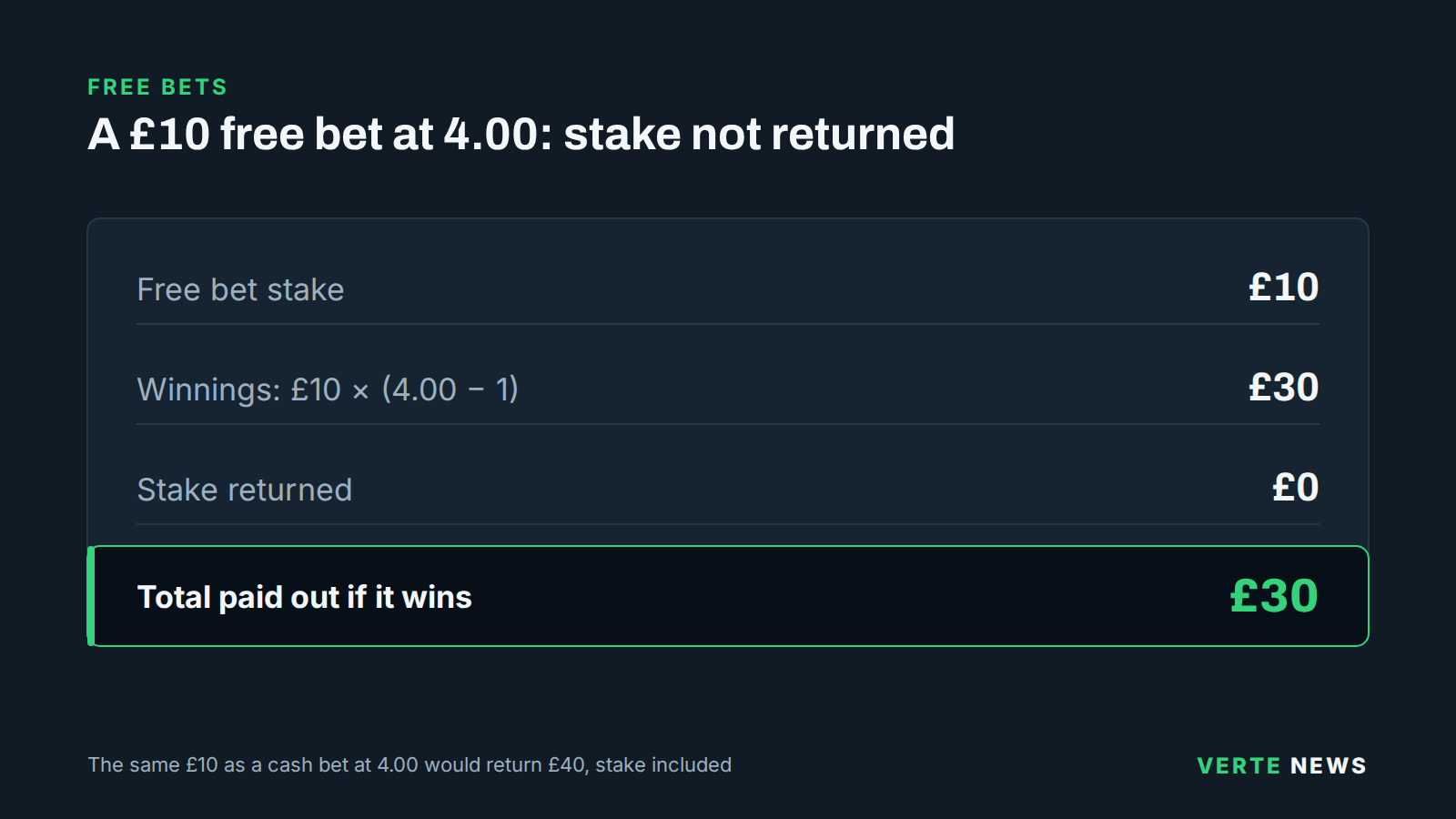
A free bet is a betting credit that lets you place a bet without using your own cash as the stake. The key difference from a cash bet is how it pays out: with most free bets, if the bet wins you receive the winnings but not the stake. A £10 free bet at odds of 4.00 returns £30, not £40. That rule, usually written as 'stake not returned' (SNR), is the most important thing to understand about free bets, and it means a free bet is worth less than its face value.
Where free bets come from
Free bets are one of the most common forms of betting bonus. They are typically given:
- as a welcome offer, after a new customer places a qualifying cash bet;
- as a refund when a specific bet loses in a defined way, such as a money-back offer paid as a free bet rather than cash;
- as a loyalty or retention reward for existing customers.
In each case the free bet sits in your account as a token or credit, not as withdrawable money, and it carries its own terms. Casino free spins work on a similar principle but under different rules, which are covered in how casino bonuses work.
Why a free bet is worth less than its face value
Compare a £10 cash bet with a £10 free bet, both at decimal odds of 4.00:
- Cash bet: a win returns £40 (£30 profit plus the £10 stake); a loss costs £10.
- Free bet, stake not returned: a win returns £30; a loss costs nothing of your own money.
Because the stake never comes back, a free bet's value depends heavily on the odds it is used at. On a short price, most of the would-be return is the stake you do not receive: a £10 free bet at 1.20 wins just £2. On a longer price, the stake is a smaller share of the return, but the bet wins less often.
A simple way to see it is to imagine fair odds with no bookmaker's margin. At fair odds of 4.00, a bet has a 25% chance of winning, so a £10 free bet is worth on average 25% × £30 = £7.50. At fair odds of 1.20, the chance is about 83%, and the free bet is worth on average about £1.67. The general figure at fair odds is £10 × (1 − 1 ÷ odds). Real prices include a margin, which reduces both figures further. The point is not to optimise the offer but to understand it: a '£10 free bet' is not £10 of cash.
Terms to read before accepting
Free bets almost always come with conditions, and they differ between operators. Common ones include:
- Qualifying bet: you may need to place a cash bet at or above minimum odds first, and sometimes only the first bet counts.
- Minimum odds: the free bet itself may have to be placed at or above a set price.
- Expiry: unused free bets typically expire, sometimes within a few days of being credited.
- Restrictions: free bets may be limited to certain sports or markets, may not be splittable across several bets, and are often excluded from cash-out.
- How winnings are paid: check whether free-bet winnings are paid as cash or as bonus funds that must be wagered before they can be withdrawn. What wagering requirements mean explains how those conditions work.
- Payment method exclusions: some offers exclude deposits made with particular e-wallets.
UK advertising rules require promotions to state their significant conditions clearly, such as deposit, wagering and minimum-odds requirements and time limits, and from 19 January 2026 the Gambling Commission capped wagering requirements at 10 times the bonus funds and banned offers that mix different gambling products, such as a sports bet that unlocks casino spins. The detail of any offer still sits in the operator's own terms, so those remain the only reliable guide.
Free bets and your own spending
Free bets are a marketing tool: their purpose is to attract customers and keep them betting. A qualifying bet is still a real-money bet, so it is worth asking whether you would have placed it anyway. Offers also come and go, which makes them a weak basis for choosing where to bet; checking the bookmaker itself, including its licence, withdrawal terms and safer-gambling tools, matters more. Deposit limits and time-outs can be set on any UK-licensed account, and setting them before claiming an offer is a sensible habit.