Both teams to score explained
Both teams to score (BTTS) is a yes/no football market on whether each side scores at least once. Here is how it is settled, how the prices work and how it interacts with totals and combination bets.
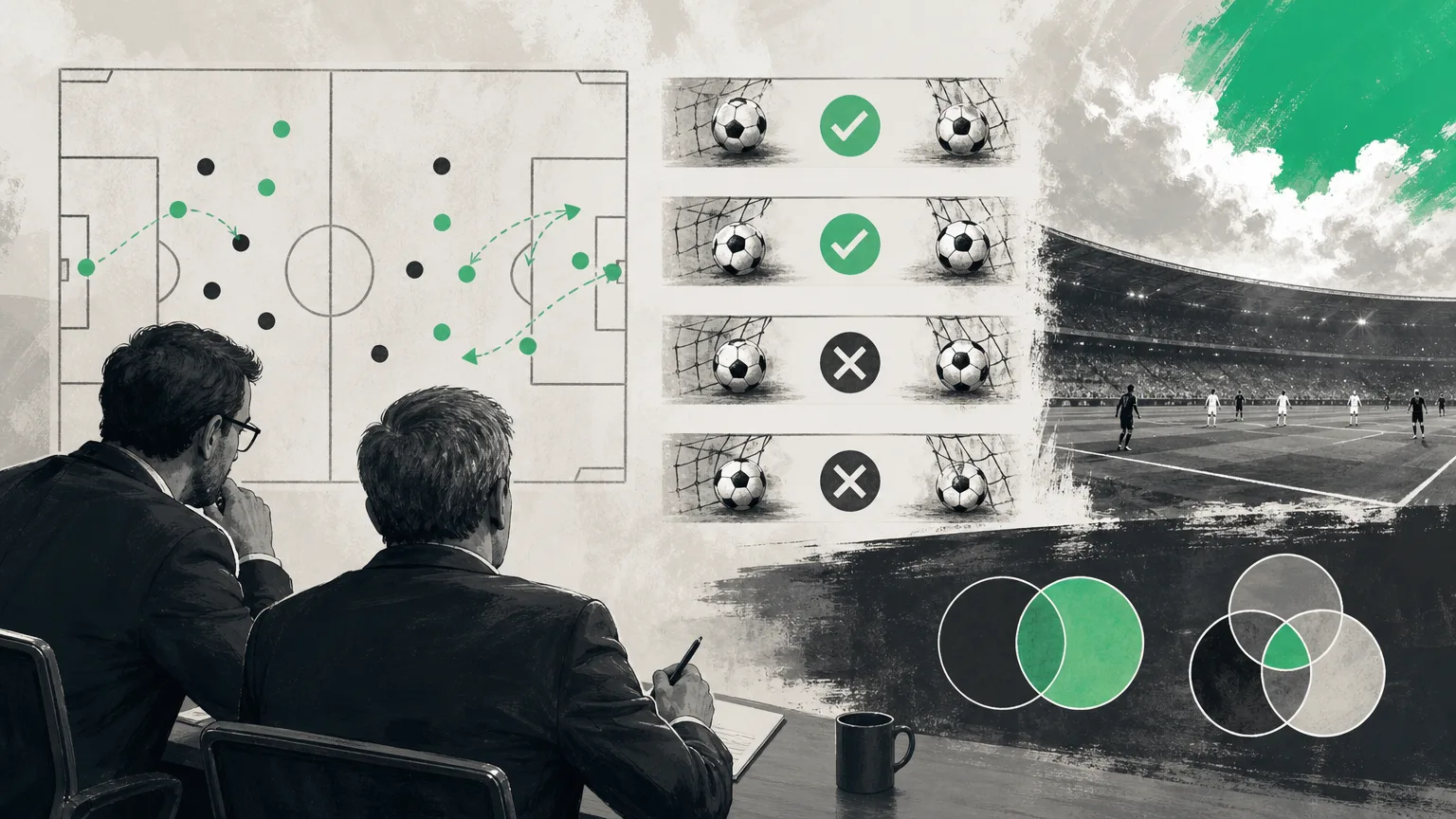
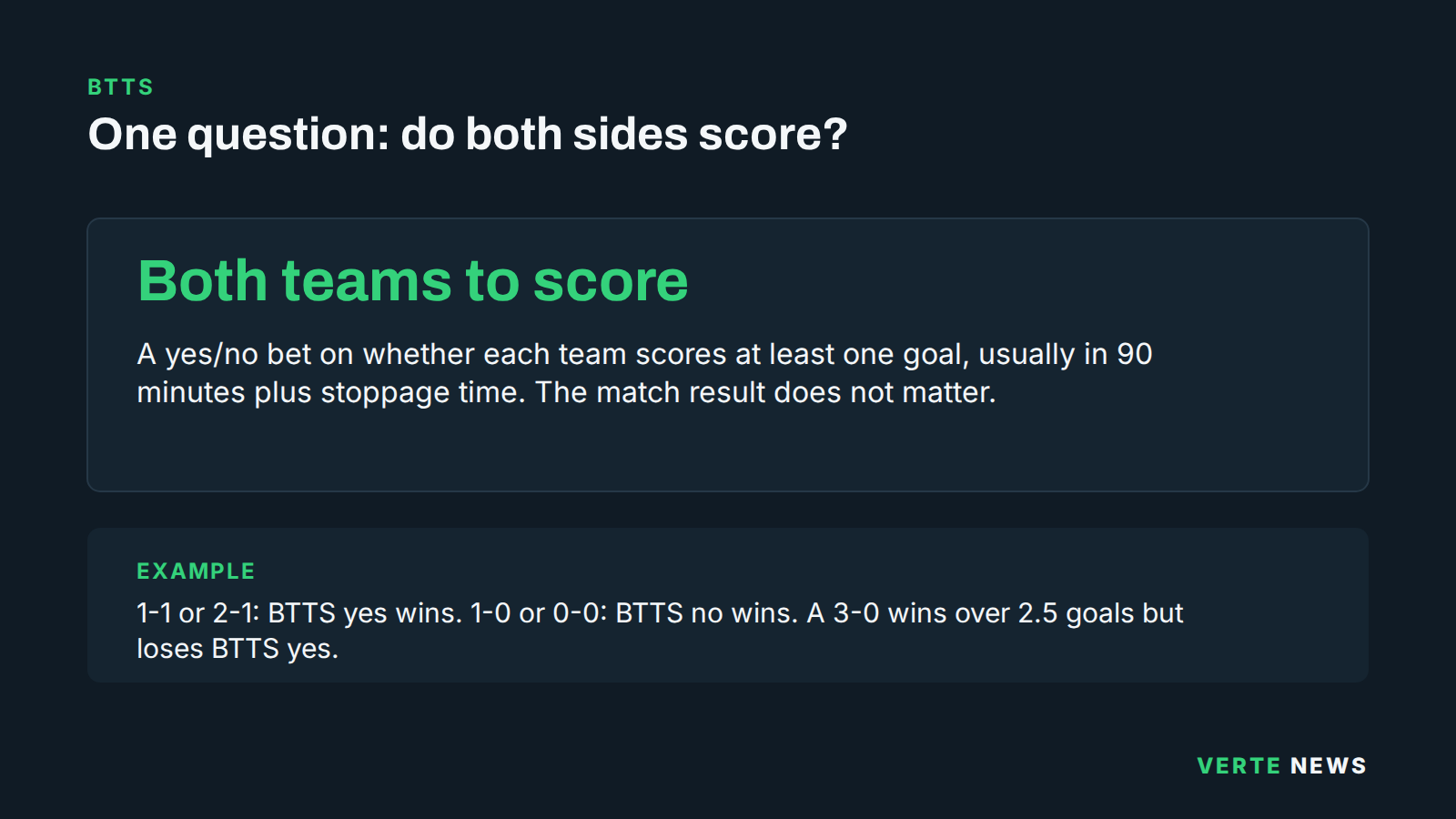
Both teams to score (BTTS) is a yes/no market on whether each side scores at least one goal. Backing yes wins if the final score is 1-1, 2-1, 3-2 or any result in which both teams score; backing no wins if at least one side fails to score, including a 0-0 draw. The winner of the match does not matter. The only question is whether both numbers on the scoreboard end up above zero.
How it is settled
- Normal time only, usually. Goals in 90 minutes plus stoppage time count. Extra time and penalty shoot-outs are normally excluded unless the market states otherwise.
- Own goals count for the team that benefits from them. A 1-0 win decided by an own goal still leaves the other side on zero, so BTTS no wins.
- Abandoned matches are settled under each operator's own rules. Some settle BTTS yes if both teams had already scored when play stopped; others void bets unless the match is completed or resumed within a set period.
There are also variants: BTTS in the first half, BTTS in both halves, and combinations such as BTTS and over 2.5 goals, or BTTS and a named team to win. Each is a separate market with its own price.
A worked example
Suppose BTTS yes is priced at 1.80 and BTTS no at 2.00. A £10 bet on yes returns £18, a profit of £8, if both teams score. A £10 bet on no returns £20, a profit of £10, if either team keeps a clean sheet. Converted to implied probability, the prices are 55.6% and 50%, a total of 105.6%. The 5.6 points above 100% are the bookmaker's margin: the reason that even an accurate view of the match would be expected to lose a little over many bets at these prices.
BTTS prices vary widely from match to match. A game between two attacking sides with uncertain defences might see yes priced well below evens, while a fixture involving a team that rarely concedes can make no the shorter price. In effect, the market is a reading of how likely the bookmaker thinks at least one clean sheet is.
Combinations and the margin
BTTS is often packaged with other selections, either within one match ('BTTS and home win') or across several matches in an accumulator. Combining is where most of the complexity, and most of the extra margin, comes in. Four BTTS yes selections at 1.80 each combine to odds of about 10.50 (1.80 multiplied by itself four times). If each leg carries a margin of around 5%, the combined bet carries considerably more, because the edge compounds with every leg added. How accumulator bets work sets out that arithmetic.
Combinations within one match are also correlated. BTTS yes and over 2.5 goals tend to happen together, so a bookmaker will not simply multiply the two prices; it prices the combination to reflect the link between them. That is why a price for several related selections in a bet builder can look lower than multiplying the individual odds would suggest.
Things to weigh up
- It removes the result, not the uncertainty. A single late goal can settle the bet either way, and one clean sheet decides the market.
- It overlaps with totals, but is not the same thing. A 3-0 wins over 2.5 goals but loses BTTS yes; a 1-1 wins BTTS yes but loses over 2.5. The over/under guide explains the totals side.
- In-play prices move quickly. Once one team has scored, the yes price shortens and the no price lengthens, and the market is usually suspended for a moment around each goal.
- Team news matters to the price. Absences of key attackers or goalkeepers can move BTTS prices noticeably before kick-off, which is one reason prices differ between bookmakers and over time.
As one of many football betting markets, BTTS is simple to understand and quick to settle, which is much of its appeal. That simplicity does not change the maths: the prices carry a margin, and over any short run the results are dominated by chance. Deposit limits and time-outs are available on UK-licensed sites for anyone who wants firmer control over how much and how often they bet.