What a white-label casino is
A white-label casino is a gambling brand that runs on another company's platform and under another company's licence. It is a quick and relatively cheap way into the market, but it raises real questions about who is responsible for the customer.

A white-label casino is an online gambling brand that operates on a platform and under a licence belonging to another company. The brand owner supplies the name, the marketing and, usually, the customers. The white-label provider supplies almost everything else: the technology, the games, payment processing, customer checks and, crucially, the licence that makes the operation legal in a given market. Revenue is then split between the two under a commercial agreement.
From the customer's side, a white-label site can look like any other casino. Behind it, however, the legal operator may be a company the customer has never heard of, and the name in the site's footer is often different from the name on the homepage.
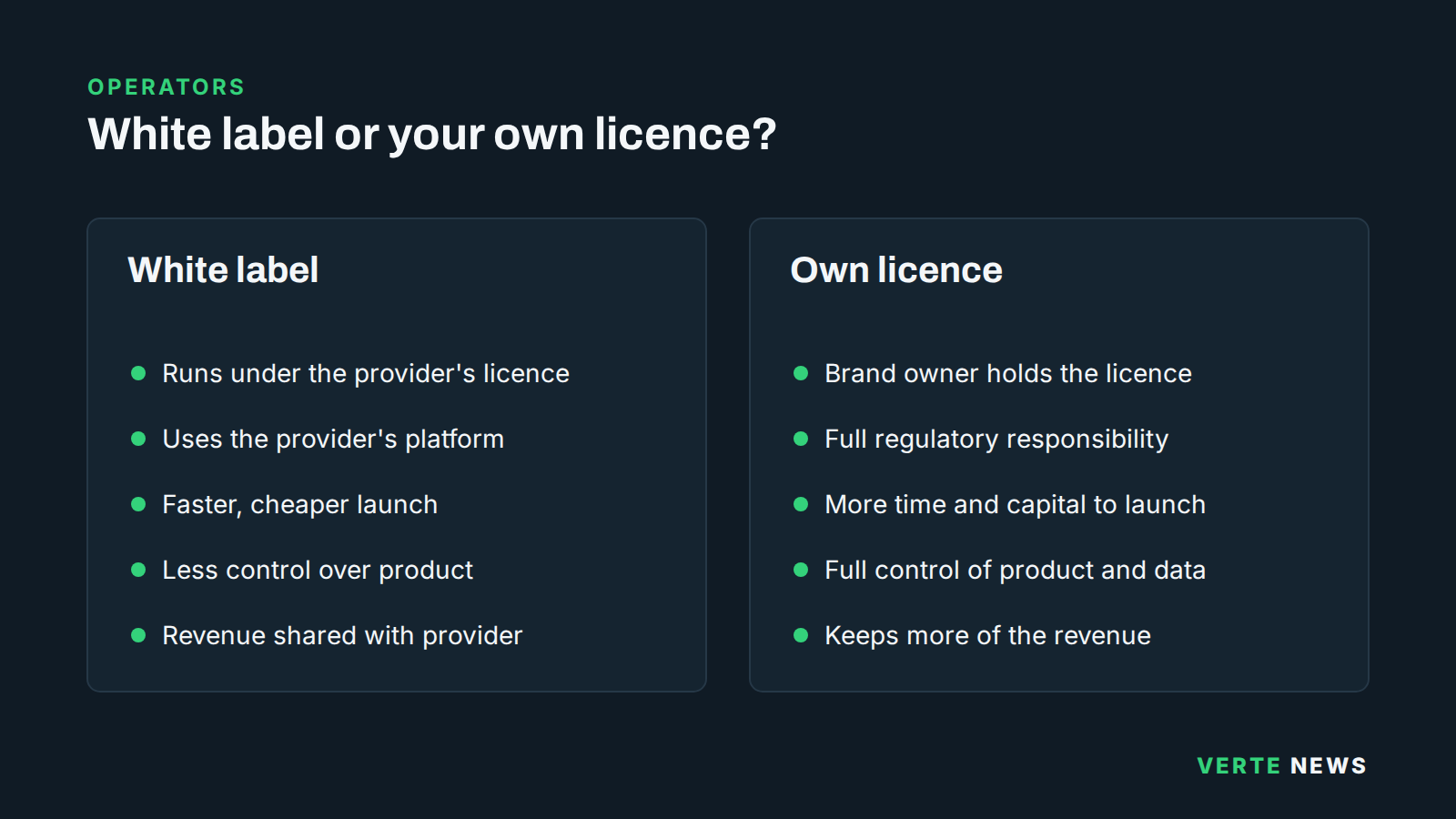
How the model works
The white-label provider is typically a licensed operator that also runs a platform business. It connects each partner brand to its account system, its catalogue of games from casino game providers, its payment methods and its compliance processes. The partner receives a branded front end, with its own design, domain and promotions.
Responsibilities are divided by contract. Usually the provider handles licensing, identity and age verification, anti-money laundering checks, payments and technical operations. The brand owner concentrates on marketing and acquiring players. The provider takes a share of the revenue, and sometimes set-up or monthly fees, in return for carrying the regulatory burden.
The appeal is speed and cost. Obtaining a licence and building a platform can take a long time and require significant capital and specialist staff. A white label can launch far more quickly, which is why the model has attracted marketing businesses, affiliates and brands with an existing audience, such as media companies or sports-related names, that want a gambling product without becoming full operators. It sits at the most outsourced end of the B2B supply chain.
White label, turnkey and full licence
It helps to distinguish three arrangements.
- White label. The brand runs on the provider's platform and under the provider's licence. The brand owner has limited control and limited regulatory standing.
- Turnkey. The brand owner holds its own licence but rents a ready-made platform from a supplier. It has more control and more responsibility.
- Full operator. The company holds its own licence and builds or assembles its own technology, as larger groups do. This offers the most control and carries the most cost.
Many businesses move along that spectrum over time, starting as a white label and later seeking their own licence once they have proved there is demand. Our explainer on how online casinos work sets out what a fully fledged operator has to run.
The regulatory issues
The central question is accountability. Regulators license the company that holds the licence, not the brand on the screen. If the brand owner controls marketing and customer relationships but is not itself licensed, there is a risk that responsibility falls between the two.
In Great Britain, the Gambling Commission has made clear that responsibility for every website operated under a licence, including white-label sites, sits with the licence holder and cannot be transferred to anyone else. It expects licence holders to carry out due diligence on white-label partners and to oversee them, and it has taken action where it considered those arrangements were not properly controlled. In 2025 one white-label operator, TGP Europe, surrendered its licence after the Commission told it that it would have to pay a £3.3 million penalty and make significant improvements to keep trading in Britain. Our guide to UK gambling licences explains the licensing framework.
The model has also drawn scrutiny because of its use by brands aimed mainly at overseas customers. Some sponsors in English football were white-label brands with little British business, a pattern discussed in our piece on why betting companies sponsor football. When TGP Europe left the British market, the Commission warned several clubs about the risks of promoting unlicensed gambling websites.
Why it matters
For customers, the practical advice is to check who the licensed operator is. A reputable site will name the company behind it, usually at the bottom of the page, and the Gambling Commission's public register can be used to check that a business holds a British licence. Complaints, self-exclusion and dispute resolution will run through the licence holder. For the industry, white labels lower the barrier to entry and allow more brands to compete, but they also multiply the number of brands a single licence holder must supervise. Regulators' willingness to tolerate that model depends on how seriously licence holders take that supervision.