What GamStop is and how self-exclusion works
GamStop is a free scheme that lets people in the UK block themselves from every online gambling site licensed in Great Britain in one step. Here is how it works, how long it lasts and what else can help alongside it.
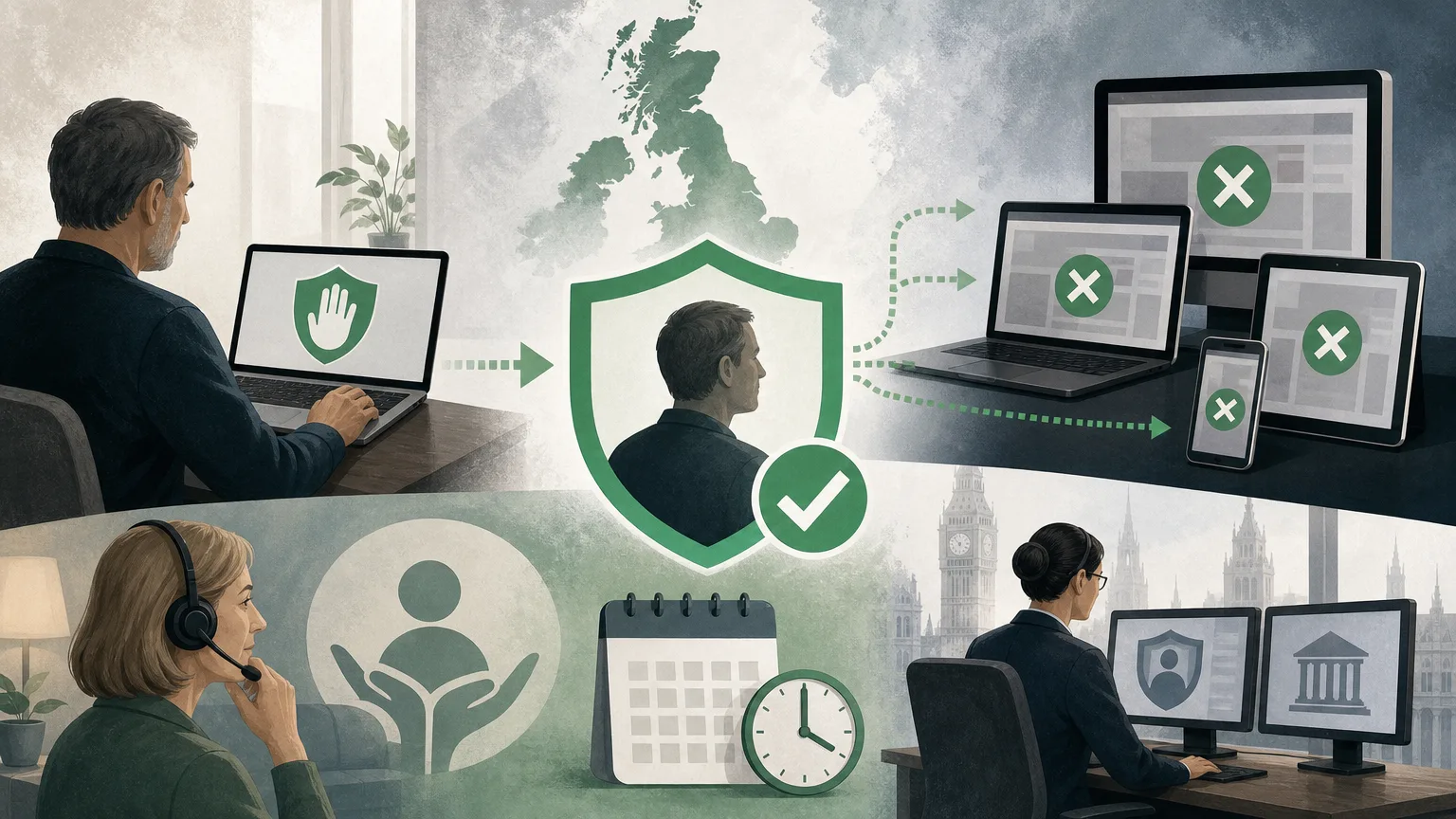
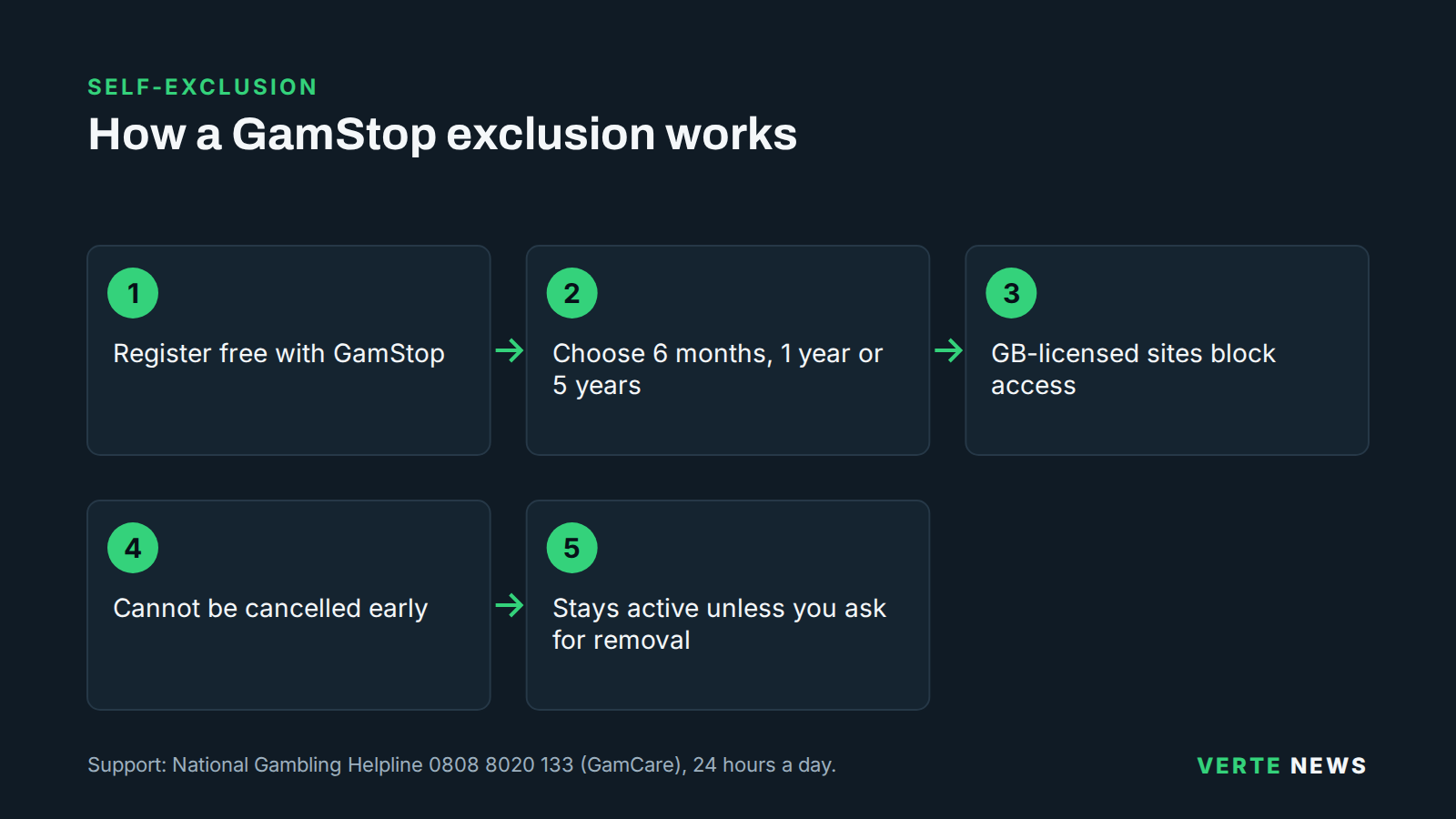
GamStop is the free national self-exclusion scheme for online gambling in Great Britain. Registering once blocks a person from gambling with every online operator licensed by the Gambling Commission for the period they choose: six months, one year or five years. Once an exclusion starts it cannot be cancelled early.
Self-exclusion is a simple idea: someone who wants a break from gambling asks to be refused. It has long existed in betting shops and casinos, but online it used to mean contacting sites one by one. GamStop, run by a not-for-profit company, replaced that with a single registration covering the whole licensed market.
How registration works
Registering is free and done through the GamStop website, with support available by phone. A person gives their name, date of birth, email address, mobile number and postal address, and chooses how long the exclusion should last. The exclusion typically takes effect across participating operators within 24 hours.
Participating operators check new and existing customers against the GamStop database. If there is a match, they must prevent that person from gambling, refuse to open new accounts and stop sending them marketing. Because the match relies on personal details, it helps to register any other email addresses, mobile numbers or previous home addresses that might have been used for gambling accounts.
Who takes part
Participation is not optional for the licensed online market. Under Gambling Commission rules, every operator licensed to provide online gambling to consumers in Great Britain has had to be part of GamStop and honour its exclusions since 31 March 2020. That covers online casinos, sportsbooks, bingo, poker and lottery-style products offered under a Commission licence. Our explainers on what the UK Gambling Commission does and how UK gambling licences work explain why that requirement reaches every licensed site.
GamStop covers online gambling only. Separate multi-operator self-exclusion schemes exist for land-based venues such as betting shops, bingo halls, arcades and casinos, and people who want to stop gambling in person can ask staff or the relevant scheme about them.
How long it lasts, and why it cannot be undone early
The periods available are six months, one year and five years. During that time the exclusion cannot be shortened or removed, even if the person asks. That is deliberate. Urges to gamble often come in waves, and a scheme that could be reversed in a difficult moment would offer much less protection.
When the chosen period ends, the exclusion does not simply switch off. GamStop keeps it active for a further seven years unless the person contacts GamStop and asks for it to be removed. Anyone who reaches the end of their period and is unsure can leave it running, or renew for a further period.
Operators also have duties once someone returns. Account checks, affordability and customer interaction rules still apply, as covered in affordability checks explained.
What GamStop does not cover
GamStop works because licensed operators are required to participate. Gambling sites that are not licensed in Great Britain are not part of it and will not check it. Such sites are not permitted to target British consumers, and using them removes the protections that the person chose. Our explainer on what non-GamStop means sets out the risks plainly.
For that reason, many people combine self-exclusion with other barriers. None is perfect on its own, but together they make impulsive gambling much harder.
- Bank gambling blocks. Many UK banks and card providers let customers block payments to gambling merchants through their app, often with a delay before the block can be turned off.
- Blocking software. Apps and browser tools can stop gambling websites and apps loading on phones, tablets and computers. Some are free.
- Land-based self-exclusion. Schemes for betting shops, casinos, bingo and arcades cover in-person gambling.
- Marketing opt-outs. Unsubscribing and asking to be removed from mailing lists reduces prompts to gamble.
Getting support
Self-exclusion is a practical tool, not a judgement. People use it for many reasons: to take a break, to reset habits or because gambling has started to cause harm. Talking to someone can help alongside it. The National Gambling Helpline, run by GamCare, offers free, confidential support on 0808 8020 133, 24 hours a day, and live chat is available through the GamCare website. Friends and family affected by someone else's gambling can use the same services.