How live casino works
Live casino games stream a real dealer, table and wheel from a studio to your screen. The outcome is physical rather than computer-generated, but the house edge works exactly as it does elsewhere online.
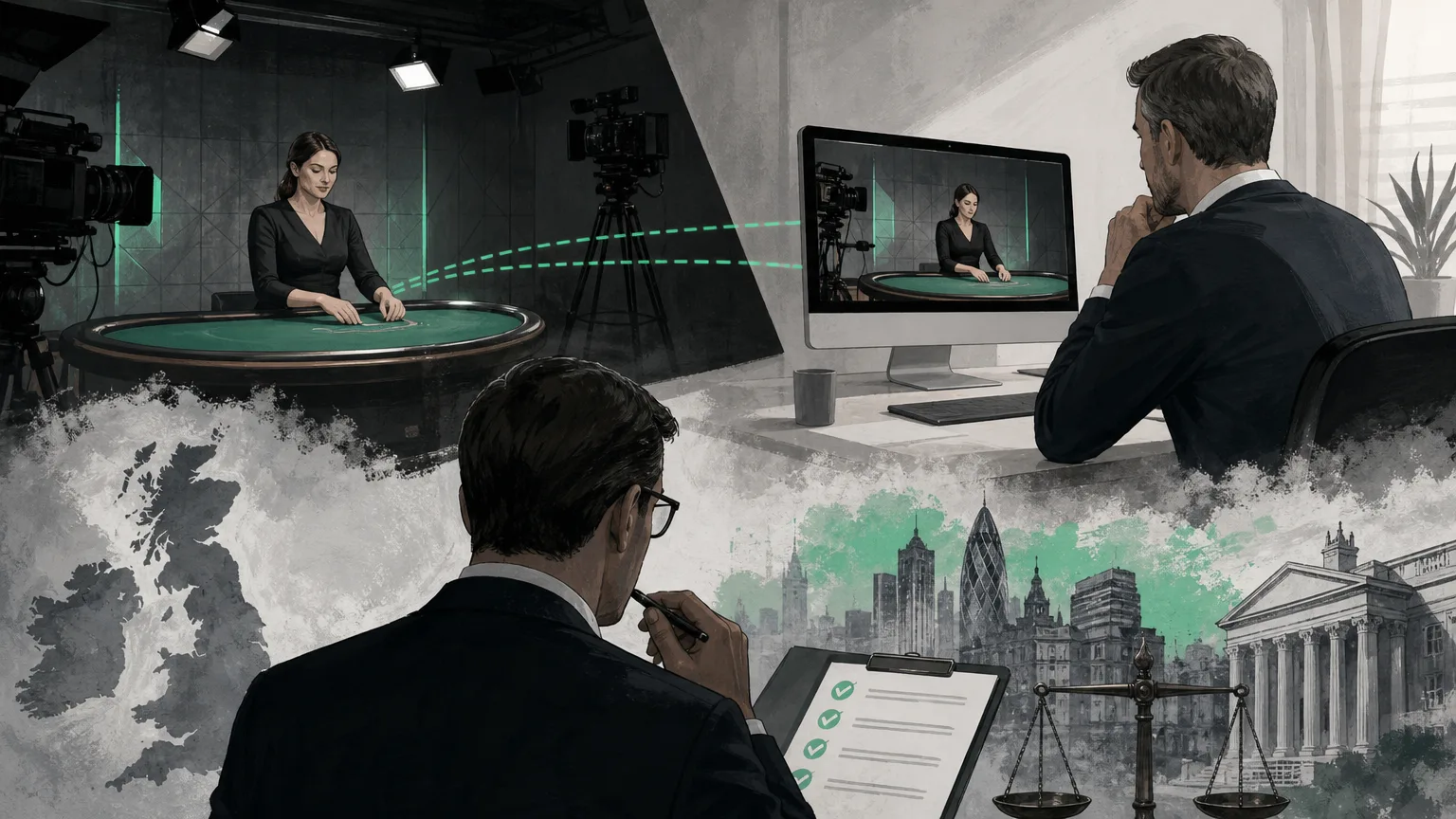
Live casino is the part of an online casino where games are played with real equipment and a human dealer, filmed in a studio and streamed to players in real time. You place bets through an on-screen interface; the dealer spins the wheel or deals the cards; the result is read by the system and your account is settled. Roulette, blackjack and baccarat are the core games, alongside game-show formats built around wheels and other physical devices.
Who runs the tables
Operators rarely run their own studios. Live games are usually supplied by specialist providers, such as Evolution or Playtech, which employ the dealers, build the studios and stream tables to many operators at once. Some tables are shared, with players from several casinos betting on the same spin; others are dedicated to one operator and carry its branding. It is part of the wider game provider model, in which the casino you log into is the shop front and a supplier makes the product.
In Great Britain, a supplier providing live casino games to British players needs its own Gambling Commission licences, typically a gambling software licence and, where it hosts the games for other operators, a game host licence. Live dealer studios must also meet the Commission's technical standards, and the operator remains responsible for the games it offers.
How a round works
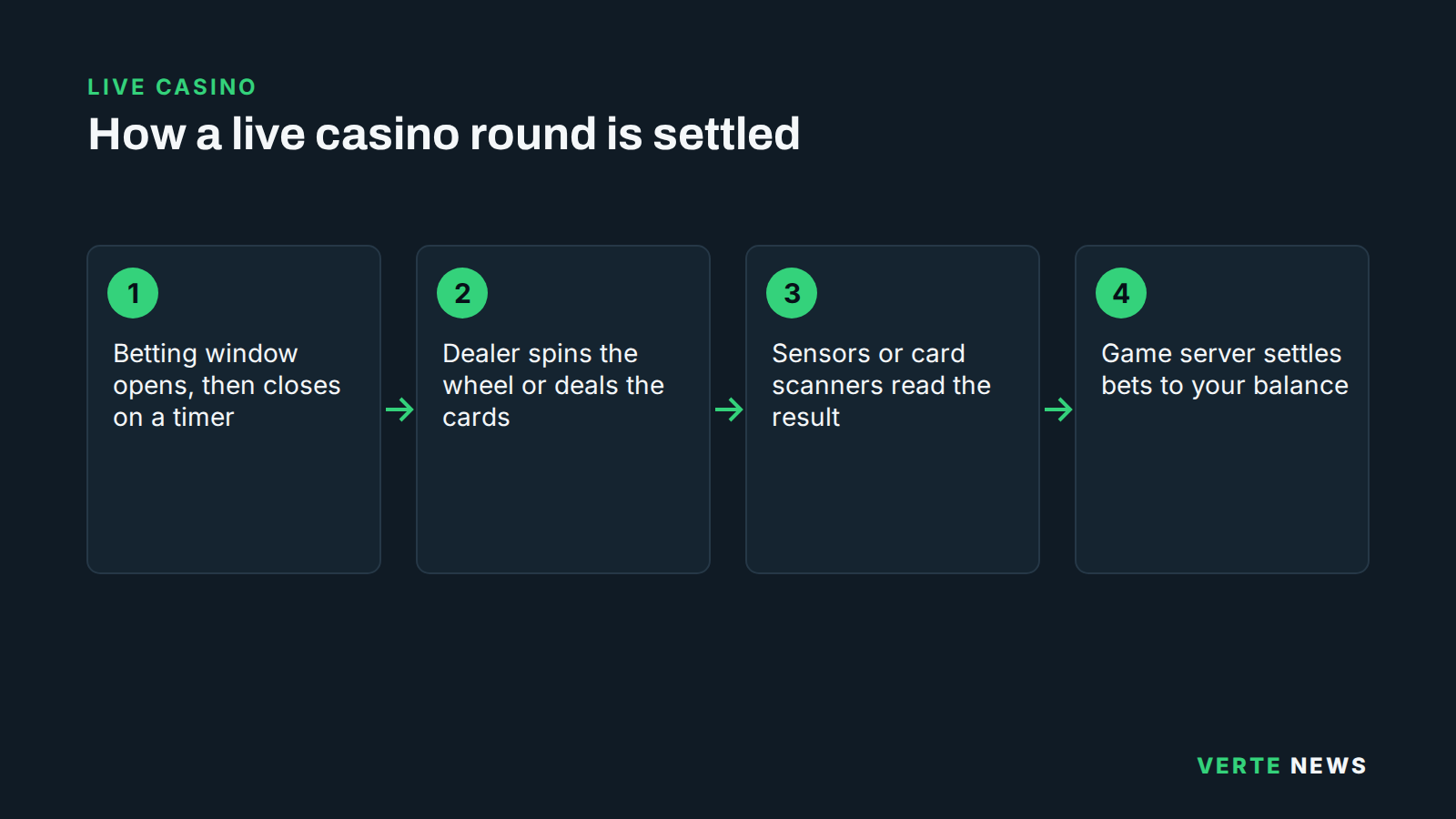
- Betting window. A timer opens and you place bets through the interface. When it ends, betting closes and late bets are rejected.
- The play. The dealer spins the ball or deals the cards, with cameras showing the action from several angles.
- Reading the result. The outcome is captured by equipment rather than typed in by the dealer. Cards are typically read by scanners or optical character recognition; roulette wheels use sensors that detect which pocket the ball lands in.
- Settlement. The result passes to the game server, bets are settled and winnings appear in your balance, usually within seconds.
Because the result is physical, no random number generator decides the spin or the deal itself. Randomness comes from the equipment and procedures, which is why wheels are checked and maintained and cards are shuffled under set rules. Some game-show variants add computer-generated elements, such as random multipliers; where they do, those parts rely on a random number generator that is tested like any other.
The maths is the same, the pace is different
A live European roulette table has the same 37 pockets and the same 35 to 1 payout on a single number as the computer version, so it has the same return to player of about 97.3% and the same 2.7% house edge. Live blackjack's return depends on its rules and on how well you play, just as it does elsewhere. The principle is explained in what RTP means.
What changes is speed. A live table typically runs far fewer rounds an hour than an automated game, because a person has to spin, deal and announce. Fewer rounds means less money staked per hour, and therefore a lower expected cost per hour at the same stake.
A worked example: at £5 a spin, a live roulette table running, say, 40 spins an hour takes £200 of your bets an hour. At a 2.7% edge the expected loss is £5.40 an hour. An automated version played at 100 spins an hour would take £500, with an expected loss of £13.50. The edge per pound is identical; the difference is purely volume. Side bets and game-show formats often carry higher edges than the base game, so check each one's stated RTP.
What to watch for
The social feel of live casino, with a dealer who talks to the table and a chat window, can make sessions run longer than planned. The same safer-gambling tools apply: deposit limits, reality checks that remind you how long you have been playing, and time-outs. Setting a time limit before sitting down is especially useful here, because the rhythm of a live table makes it easy to lose track.
Be aware, too, that a dropped connection does not stop the round. If your connection fails after a bet has been accepted, the game will normally settle it on the result, and each provider's rules set out how interrupted or voided rounds are treated. They are worth reading once, along with the table's minimum and maximum stakes.