How casino payment methods work
Online casinos take deposits through debit cards, e-wallets, bank payments and a few niche methods. Each moves money differently, which affects speed, limits, fees and whether you can withdraw to it.
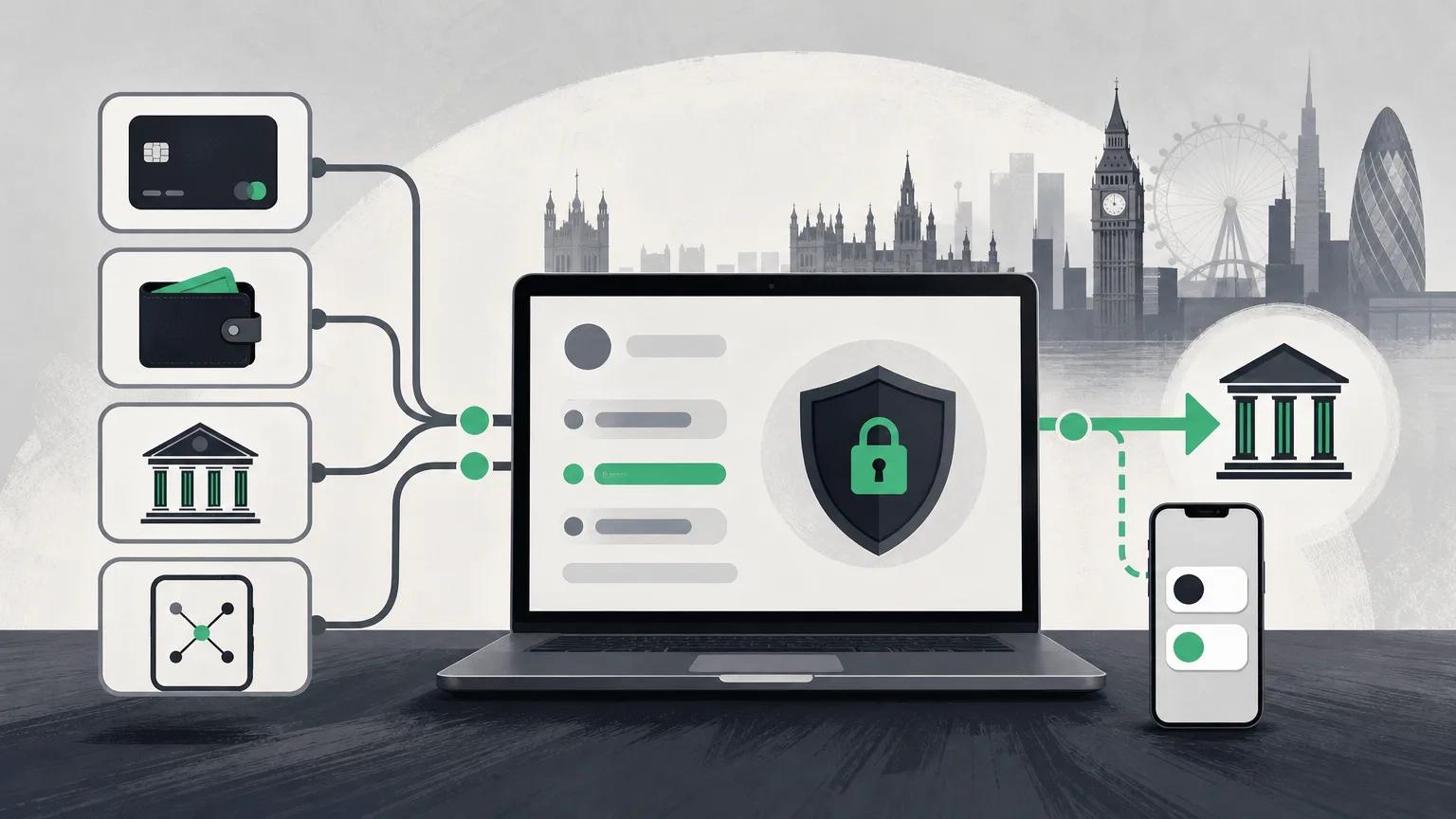
An online casino's cashier connects you to payment providers that move money between your bank or wallet and your casino account. The method you choose affects how quickly a deposit lands, how quickly a withdrawal arrives, whether you can withdraw to it at all, and sometimes whether a promotion applies. In Great Britain there is also a legal limit on the choice: credit cards cannot be used to gamble.
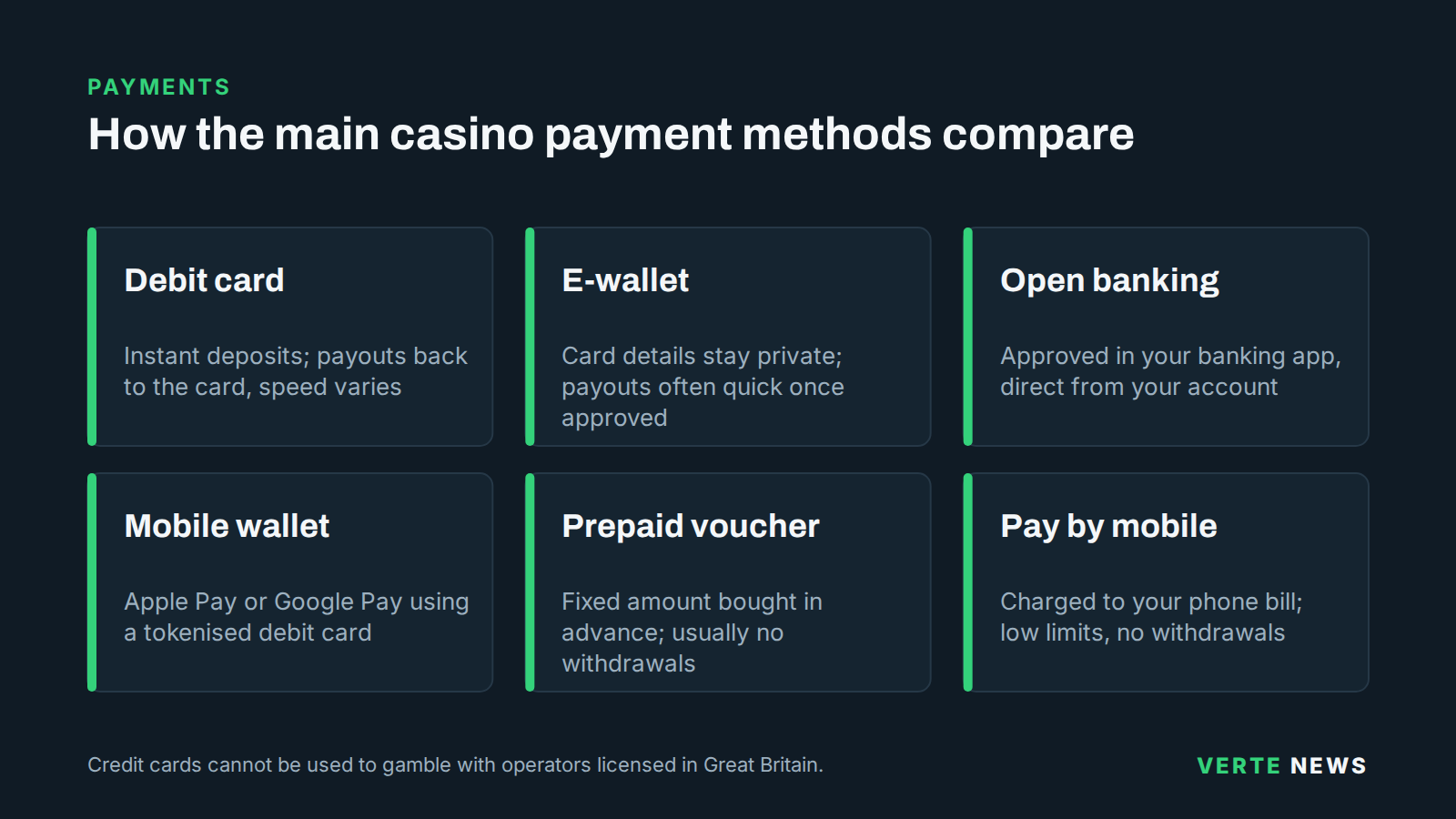
The main methods
Debit cards. The most widely accepted option. Deposits are usually instant. Withdrawals go back to the card; where the card and bank support instant payouts they can be quick, otherwise they may take a few working days.
E-wallets. Services such as PayPal act as an intermediary: you fund the wallet from your bank account or card, then pay the casino from it. Your card details are not shared with the operator, and withdrawals are often among the fastest once approved. Some operators exclude e-wallet deposits from certain promotions, so check the terms.
Mobile wallets. Apple Pay and Google Pay store a tokenised version of your debit card. To the casino they behave much like a card payment, and withdrawals may be paid to the underlying card.
Bank transfer and open banking. Traditional transfers are reliable but can be slow. Open banking payments, where you approve a payment in your own banking app, move money directly from your account and can be fast in both directions where the operator supports them.
Prepaid vouchers. Vouchers such as Paysafecard are bought in advance and redeemed with a code. They help with budgeting and privacy but usually cannot receive withdrawals, so you will need a second method to take money out.
Pay by mobile. Deposits are added to your phone bill or taken from phone credit. Limits are low, and you cannot withdraw by this route.
Rules that shape the options
The credit card ban. Since April 2020, operators licensed in Great Britain have been banned from accepting credit card payments for gambling, including through e-wallets funded by a credit card. The aim was to stop people gambling with borrowed money.
Closed loop. Operators generally return withdrawals to the method used to deposit, up to the amount deposited with it, as an anti-fraud and anti-money laundering control. If you deposited with a method that cannot receive money, you will be asked to nominate another. This is a common source of friction, explained further in why casino withdrawal times differ.
Your name, your method. The payment method must be in your own name. Using someone else's card or wallet will normally lead to the payment being refused or the account being investigated. This sits alongside the identity checks described in what KYC means in gambling.
Cryptocurrency. Crypto payments are rare on sites licensed in Great Britain. Where they are offered, it is typically by operators licensed elsewhere, which raises the separate question of what protections apply; see how offshore gambling regulation works.
Choosing a method sensibly
A simple comparison helps. Suppose you deposit £50 by prepaid voucher and later win £200. The voucher cannot take the payout, so the operator will ask you to add and verify a bank account or card before paying. Had you deposited by debit card, the £200 would normally go back to the same card. Neither route pays more; one simply has fewer steps.
Things worth checking before you deposit:
- whether the method can receive withdrawals;
- minimum and maximum amounts, in both directions;
- any fees charged by the operator or the payment provider;
- whether the method is excluded from a promotion you intend to use;
- how long withdrawals to that method typically take.
Payment tools can also help you control spending. Many banks let you block gambling transactions on your debit card, and deposit limits in your casino account cap what can go in over a day, week or month. A prepaid voucher puts a hard ceiling on a single deposit. None of these replaces a budget, but they make it easier to stick to one. Money you deposit should be money you can afford to lose; affordability checks exist because not everyone can.