Texas lawmaker files bill to raise prediction market age to 21
Rep. Salman Bhojani has pre-filed legislation that would require prediction market users in Texas to be 21, up from the 18-plus standard used by many operators.
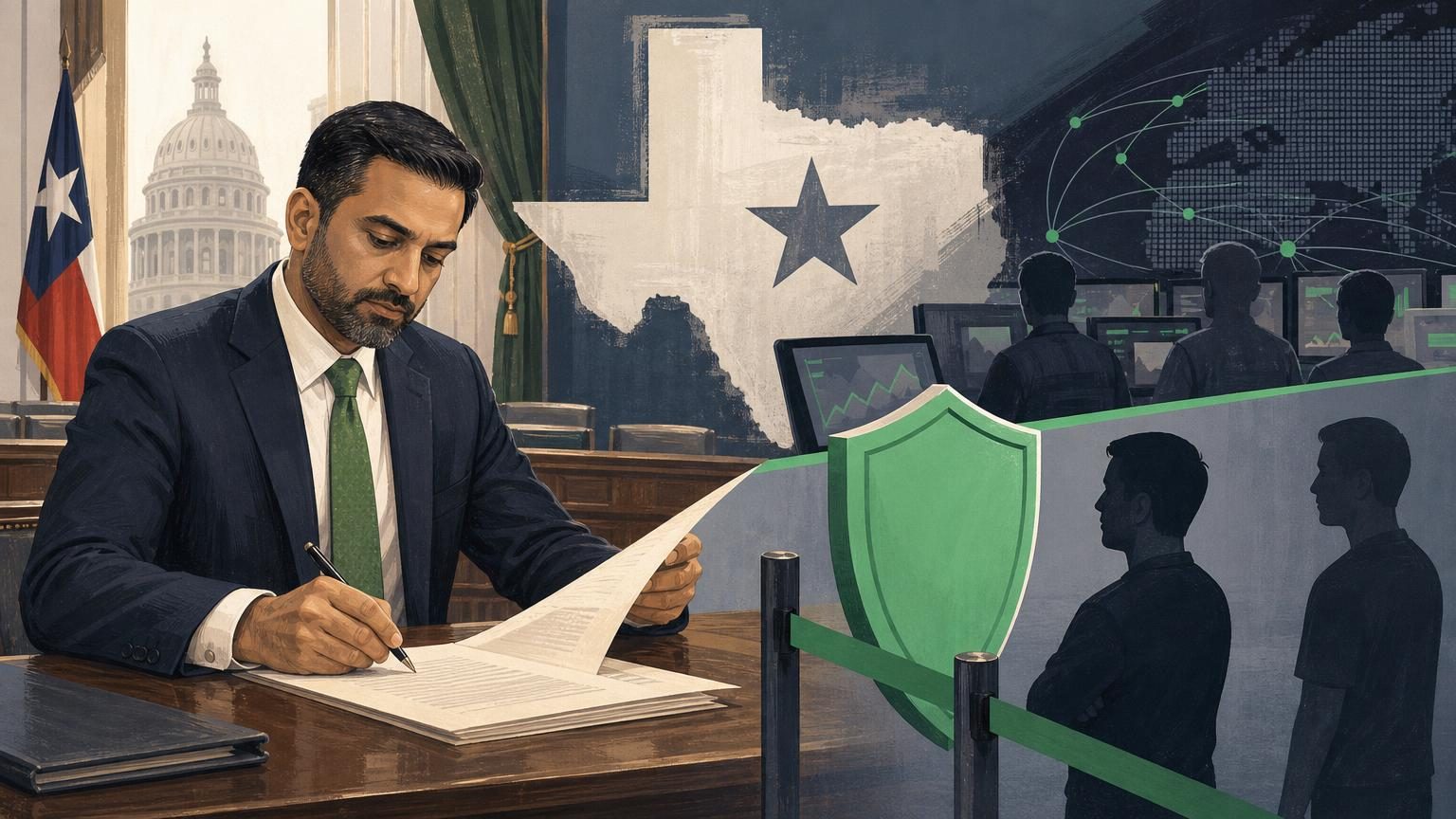
Texas Democrat Rep. Salman Bhojani has pre-filed a bill that would set 21 as the minimum age to trade on prediction markets in the state, according to Casino.org News.
The measure, H.B. 598, was filed ahead of the legislative session that begins in January and lands alongside a wave of other wagering-related bills introduced by Democratic lawmakers following last Tuesday's midterm elections, Casino.org reported.
Democrats now control the Texas State House and the state's major statewide offices, a shift Casino.org said has raised expectations that Texas could move toward broader gaming expansion.
Bhojani's bill would bring prediction markets into line with the age thresholds used in most forms of regulated wagering nationally, replacing the 18-and-up access offered by some of the largest operators in the sector. Fanatics and Novig are both cited in the bill text as firms currently permitting 18-year-olds to trade.
Under the proposed text, operators would be barred from letting anyone under 21 who is physically located in Texas buy, sell, trade or otherwise take part in an event contract offered through a prediction market.
H.B. 598 would also require operators to verify customers' ages through a commercial age verification system, using government-issued identification or another method described in the bill as commercially reasonable.
The push follows advocacy earlier this year from the Texas Medical Association, which called for raising the prediction market trading age to 21 and warned that teenagers could be especially vulnerable to developing problematic wagering habits through the fast-paced format of yes/no exchanges, per Casino.org.
The association also urged the state to consider restricting prediction market advertising near schools and on social media platforms popular with teenagers. Bhojani's bill reflects that, proposing to bar yes/no exchange operators from advertising close to elementary and secondary school campuses, while requiring them to clearly disclose the 21-plus age minimum.
Notably, the bill does not target sports event contracts, which have driven much of the industry's legal difficulty in other states. It does, however, propose civil penalties for operators that allow trading on a range of sensitive categories, including criminal investigations, deaths, executions, legal outcomes, and terrorism or acts of war.
Texas policymakers had already flagged prediction markets for scrutiny this year before the midterm results, and Casino.org said that scrutiny has since intensified, including at the federal level where Democrats are set to hold larger majorities in both chambers of Congress from January.
Texas's legislature remains divided, with the House under Democratic control and the Senate under Republican control. Gov.-elect Gina Hinojosa, however, is a Democrat, meaning that if H.B. 598 clears both chambers, it is expected to be signed into law, according to Casino.org.