State Attorneys General Press CFTC to Scrap Sports Swaps Rule
Forty-three states and Washington DC tell the Commodity Futures Trading Commission its plan to classify sports event contracts as swaps exceeds its authority and ignores a lack of quorum.
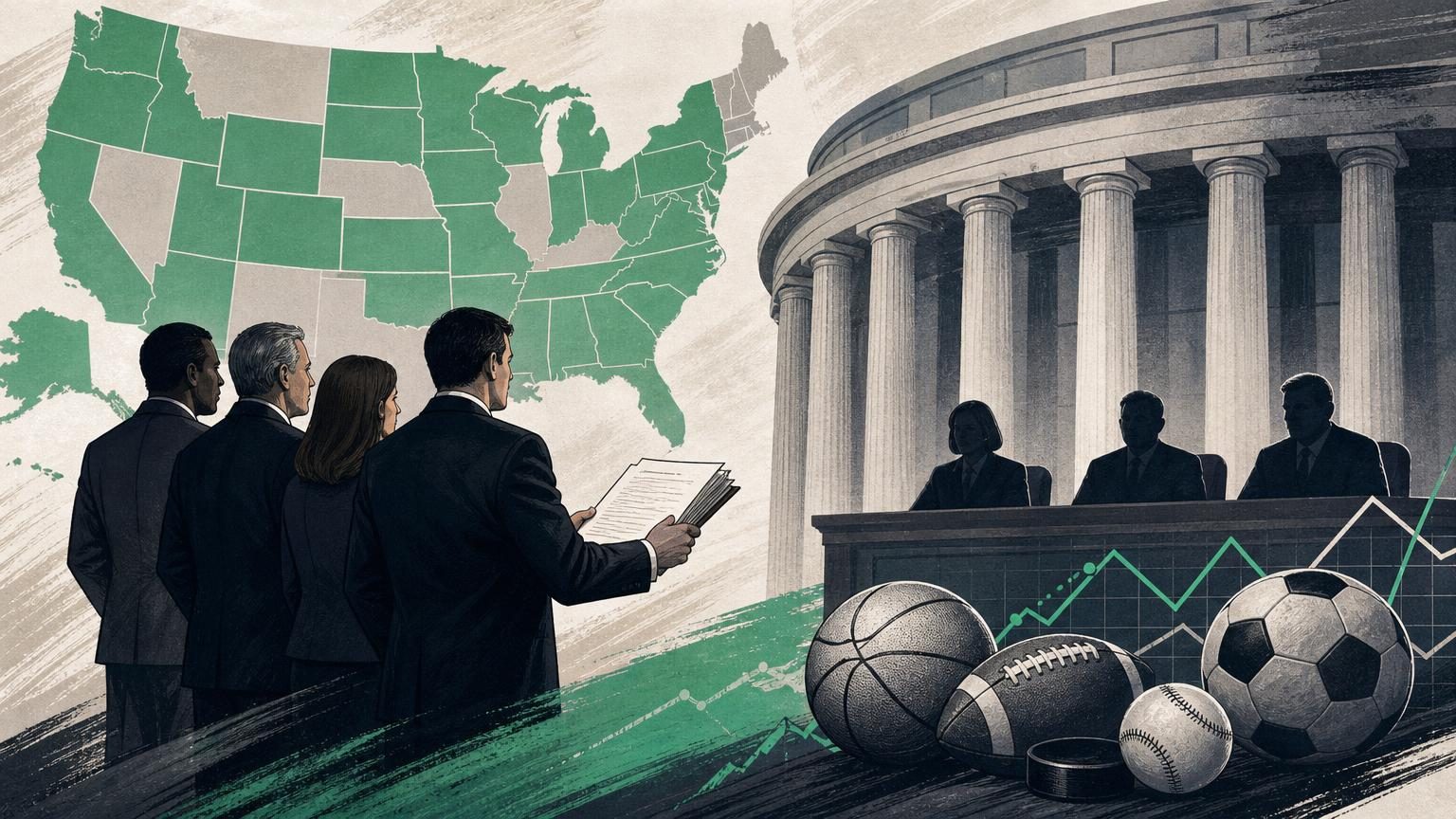
A coalition of attorneys general spanning 43 states plus the District of Columbia has written to the Commodity Futures Trading Commission urging it to abandon a proposed rule that would classify sports event contracts as swaps under the Commodity Exchange Act, Casino.org News reported.
The CFTC published the Notice of Proposed Rulemaking on 9 October, seeking to amend the definition of a swap to capture trading on sports, political, cultural and weather-related outcomes offered through prediction markets.
The letter, addressed to CFTC Secretary Christopher Kirkpatrick, argues the rule would strip states of their authority to regulate consumer protection around sports wagering while going beyond the powers Congress gave the federal agency.
Ohio Attorney General Andy Wilson, who helped lead the coalition behind the letter, said a sports bet "isn't a derivative just because the CFTC says so," adding that the agency "doesn't get to invent powers that Congress never gave it, ignore federal court decisions, and bulldoze state consumer protections."
Wilson said that if Congress had intended the commission to oversee sports gambling, "it would have said so—and headquartered it in Las Vegas."
The dispute follows a period in which the Trump administration has expanded the CFTC's reach over prediction markets, platforms that let users trade shares tied to event outcomes under Designated Contract Market licences issued by the agency.
Scrutiny intensified after the CFTC did not object to exchanges self-certifying sports-related contracts in 2025, alongside existing criticism of platforms offering trades on elections and the tenure of foreign leaders.
CFTC Chair Michael Selig, who has run the agency without fellow commissioners, has maintained that federal law gives the CFTC exclusive jurisdiction over swaps and that sports event contracts qualify as derivatives subject to the Commodity Exchange Act.
Selig said Americans use event contracts "to hedge risks, speculate, and provide the public with information about the outcome of future events," describing them as "commodity derivatives squarely within the CFTC's regulatory remit under the Commodity Exchange Act and are within the agency's exclusive jurisdiction."
Selig's earlier role, before he joined the CFTC, was as a cryptocurrency task force's chief legal counsel at the Securities and Exchange Commission. Trump nominated him to lead the CFTC in October 2025, and the Senate confirmed him in December.
Beyond the jurisdictional dispute, the attorneys general contend the CFTC cannot lawfully adopt the rule while operating with a single commissioner, arguing the agency lacks the quorum required to act.
The Commodity Exchange Act states that a vacancy among commissioners "shall not impair the right of the remaining Commissioners to exercise all the powers of the Commission," but the attorneys general read the term "a vacancy" as referring to isolated gaps rather than a near-total absence of commissioners, writing that "a single commissioner does not qualify as 'Commissioners.'" In their view, a functioning quorum requires no fewer than two commissioners, and the figure could run as high as four.
On 12 November, the president put forward two new names for the commission: Nathan Anonick, a Republican, and Matthew Rowland, a Democrat, both currently serving as legal advisers on the Senate Agriculture Committee, according to Casino.org News.