Second Circuit rejects Kalshi bids to pause New York, Connecticut cases
A three-judge panel denied Kalshi and Coinbase injunctions pending appeal, clearing the way for New York and Connecticut to press ahead with enforcement against the prediction market's sports contracts.
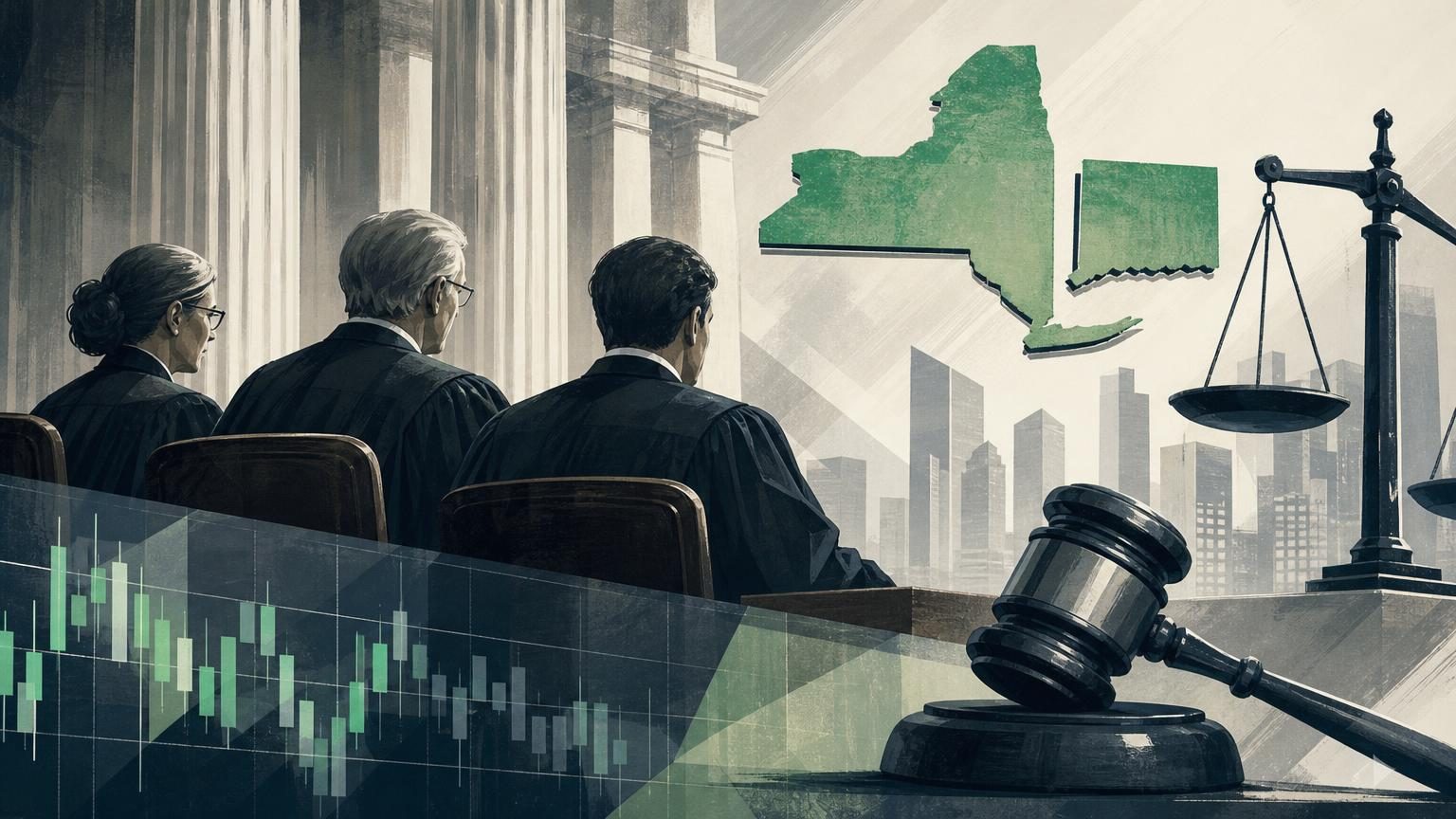
The U.S. Court of Appeals for the Second Circuit has denied Kalshi's requests for injunctions pending appeal against New York and Connecticut authorities, along with a similar motion from Coinbase in the Connecticut case, according to SBC Americas.
A three-judge panel ruled on Tuesday, 3 November, that the companies had not shown they were entitled to block state enforcement action while their appeals continue.
The combined order covered three separate disputes: Kalshi's fight with the New York State Gaming Commission, its litigation with the Connecticut Department of Consumer Protection, and Coinbase's own battle with Connecticut Attorney General William Tong and other state officials. Coinbase offers sports contracts through Kalshi.
"Upon due consideration, it is hereby ordered that the motions are denied because appellants have failed to make the required showing that an injunction pending appeal is warranted," the court order states, giving no further detail on the panel's reasoning.
The decision clears the way for New York and Connecticut to pursue further action against sports event contracts that both states argue function as unlicensed, untaxed sports betting.
The appeals followed defeats at district court level. New York federal Judge Analisa Torres found in July that the state's gambling laws are not preempted by the Commodity Exchange Act, while Connecticut federal Judge Vernon Oliver ruled in August that the sports event contracts do not meet the definition of a swap under that same federal statute. Kalshi appealed both rulings to the Second Circuit, which folded them into one motion alongside Coinbase's challenge to Oliver's separate ruling allowing Connecticut's gambling claim to proceed.
Those federal losses prompted both states to escalate in their own courts. New York Governor Kathy Hochul and Attorney General Letitia James sued Kalshi in state court on 31 July, seeking roughly $36 billion in penalties covering disgorgement, customer restitution and fines tied to revenue the company generated in New York. Connecticut's Tong, Governor Ned Lamont and the DCP filed a parallel state suit four weeks later.
Kalshi sought to remove both state cases to federal court, but New York and Connecticut each moved to send them back to state court in September. Hochul, James, Tong and Lamont were all re-elected in the midterms on the same day the Second Circuit issued its ruling.
The outcome extends a run of circuit-level defeats for prediction markets through 2026. The Ninth Circuit rejected Kalshi's appeal against Nevada in a 3-0 decision in late August, then sided with two California tribes in mid-September on claims that Kalshi's contracts breach the Indian Gaming Regulatory Act. The Sixth Circuit unanimously allowed Ohio and Tennessee to proceed with enforcement in September, after which Ohio widened its crackdown to include Coinbase. On Wednesday, the Ninth Circuit also denied Kalshi's request for a rehearing en banc in the Nevada case.
The sole appeals court win for the industry remains the Third Circuit's 2-1 ruling in favour of Kalshi against New Jersey in April, which now underpins New Jersey's petition asking the Supreme Court to hear the case. The Supreme Court has granted Kalshi a second extension to file its response, moving the deadline to 7 December.