Brazil's Supreme Court halts lower-court challenges to Lula betting ban
Justice Luiz Fux has frozen further lower-court rulings on Brazil's federal online betting ban while the Supreme Federal Court decides whether the measure is constitutional.
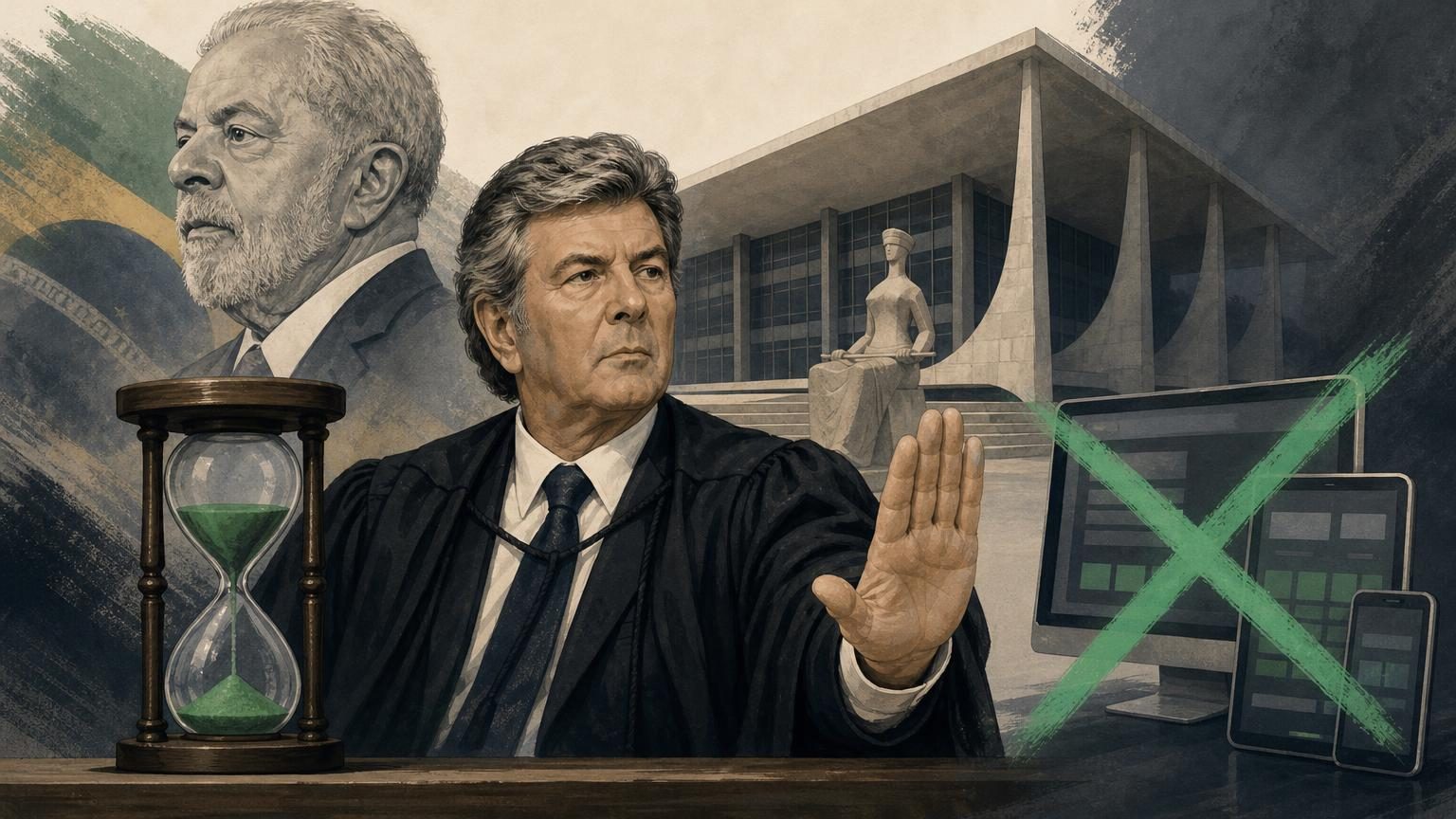
Brazil's Supreme Federal Court (STF) has suspended all lower-court proceedings challenging President Lula da Silva's federal ban on online betting, pending its own ruling on whether the measure is constitutional.
Justice Luiz Fux granted an appeal from Prosecutor-General Paulo Gonet, who had asked the court to close off the bilateral rulings that had let individual operators keep trading despite the ban, according to SBC News.
The ban was introduced through Provisional Measure (PM) 1,394/2026, announced by Lula on 25 September. Congress opened a 120-day review of the measure, and betting firms were told to wind down operations within a short window.
Some companies secured exceptions in the meantime. CDA Gaming obtained lower-court permission to keep running its Casa de Apostas, BetSul and Jogo Online brands. Stake was briefly cleared to continue trading until 25 October, the date of the presidential election run-offs, before that ruling was overturned.
Those inconsistent outcomes prompted a wave of appeals to the Supreme Court from trade bodies, which argue the ban improperly suspended a market that had already been brought under regulation. Industry groups and allied voices in business and politics have characterised Lula's intervention as a "constitutional infringement" that breaches "legal certainty, free competition and due process".
That framing refers to the regulatory regime established under the Bets Law, which Lula signed in late 2024. Trade bodies contend that regime should remain in force for licensed operators while Congress decides whether to pass, suspend or amend the provisional measure.
Fux's interim decision, issued this morning, puts a stop to that route. He said conflicting rulings risked creating legal uncertainty that would leave some operators trading while others stayed shut. The order is designed to keep the rules applied consistently across the market until the Supreme Court rules on the ban's constitutionality, which Fux maintains is the central question before the STF.
In practice, the ruling narrows the options open to both sides of the dispute. Neither operators seeking to resume business nor campaigners pressing for the ban to stand can now pursue outcomes through the lower courts. Both must wait on the STF's eventual decision or on Congress's handling of the provisional measure.
The court held three days of public hearings before Fux starting on 3 November, taking submissions from representatives of Brazilian football, media and industry trade bodies opposed to the ban, alongside evidence from Health Minister Alexandre Padilha on problem gambling, addiction and the risk to household finances.
The federal government's case was put by Attorney General Jorge Messias, who told the court that online gambling regulation amounted to a "failed experiment" that had put public health and household finances at risk.
Separately, Congress is working through 99 amendments tabled against PM 1,394/2026. These will go through committee scrutiny ahead of votes in the Chamber of Deputies and the Senate, which can approve, amend or reject the measure outright.
The provisional measure's initial 60-day period runs out on 23 November. If Congress has not completed its vote by then, the measure automatically carries over for a further 60 days.