Brazil clubs tell Supreme Court they are first victims of betting ban
Flamengo, Fluminense, Botafogo and Cruzeiro told Brazil's Supreme Court that Lula's prohibition on online gambling would strip clubs of core revenue, as justices weighed the constitutionality of the ban.
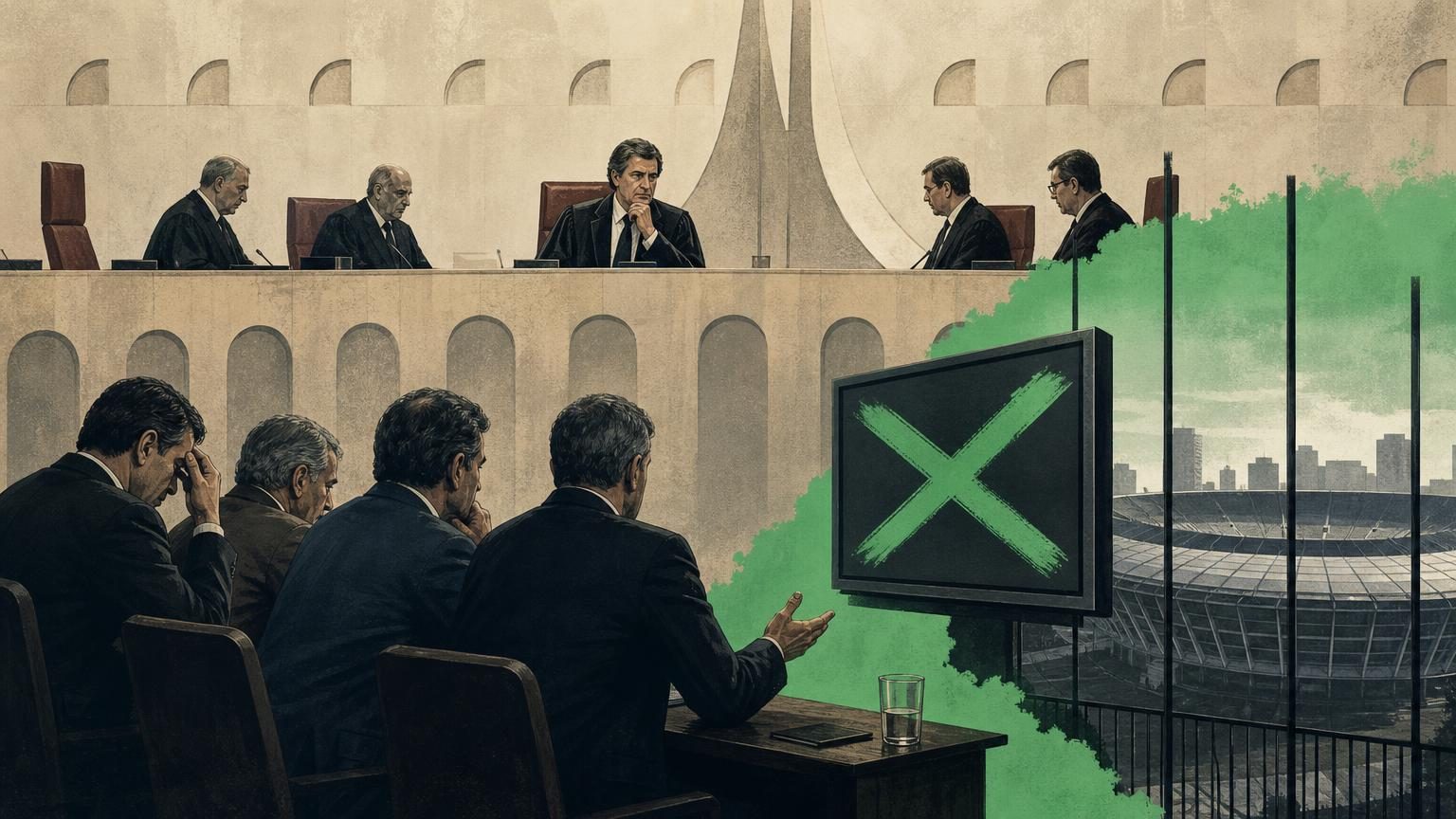
Brazil's Supreme Court began hearing arguments on the fallout from a presidential ban on online gambling, with football clubs casting themselves as the first economic casualties of the policy, according to SBC News.
The hearing, led by Justice Luiz Fux in Brasilia, examined Provisional Measure 1,394/2026, which President Luiz Inácio Lula da Silva signed on 25 September to scrap the 2024 Bets Law. The measure outlaws running, offering, brokering or advertising fixed-odds betting anywhere in the country.
The ban faces challenges on two tracks. Congress has 120 days to reject, amend or convert the provisional measure into permanent legislation, while the Supreme Court separately considers whether the prohibition itself is constitutional.
Fux noted the court had already examined the social and economic consequences of gambling during hearings held in 2024, before the Bets Law regime existed. He said the latest session returned the court to questions of consumer protection and the policy failings of that regime since it took effect on 1 January 2025.
Justices in the opening session took evidence from the Ministry of Justice and Public Security, the Attorney General's Office, representatives of football clubs and delegates of the players' body Fenapaf.
Flamengo told the court that jeopardising roughly R$430m (£58.1m) of annual revenue could put over 1,200 jobs at risk. Club vice-president Flávio de Araújo Willeman said the club had taken on financial obligations to athletes and employees based on contracts signed under the legislation then in force.
Fluminense president Mattheus Montenegro argued the dependence on betting money extended well beyond the biggest clubs, noting that betting firms supplied roughly a third of Série A clubs' commercial income last year. "Changing this provisional measure strikes at the heart of every club; it destroys their main source of survival," he said.
Montenegro also challenged the pace of the reversal, contrasting Brazil's compressed timeline with restrictions introduced elsewhere. "In Italy, 10 months. In Brazil, 10 days," he said, adding that "no market anywhere restricted betting company advertising in 10 days."
Botafogo's representatives warned that lost sponsorship income would hit its academy and women's team, complicating the finances of a club already undergoing judicial restructuring. Smaller clubs, with fewer alternative sponsors, were flagged as most exposed, alongside women's football and youth development programmes.
Cruzeiro's José Francisco Manssur raised a separate grievance over authorisation fees, arguing the government had kept R$30m in payments from operators despite ending their licences early. "It is a truly confiscatory measure," he said.
The provisional measure followed a series of tightening restrictions on Brazil's regulated betting market and arrived nine days before the 2026 presidential election, in which Lula defeated Flavio Bolsonaro of the Liberal Party. Bolsonaro had also floated a gambling ban in his own campaign.
Having concluded it could not adequately police a licensed betting market under the 2024 Bets Law, the government now faces the task of showing it can suppress an unlicensed one instead, a point the Supreme Court weighed alongside the clubs' objections to closing a market Lula himself had signed into law.