Underdog Launches Live NFL Drive Markets Amid Micro-Bet Backlash
The prediction market platform began offering drive-by-drive NFL contracts as regulators and lawmakers step up scrutiny of fast-moving micro bets.
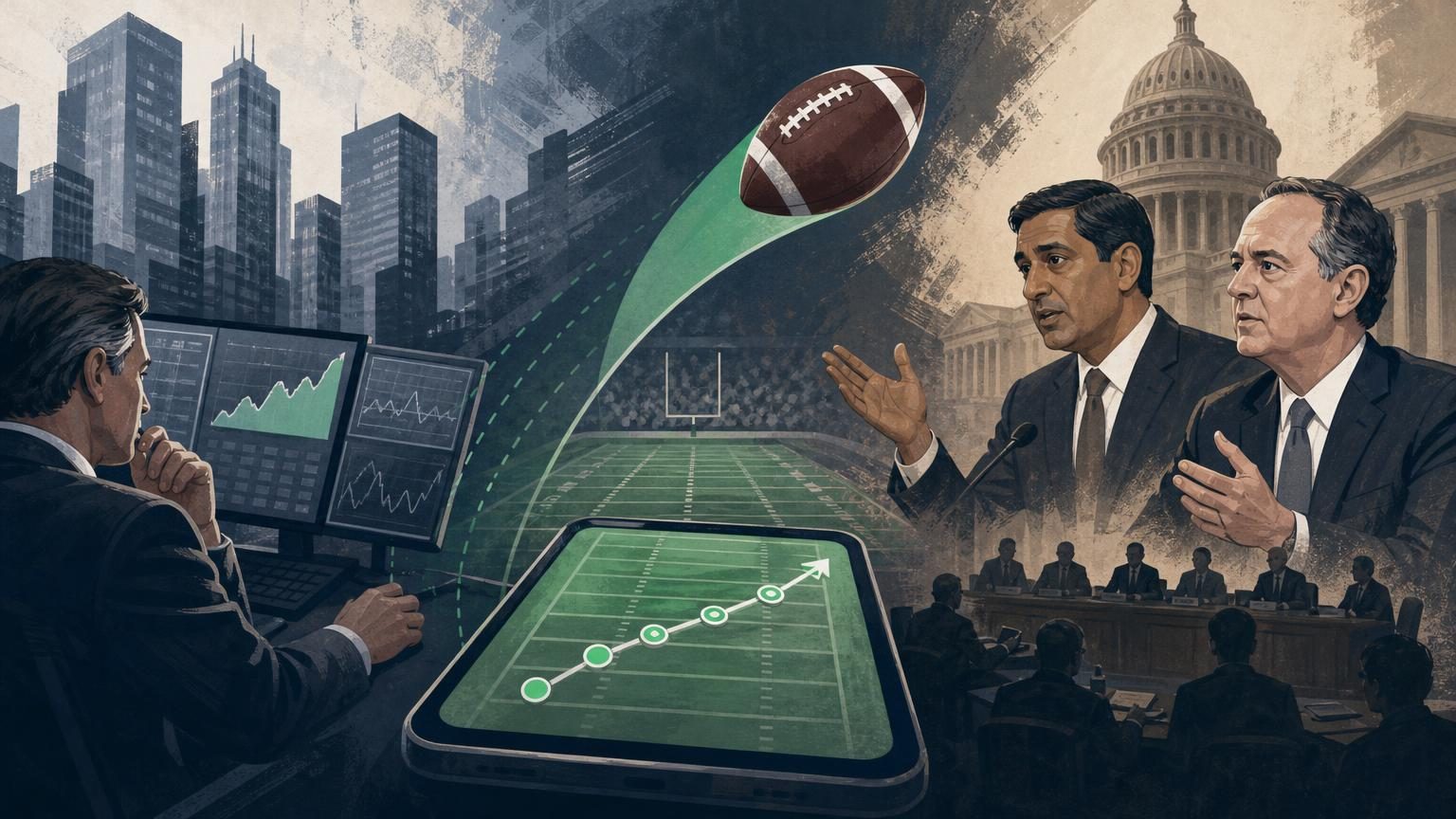
Underdog has started listing contracts tied to the outcome of individual NFL drives, a market that Harry Raymond, the company's director of product, described as the first of its kind, Legal Sports Report reported.
Raymond shared clips showing the new markets in action as the Buffalo Bills faced the Minnesota Vikings on Monday Night Football, writing "Excited to bring these fast-moving markets to more fans" and adding "Trust me, Monday Night Football has never been this fun."
The contracts let users trade on the outcome of a team's next drive and on which player will catch a pass during it, closely mirroring the micro bets already sold at regulated sportsbooks on short in-game sequences such as the next pitch or the next play call.
The launch lands weeks after the Commodity Futures Trading Commission told rival exchange Novig to pull micro contracts tied to the first points scored in a basketball game, judging them susceptible to manipulation.
The CFTC separately ruled that ProphetX's so-called scorigami contracts, which reward bettors when a game ends on a scoreline that has never occurred before in that sport, fall outside the Commodity Exchange Act's definition of a swap.
Legal Sports Report asked the CFTC whether it views Underdog's new drive markets as micro contracts and whether it would seek their removal from the exchange that lists them. The agency had not responded at the time of publication.
State lawmakers have been moving against micro betting at licensed sportsbooks even as prediction markets expand into similar territory. New Jersey's S2160, which would eliminate such wagers, cleared committee in March but has since stalled; state senator John McKeon said he was "over the top disturbed" after hearing about problem gambling linked to micro bets. Pennsylvania representatives Tarik Khan and Jamie Flick have proposed bans that would also restrict same-game parlays on props, while bills in New York and Ohio target live betting more broadly. None has advanced out of its chamber.
Prediction markets are not bound by the consumer protections that apply to state-licensed sportsbooks. Most regulated operators set a minimum age of 21 and must offer deposit limits, cooldown periods and self-exclusion tools; prediction markets generally allow users from 18 and are not required to provide equivalent safeguards, though some have added comparable tools voluntarily.
Sports leagues' sportsbook partners have been pulling back on contested bet types without prediction markets facing the same pressure. In October, the NBA's betting partners dropped parlays combining multiple unders on a single player's stats, bets on opening tips, certain individual plays and unders on players expected to log fewer than 12 minutes — restrictions that did not extend to prediction markets, even as the league struck partnerships with several of them that same month.
The NFL has separately pushed prediction markets to drop what it calls "objectionable" bets, telling the Supreme Court in an amicus brief that the CFTC and exchanges have favoured "a more laissez-faire approach" over the safeguards required in state-regulated betting.
Congressional pressure is building too. Representative Ro Khanna wrote on X that these platforms amount to sports betting dressed up as financial trading, contending that they sidestep state and tribal gambling laws, divert state tax revenue, expose young Americans to public health risks and fuel addiction. "Congress must ban them," he wrote, the post following last week's midterm elections, in which Democrats won majorities in both the House and Senate.
Sports and gaming attorney Daniel Wallach told Legal Sports Report that Democratic control of Congress raises the prospect of hearings, investigations, pressure on the CFTC and new legislative proposals. Any such bill would still have to pass President Trump's desk. Gambling law expert I. Nelson Rose said he anticipates a veto, pointing to Donald Trump Jr.'s stakes in Kalshi and Polymarket.
Bipartisan legislation already exists in draft form. Senator John Curtis introduced the Prediction Markets Are Gambling Act in March with Senator Adam Schiff as a cosponsor, aiming to bar operators from offering sports event contracts. Schiff reiterated last week on X that "sports prediction markets are sports bets."