South Korean court jails three over North Korean gambling site network
A Seoul court sentenced three men for helping North Korean hackers build and sell illegal gambling sites, part of a scheme prosecutors say generated millions for the regime.
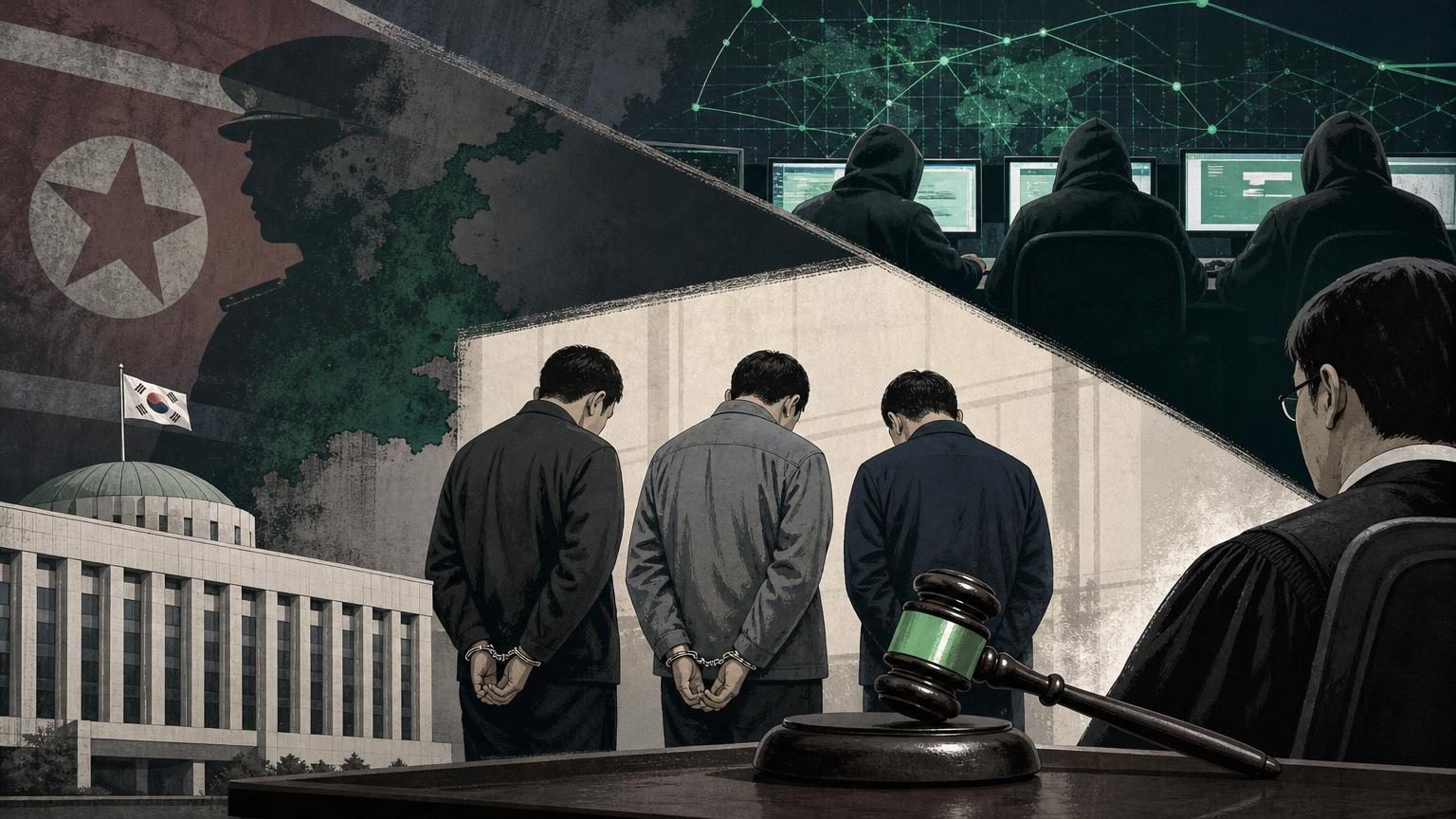
The Seoul Central District Court sentenced three South Korean men on Thursday for their role in developing and marketing illegal gambling websites built with the help of North Korean hackers. One defendant received a four-year prison term, while two accomplices were given three years each.
According to South Korean news agency Yonhap, the men formed part of a criminal network that earned roughly 23.5 billion won, around $17.6 million, by selling 16 illegal gambling websites to operators in South Korea between 2022 and 2024.
More than 7 billion won, about $5.2 million, representing roughly 30% of those proceeds, was passed on to North Korean hackers who had developed the underlying software, Yonhap reported.
The network's ringleader, identified only by his surname Kim, was sentenced earlier to five years in prison. Prosecutors say Kim made direct contact with North Korean hackers based in China and commissioned them to build gambling software, among it a mobile adaptation of a slot game known as Sea Story, or Bada Iyagi in Korean.
The arrangement reportedly covered website maintenance, technical support and ongoing security management, with the hackers linked to North Korea's General Bureau 313 and Reconnaissance General Bureau, both tied to the country's intelligence and cyberwarfare apparatus.
The Korea JoongAng Daily reported that the three accomplices used platforms such as X and Telegram to promote the software, marketing it partly on the basis of its low development costs compared with legitimate alternatives.
Investigators found that Kim swapped upwards of 1,100 messages with the North Korean developers over Telegram and other channels to troubleshoot technical issues with the sites.
One of the defendants, Kim's younger brother, told the court he had not known the developers were North Korean. Prosecutors countered that Telegram conversations contained distinctive North Korean vocabulary, including the word sonjeonhwa, the North Korean term for mobile phone.
Two of the three defendants were found guilty of breaching South Korea's National Security Act alongside gambling-related offences, while the remaining defendant was found guilty on a charge of running illegal gambling operations. In handing down sentences, the court pointed to the national security risks and broader social harm caused by illegal online gambling.
South Korean intelligence officials have long linked such operations to Bureau 39, an organisation tasked with generating foreign currency for the North Korean regime. In 2016, security researcher Yu Dong-yeol estimated that North Korea earned around $866 million a year from online gambling, software sales and other illegal cyber activity.
South Korea's National Intelligence Service said in 2024 that it had exposed a North Korean software operation based in Dandong, China, which charged around $5,000 to build an illegal gambling website and a further $3,000 a month for maintenance. Fifteen developers tied to that operation, also reportedly linked to Bureau 39, presented themselves as Chinese nationals in order to secure contracts, according to the NIS.