Polymarket and Kalshi extend prediction markets into US public health
The two platforms now list wagers on measles cases, vaccine mandates and drug trials, prompting warnings that the products sit outside gambling regulation entirely.
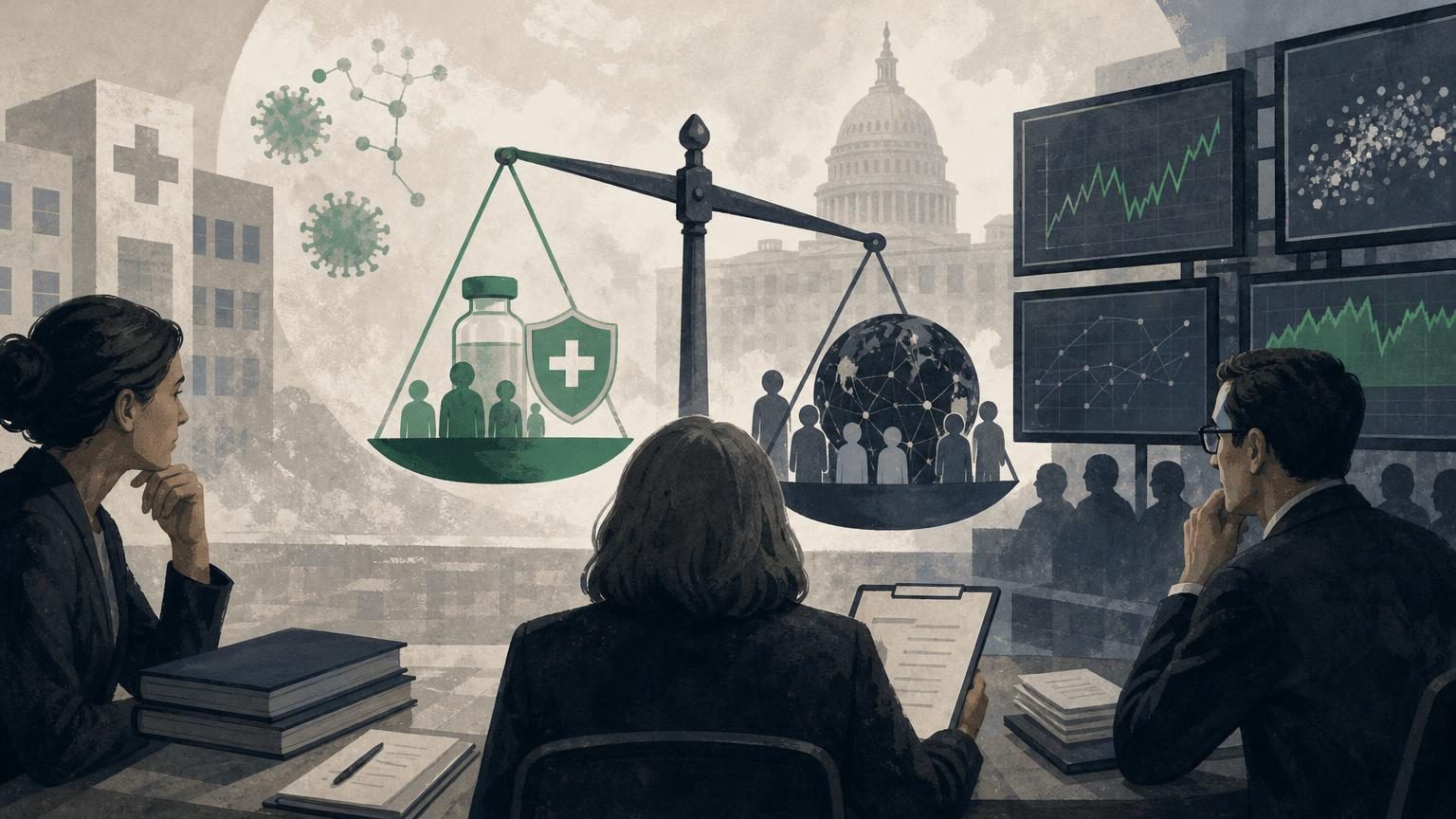
Polymarket and Kalshi, the two largest US prediction-market platforms, have begun listing contracts tied to public health events, including measles case counts, vaccine mandate changes and drug trial outcomes, according to reporting by Guardian gambling.
Polymarket has run advertising in New York referencing state vaccine markets, while Kalshi started offering health-related contracts over the summer. Users can wager on when the Food and Drug Administration will approve a skin-cancer vaccine, whether the Centers for Disease Control and Prevention will revise its vaccine recommendations, and whether the US will retain its measles-elimination status in 2026.
Matthew Eisenberg chairs the health policy and management department at the Johns Hopkins Bloomberg School of Public Health. He told the Guardian he was not surprised by the development, since the two platforms will put up a contract on any event whose outcome can be verified.
Lia Nower, who heads Rutgers University's Center for Gambling Studies, said the platforms are functionally identical to regulated gambling but largely escape oversight because they are classified as financial derivatives rather than bets. That positions them under US Commodity Futures Trading Commission jurisdiction rather than state gambling regulation, even as several states have sued the companies arguing they operate as gambling sites.
Nower described the current landscape as a regulatory vacuum, saying there is no federal body setting limits or minimum guidelines for states to follow. She warned that officials or advocates could place bets on ending state vaccine mandates and then push policy changes to realise them, with no apparent law preventing that conflict of interest.
Eisenberg raised similar concerns about drug trials, saying that letting people wager on FDA decisions and trial endpoints effectively hands a reward to anyone holding information not yet public, including agency reviewers, trial investigators and legislative staff. He said the danger is not necessarily that a reviewer takes a bribe, but that the market rewards leaks of confidential information.
Neither company directly addressed the public health concerns raised by the Guardian. Polymarket did not respond to questions on the record. A Kalshi spokesperson, Dani Lever, said in a statement that the company's clinical trial markets are a pilot programme intended to surface insight scattered among people who understand a trial's likely success, arguing that public markets avoid the structural barriers that keep such knowledge from reaching the public.
The expansion comes as problem gambling is itself drawing scrutiny as a public health issue. Nower co-authored a report finding that more than half of young people aged 13 to 27 gambled in the past year, with 39.5% of those young gamblers showing some degree of risk and 10.3% classed as high risk for problem gambling, disproportionately affecting younger, Black, Hispanic and lower-income groups.
Eisenberg's own research on online sports betting found that legal markets bring a measurable rise in depression and anxiety treatment among young men afterward, prompting some states to consider consumer protections such as deposit limits, self-exclusion tools and advertising rules funded through betting taxes. He said prediction markets sit outside all of that, generating little tax revenue to support treatment, and effectively functioning as gambling products that have exited the only regulatory system built to limit gambling harm.
Nower said prediction markets are something the government needs to clamp down on, but noted there is still no federal regulatory body addressing the issue, and no gambling-focused research centres at the National Institutes of Health comparable to those for alcohol and drug abuse. She said New Jersey is among the states now moving to restrict the markets, citing consumer protection and insider-trading concerns.