Ninth Circuit Rejects Kalshi Bid To Rehear Nevada Sports Contracts Case
A three-judge panel has unanimously declined to reconsider its August ruling, leaving the Supreme Court as Kalshi's only remaining avenue to challenge Nevada's gambling law enforcement.
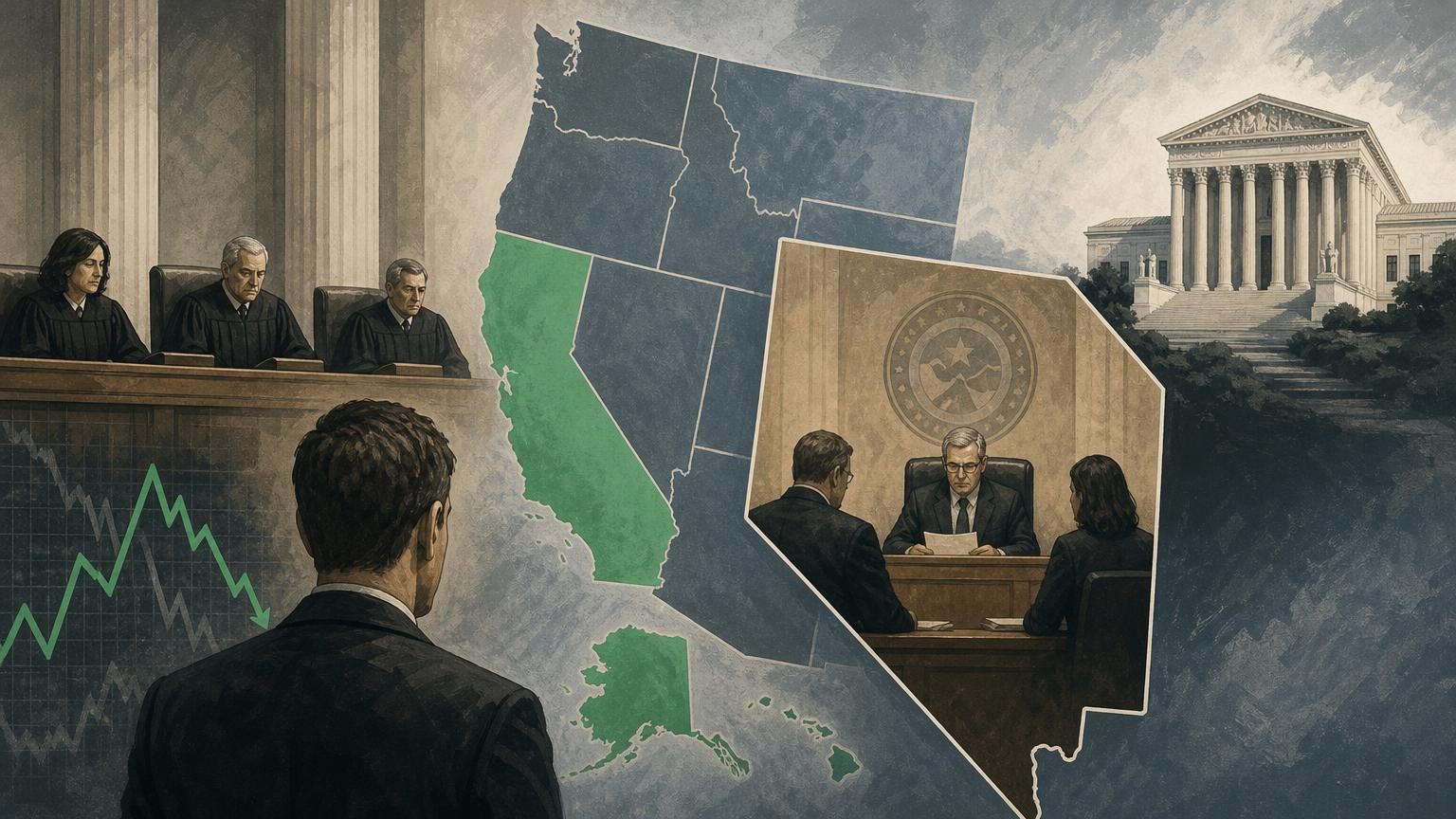
The Ninth Circuit Court of Appeals has denied Kalshi's request for a rehearing in its dispute over sports event contracts in Nevada, Legal Sports Report reported.
The same three-judge panel that ruled against the prediction market operator in August unanimously rejected both the petition for panel rehearing and the request for rehearing en banc.
"The full court has been advised of the petition for rehearing en banc and no judge has requested a vote on whether to rehear the matter en banc," the court said in its ruling.
Kalshi now has 90 days to petition the US Supreme Court for review. New Jersey is already asking the justices to consider the same underlying legal question in a separate case.
Wednesday's decision leaves intact the panel's August conclusion: in the court's view, Kalshi's contracts fall short of meeting the legal definition of a swap, so federal commodities law probably cannot override Nevada's gambling statutes.
"The substance of the sports event contracts offered on Kalshi's DCM is sports gambling, regardless of whether Kalshi calls them swaps," the panel wrote in its original August ruling.
The ruling clears the way for the Nevada Gaming Control Board to enforce state gambling law against the company, and its effect extends across the rest of the Ninth Circuit, covering Alaska, Arizona, California, Hawaii, Idaho, Montana, Oregon and Washington.
Kalshi had already lost a separate Ninth Circuit appeal that required it to geofence three tribal lands in California.
The company has also lost in the Sixth Circuit, where judges allowed Ohio and Tennessee to enforce their own gambling laws. That panel went even further than its Ninth Circuit counterpart, ruling outright that the contracts fail to meet the definition of a swap and that no form of federal preemption shields them from state law.
Ohio acted quickly on that decision, issuing cease-and-desist orders to ten operators and brokers last month.
Kalshi's legal position is not uniformly weak, however. The Third Circuit upheld a preliminary injunction in its favour against New Jersey by a 2-1 margin in April, and a federal judge in Illinois has granted the company a similar injunction.
Further rulings are pending. Kalshi is appealing a loss to Utah before the Tenth Circuit, in a case where the state has filed criminal charges against the company's co-founders.