Florida AG presses Google, Meta and TikTok on sweepstakes casino ads
James Uthmeier has told five tech platforms to stop carrying advertising for sweepstakes casino brands including Stake, Chumba Casino, LuckyLand and Global Poker.
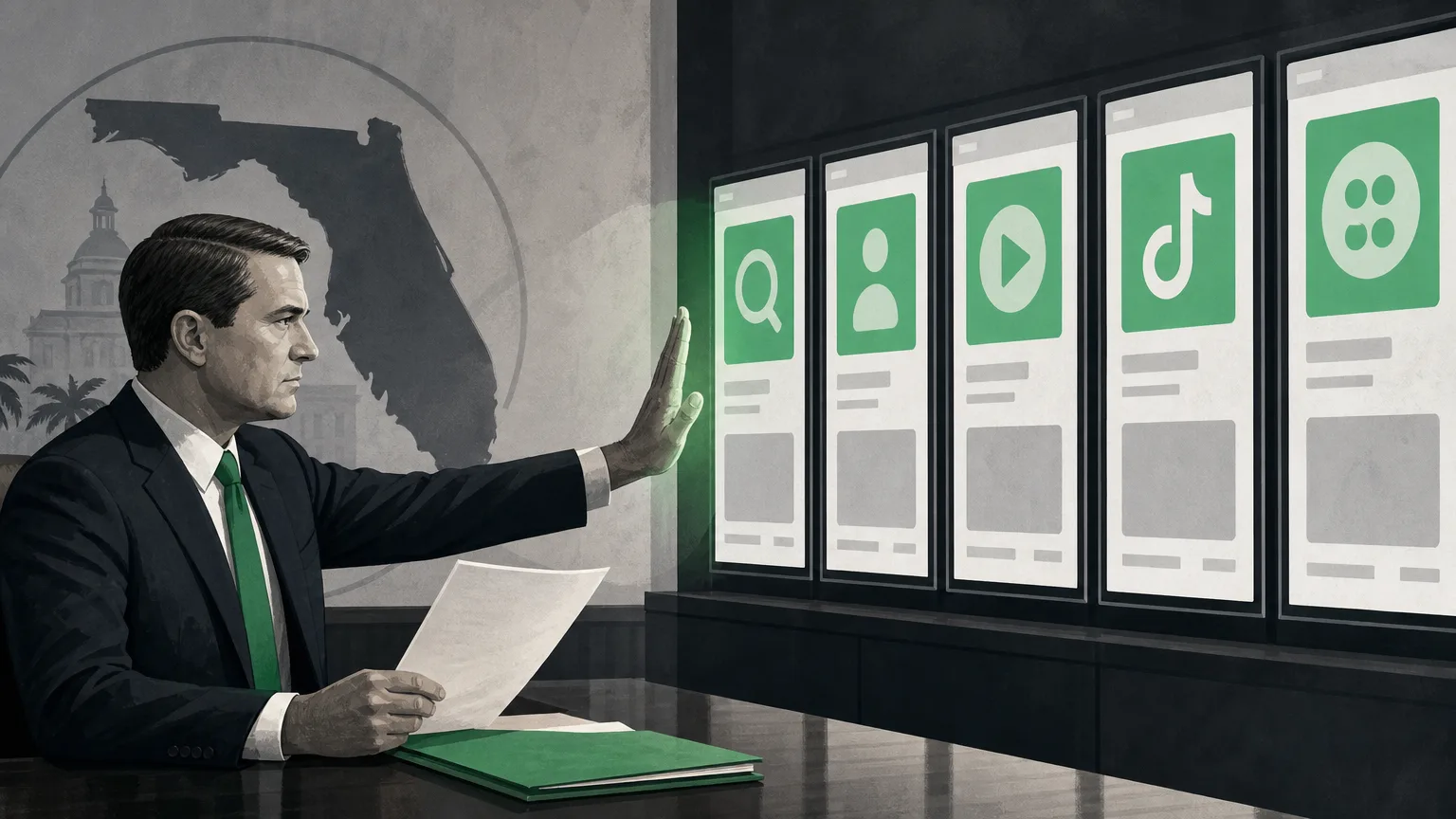
Florida Attorney General James Uthmeier has widened his campaign against sweepstakes casinos to include the platforms that carry their marketing, according to SBC Americas.
Uthmeier said on social media last week that he had written to Google, Meta, Reddit, Snap and TikTok, asking each to halt advertising for sweepstakes casino sites in Florida.
The letters, issued last week, give the five companies until 23 October to confirm they have stopped running the ads and to set out how they will prevent them reaching Floridians in future, SBC Americas reports.
Among the operators named in the correspondence are Stake and VGW's Chumba Casino, LuckyLand and Global Poker.
Uthmeier already sued Stake and VGW last month. In his letters to the tech companies, he wrote that the lawsuits show his office will pursue both the operators of what he calls illegal gambling and those who help them reach customers.
The approach now stretches across three layers of the sweepstakes business: the operators themselves, the payment processors used to fund accounts, and the advertising channels that bring in players.
Lawsuits target the dual-currency model
The August cases against VGW and Stake were filed in Hillsborough County Circuit Court and also name payment companies. They seek to halt the operators' activity in Florida and to recover alleged gambling proceeds, consumer restitution and civil penalties, under claims that the sites breach state gambling law and the Florida Deceptive and Unfair Trade Practices Act.
At issue is the sweepstakes sector's two-currency structure, in which players buy Gold Coins for social play and separately receive Sweeps Coins that can be used on casino-style games and later redeemed for cash prizes. Operators maintain that because Sweeps Coins can also be obtained without payment, the format is a lawful promotional sweepstakes rather than real-money gambling.
Uthmeier rejects that reasoning. "If it looks like a casino, takes real money like a casino, and pays out like a casino, it is a casino—and it is illegal under Florida law," he said in a statement reported by SBC Americas, adding that the companies had been "preying on Floridians, including minors and seniors, with deceptive marketing, and 24/7 access, while dodging our state's licensing, taxation, and consumer-protection requirements."
Cutting off advertising access would squeeze operators' ability to sign up new players in Florida even while the underlying lawsuits are still working through the courts.
No statewide ban from lawmakers
Florida's legislature has not passed a law banning sweepstakes casinos outright, leaving Uthmeier to rely on existing statutes rather than a bespoke measure. A 2025 attempt to tighten rules on internet gambling stalled, and a 2026 effort fared little better: House Bill 591, which would have banned all gambling not run by the Seminole Tribe, died in a House subcommittee, while the broader Senate Bill 1580 passed the Senate and cleared the House 82-31 in amended form on 11 March before dying in returning messages two days later when the chambers failed to reconcile their versions.
Part of a wider state-by-state push
Florida's move sits within a broader national effort to close what regulators describe as a loophole allowing dual-currency sweepstakes sites to offer casino-style games without gambling licences. SBC Americas reports that California, Connecticut, Montana, New Jersey and New York all passed laws targeting the model in 2025.
Other states have relied on regulatory enforcement instead of new legislation. In Louisiana, lawmakers passed a ban that Governor Jeff Landry vetoed, arguing regulators already had sufficient authority to act; the Louisiana Gaming Control Board and Attorney General Liz Murrill subsequently issued dozens of cease-and-desist notices to unlicensed operators, sweepstakes sites among them. Arizona and Michigan regulators have likewise used enforcement powers against operators rather than waiting on statutory change.
Uthmeier's strategy follows that same pattern: arguing in court that Florida's existing gambling law already covers sweepstakes casinos, while asking the platforms that advertise them to stop giving operators a route to Florida customers.