FanDuel tells Congress it sent about 30 athlete videos to VIPs
In a fresh letter to three lawmakers, FanDuel disclosed roughly 30 personalised celebrity video messages sent to VIP customers since 2024, as scrutiny of its VIP program intensifies.
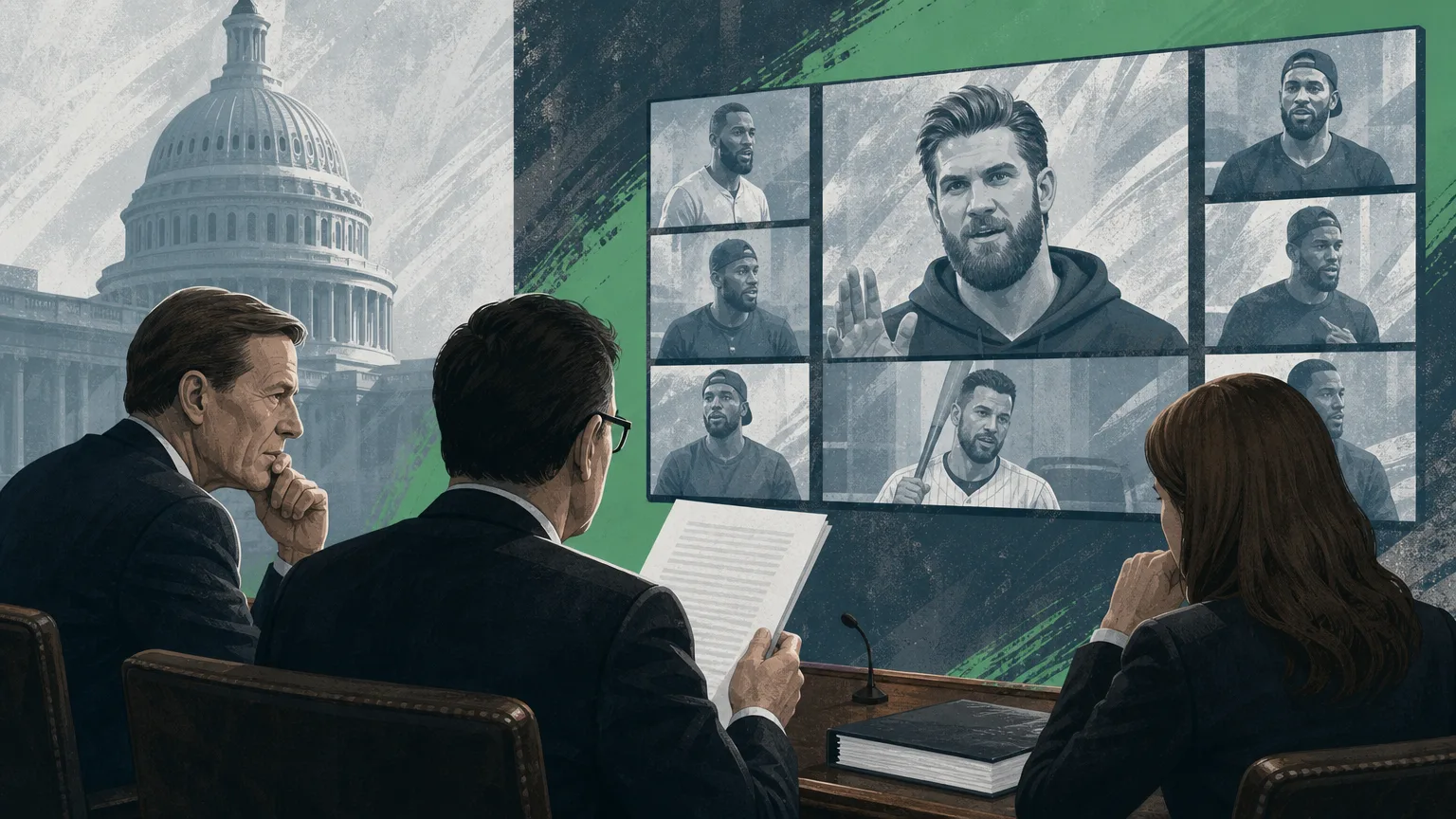
FanDuel has told Congress that the Cameo-style video sent to a problem gambler by basketball star Bryce Harper was not an isolated gesture, disclosing that its VIP hosts have arranged about 30 similar personalised clips from athletes and entertainers for customers over the past two years.
The figure appeared in a letter dated 24 September from Cory Fox, FanDuel's senior vice president of public policy and sustainability, addressed to Senator Richard Blumenthal and Representatives Paul Tonko and Valerie Foushee. SBC Americas reported that the Philadelphia Inquirer first obtained the letter last week.
The correspondence describes how VIP hosts are trained, supervised and restricted, and closes by describing FanDuel as what it called a transparent, responsive and cooperative partner. The company said it has no plans to discontinue the VIP program. A FanDuel spokesperson declined to comment when approached by SBC Americas.
The exchange stems from a 2024 incident in which a FanDuel VIP host sent Thompson, a bettor later identified as having a gambling addiction, a 21-second Cameo video from Philadelphia Phillies player Bryce Harper. According to SBC Americas, Thompson lost $1.5 million through FanDuel and, in a Philadelphia lawsuit filed in March by the Public Health Advocacy Institute, said he had considered suicide rather than disclose his losses to his family. Harper has said he was unaware how the clip would be used.
Blumenthal, Tonko and Foushee first demanded on 10 August that FanDuel end its VIP program, posing eight questions to chief executive Christian Genetski. FanDuel's reply four days later said VIP account managers are salaried rather than paid on customer wagering volume, and detailed its responsible gaming tools. The lawmakers rejected that response on 3 September as misleading and incomplete, and resubmitted the same eight questions with a 17 September deadline.
FanDuel's 24 September letter answers each question in turn. The company denied offering incentives designed to dissuade customers from scaling back or closing accounts, saying it distinguishes between commercial retention efforts aimed at bettors who might switch operators and cases where a customer cites responsible gambling concerns. It said VIP rewards beyond certain thresholds require additional sign-off, and that hosts may only contact customers through approved company channels, with staff trained to escalate warning signs ranging from financial strain to language indicating self-harm.
FanDuel also cited its Real-Time Check-In system, a machine learning tool it launched in 2025 to flag customer deposits that depart from established patterns, as evidence of its responsible gaming infrastructure. On the separate question of FanDuel Predicts, its joint venture with CME Group, the company said the product sits under a distinct federal regulatory framework and that it does not currently operate a VIP program for that business.
The lawmakers have not yet responded publicly to the latest letter. Separately, the MLB Players Association told Congress in August that it would back banning players from personalised VIP marketing in its next collective bargaining agreement, which is due to be negotiated before the current deal expires in December.
Blumenthal and Tonko have pushed repeatedly for federal oversight of sports betting, reintroducing the SAFE Bet Act in March 2025 after an initial 2024 version. The bill would impose deposit and wager limits, require affordability checks, and ban in-game marketing and AI-driven promotional targeting. Blumenthal has also introduced the Prediction Markets Security and Integrity Act, which would prohibit contracts on war, target insider trading and shift oversight of prediction markets to the states.
On 23 September, a day before FanDuel's letter, Blumenthal and Tonko joined the Public Health Advocacy Institute in Washington to launch a broader gambling reform campaign spanning sportsbooks and prediction markets. According to SBC Americas, Blumenthal said at the launch that the gambling industry, including DraftKings, FanDuel and prediction markets, is exploiting problem gambling.
The FanDuel letter arrives amid wider media and regulatory attention on betting operators' data practices. SBC Americas noted a recent New York Times investigation reporting that DraftKings had built machine learning models to identify customers likely to gamble and lose more in response to promotions, while a tool intended to flag at-risk bettors stalled. Massachusetts regulators have also been examining VIP programs industry-wide.