Casino.org Disputes Claim El Cortez Created Vegas Buffet
A historian's account crediting the El Cortez with inventing the Las Vegas buffet does not match archival records, according to Casino.org News.
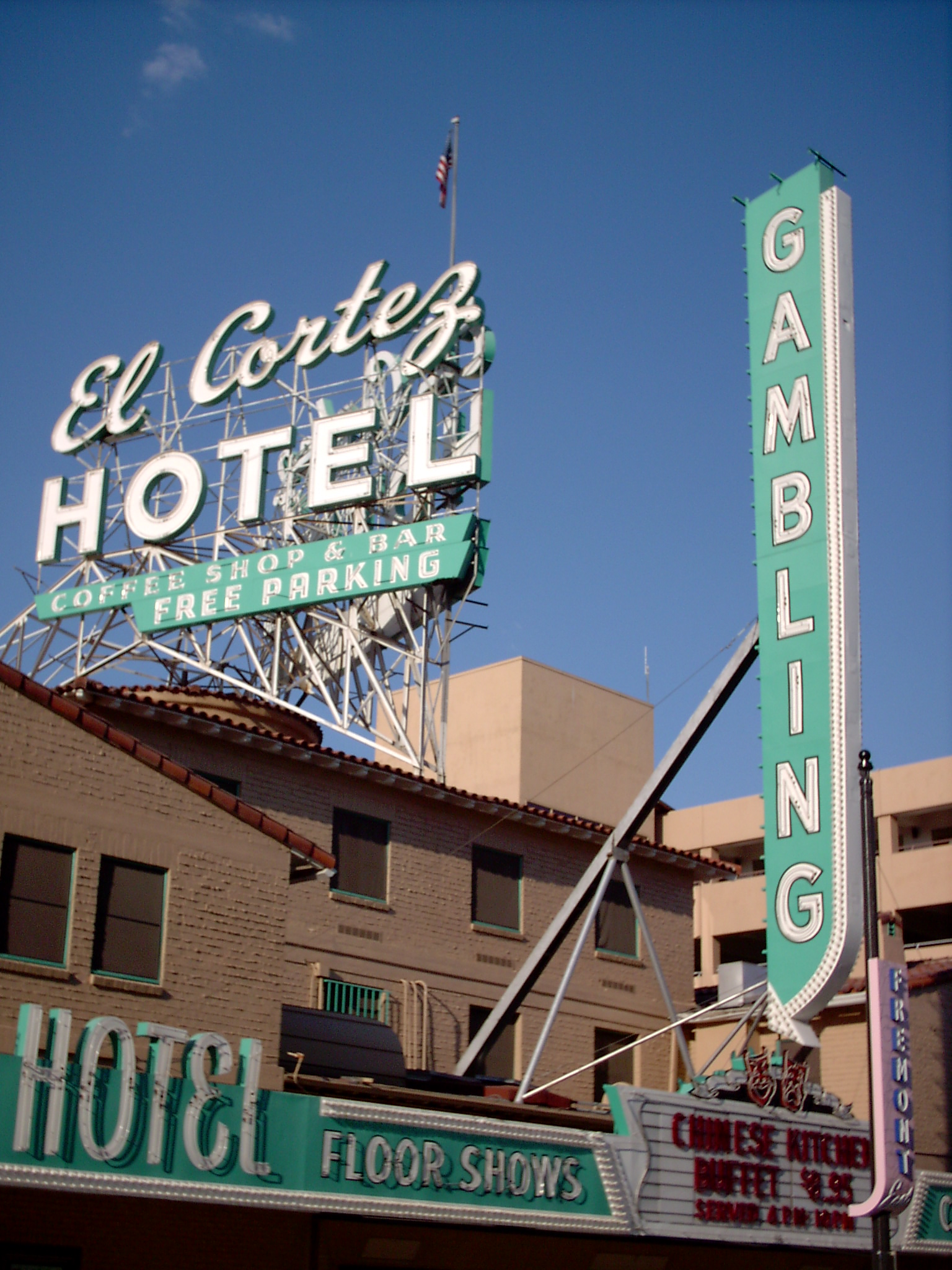
Casino.org News has challenged a long-circulated claim that the El Cortez in downtown Las Vegas invented the casino buffet, arguing that contemporary records point instead to the El Rancho Vegas on the Strip.
The claim traces to historian Hal Rothman's 2002 book Neon Metropolis, which credits casino executive Davie Berman and chef Nat Hart with launching a Jewish-style spread, including lox, whitefish and herring, at the El Cortez around 1945. Rothman wrote that this was the moment "a Las Vegas tradition, the buffet, was born."
Casino.org News reports that a better-documented buffet opened at the El Rancho Vegas, the first casino resort built on the Strip, in November 1946. Known as the Chuck Wagon, it cost $1.25 and included free, unlimited coffee.
According to the outlet, the Las Vegas Review-Journal reported on 21 November 1946 that the Chuck Wagon had held its grand opening the previous night, attended by local dignitaries. The paper described it as a nightly fixture served from 1am to 4am, followed by a complimentary breakfast from 4am to 6am.
The format quickly spread along the Strip. Less than three weeks after the Chuck Wagon's debut, the Last Frontier introduced its own midnight buffet, priced at $1.80 and accompanied by a floor show, Casino.org News notes.
Herb McDonald, the El Rancho's publicity director, later said he stumbled on the idea while putting out cold cuts and cheese for a late-night snack. He is quoted in his 2002 obituary as recalling that "gamblers walking by said they were hungry, and the buffet was born."
The outlet also examined an earlier possible contender: a "Saturday Night Snack Bar" the Last Frontier advertised in the Review-Journal as far back as March 1943. It concluded that a snack bar is not necessarily a buffet, and that the advertisement does not show an all-you-can-eat spread was on offer.
Casino.org News found the El Cortez timeline harder to support. In a 2014 oral-history interview archived at UNLV, Nat Hart's son Steven said his father came to Las Vegas with Davie Berman to help reopen the Flamingo following Bugsy Siegel's murder in June 1947.
UNLV's own archival records place Hart's move to Las Vegas after Rothman's proposed 1945 date. A biographical note in the Nat Hart Professional Papers finding aid gives 1947 as his arrival year, while a separate biography in UNLV's Southern Nevada Jewish Community Digital Heritage Project gives 1949. Both identify the Flamingo, not the El Cortez, as his first Las Vegas employer.
Casino.org News points out a further inconsistency in Steven Hart's account: the Flamingo never closed and reopened after Siegel's murder. It closed on 6 February 1947 and reopened on 1 March that year, more than three months before he was killed.
For Rothman's version to hold, the outlet argues, Hart would have had to visit Las Vegas earlier than his documented relocation, help build a buffet for which no contemporary evidence exists, and do so for a casino absent from his own employment history.
The El Cortez, which opened on 7 November 1941, remains the oldest continuously operating casino in Las Vegas, predating its nearest rival by 14 years. Casino.org News concludes that inventing the buffet is not among its verified distinctions.
Photo credits
File photo. Photo: Reinhard Schaffner · CC BY-SA 2.0 · via Wikimedia Commons · shown in full here; cropped in thumbnails
