Casino.org debunks Sands floating craps myth from 1950s
Casino.org's Vegas Myths Busted column finds the famous Sands pool craps photo was a staged 1953 publicity stunt, not a genuine gaming experiment.
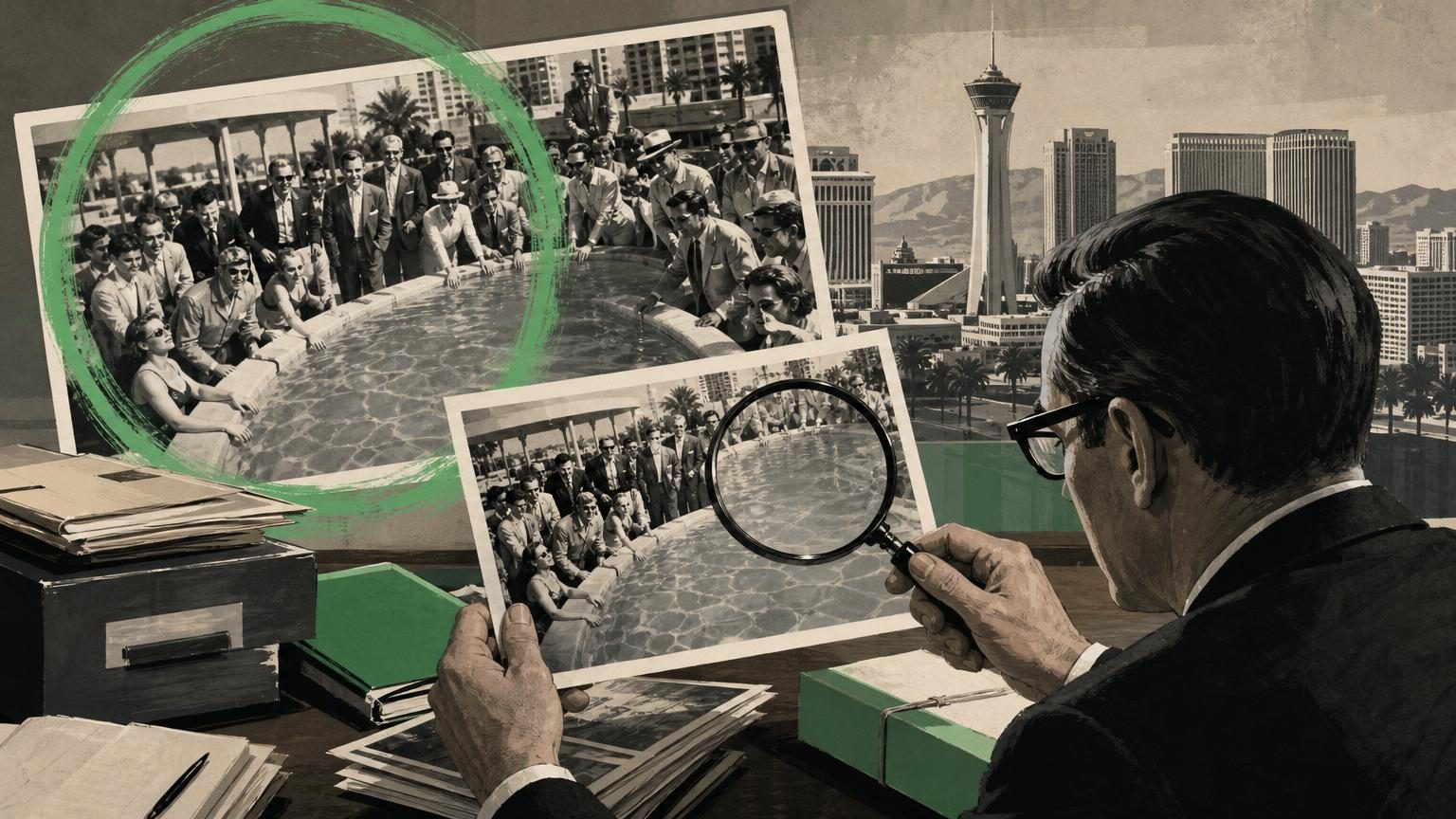
A widely circulated photograph showing guests shooting craps on a table floating in the Sands pool has been debunked as a publicity stunt rather than a real gambling offering, according to Casino.org's Vegas Myths Busted column.
The UNLV Special Collections archive describes the image as showing roughly 2,200 guests trying floating craps in 1954, a caption Casino.org says was never fact-checked after being distributed to newspaper wire services by the resort's publicity team.
Citing historian Larry Gragg's account in the Spring 2008 Nevada Historical Society Quarterly, Casino.org reports that Sands publicity director Al Freeman arranged for a craps table to be placed in the pool on 30 June 1953, then recruited patrons and dressed stickmen in eyeshades and arm garters before Las Vegas News Bureau photographers took the shots that became iconic.
Casino.org notes the stunt was inspired by the song 'Oldest Established Permanent Floating Crap Game' from the Broadway musical Guys and Dolls, in which 'floating' referred to a game that changed locations to dodge police, not one that physically floated on water.
No other photographs have surfaced in more than 73 years showing a different session of pool craps at the Sands, which Casino.org argues would have been among the most photographed gambling experiences in Las Vegas history had it actually continued.
The outlet also points to the organisation behind the image, the Desert Sea News Bureau, which the publicity firm Steve Hannagan and Associates set up in 1948 on behalf of its client, the Las Vegas Chamber of Commerce, before it was renamed the Las Vegas News Bureau in 1955. Casino.org describes the bureau's mandate as selling Las Vegas rather than reporting on it, and notes it has existed only as an archive under the Las Vegas Convention and Visitors Authority since 1992.
Casino.org cites a March 14, 1986 article in the Las Vegas Israelite describing the earlier floating craps game as having 'actually took place in the pool' but having been 'used only once for publicity purposes,' corroborating that the stunt was never repeated commercially.
The column distinguishes the staged Sands photos from a later, genuine pool gambling product: swim-up blackjack, which the Tropicana introduced in 1981 with players wading to stools bolted to the bottom of an indoor pool grotto while dealers worked from a dry pit. The Hard Rock added swim-up blackjack in 1999 and Caesars Palace followed in 2010, according to Casino.org. With the Tropicana and Hard Rock now closed, Caesars Palace remains the only Las Vegas resort still offering the format, the outlet reports.
Casino.org also flags that the same news bureau staged another enduring Las Vegas myth, a Sands 'showgirl tram' that never actually operated, which its earlier Vegas Myths Busted coverage addressed separately.
The Las Vegas Review-Journal is cited in the Casino.org piece as having claimed in an August 2017 article that in-pool gaming had existed since that decade, with the Sands and the Dunes named as the resorts that pioneered it, an assertion Casino.org's reporting disputes based on the lack of corroborating photographic or documentary evidence.