CFTC nominees avoid clear stance on sports event contracts at Senate hearing
Democratic nominee Matt Rowland voiced sympathy for states and tribes while Republican pick Nathan Anonick declined to say whether NFL trades count as sports betting, SBC Americas reported from Tuesday's Senate Agriculture Committee hearing.
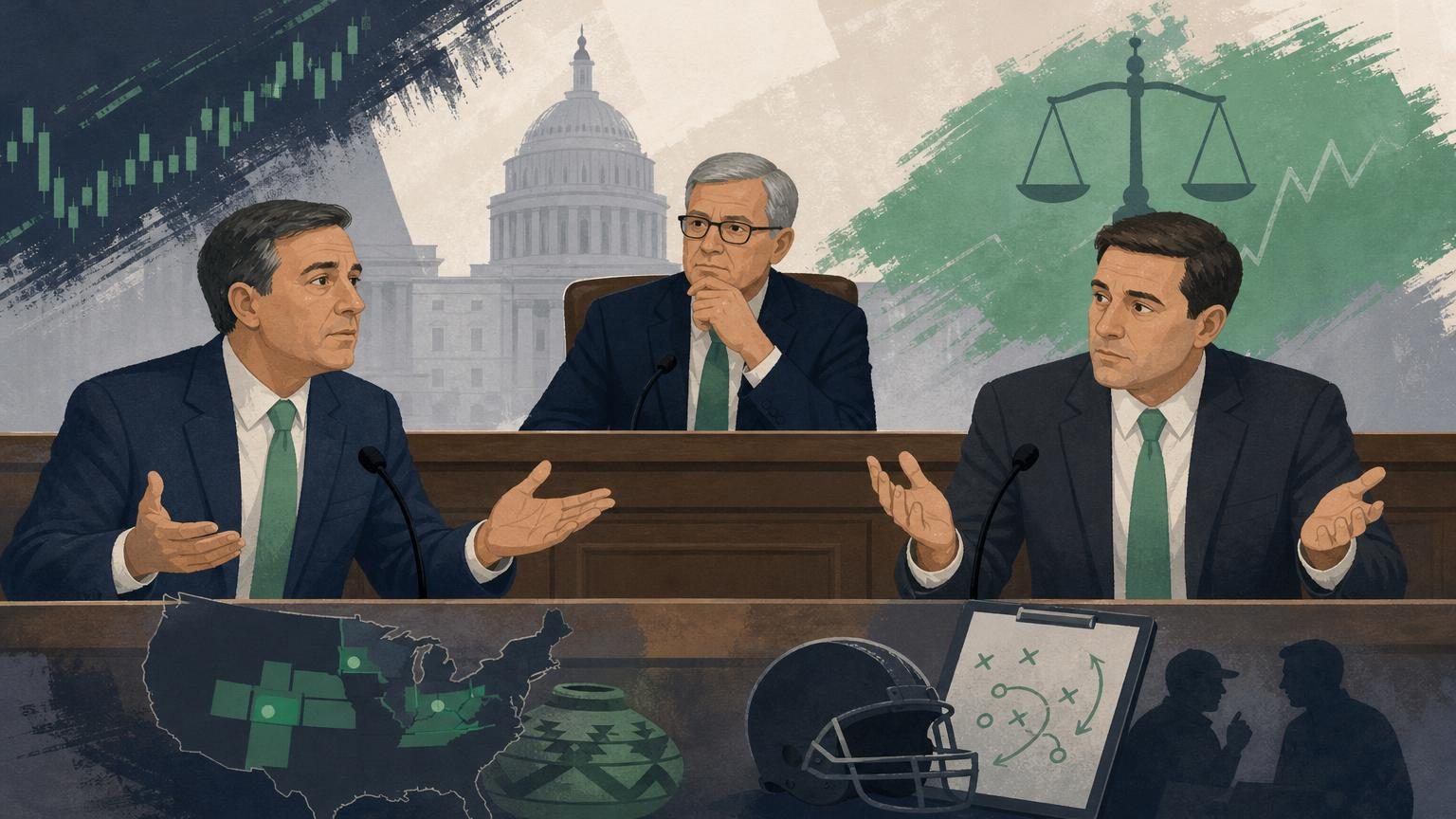
Two nominees for the Commodity Futures Trading Commission largely sidestepped the central question dividing regulators and prediction market operators during a Senate Agriculture Committee hearing on Tuesday, according to SBC Americas.
Democratic nominee Matt Rowland and Republican nominee Nathan Anonick, both put forward by President Donald Trump last week, fielded questions on an agency senators said has drifted from its agricultural remit toward overseeing prediction market technology.
Trump named the pair nine days after Democrats won control of Congress in the midterm elections. The CFTC has operated with a single commissioner, Republican chairman Michael Selig, for nearly a year on what is designed as a five-seat bipartisan body. Selig has used that lone vote to back operators including Kalshi and Polymarket, including in 12 lawsuits filed against states.
Sen. Tina Smith (D-MN) pressed Rowland on the issue, and he told her he was "sympathetic to the points states and tribes have raised," while adding he could not comment extensively because of active litigation.
Smith's state became the first to ban prediction markets in May, a law the CFTC subsequently sued to block. She argued jurisdiction over sports betting rests with states and tribes, citing the 2018 Murphy v. NCAA ruling and the Indian Gaming Regulatory Act. Both nominees agreed that Murphy assigned those powers as described and that CFTC rules bar gaming contracts, but neither would say what separates a sports wager from a sports event contract.
Rowland noted that "there have been courts that held both ways," while Anonick called it "a complex legal question that courts have disagreed" on, describing the issue as "very charged."
The dispute is moving toward the Supreme Court. Appeals judges on the Third Circuit have ruled for Kalshi, while three other appellate courts — the Fourth, Sixth and Ninth Circuits — have ruled for the states. Three petitions are now before the justices.
Sen. Adam Schiff (D-CA) described sports event contracts as the "Wild West" of regulation and accused Selig of reversing an earlier pledge to remain neutral. Schiff said Selig had promised to defer to courts but now encourages operators to disregard court orders, telling the hearing: "I don't know that I've ever been so blatantly deceived by a nominee before."
Schiff led nine Democratic senators in a letter sent to Selig on Monday demanding he reverse that stance and preserve all communications dating to January 2025, when prediction markets began offering sports event contracts. The letter states the direction "directly conflicts with active court orders" in California, Michigan, Nevada and Washington, and sets a deadline of Nov. 23 for a response.
Schiff then put a direct question to Anonick: does a trade on the outcome of an NFL game count as sports betting? Anonick replied that the question, "from a legal perspective, is complex," and said he would rely on fact-finding involving general counsel, outside counsel, tribes, states and other stakeholders rather than offer a position in advance, adding: "I do not have a preconceived position because it would be irresponsible without going through that process."
Sen. Raphael Warnock (D-GA) raised separate concerns about reduced enforcement activity, staff cuts and whether the agency gives preferential treatment to firms connected to Trump. Rowland responded that the law has to be enforced fairly, and Anonick said rules must apply "equally and fairly to everyone involved."
The committee took no vote Tuesday and will keep its record open for two days. Sen. Ben Ray Luján indicated both nominees are expected to be confirmed during the lame-duck session.