Brazil gambling ban faces fresh legal test after Lula win
Following confirmation of Lula's re-election, Brazil's STF and Congress must now decide the fate of the provisional measure that banned betting.
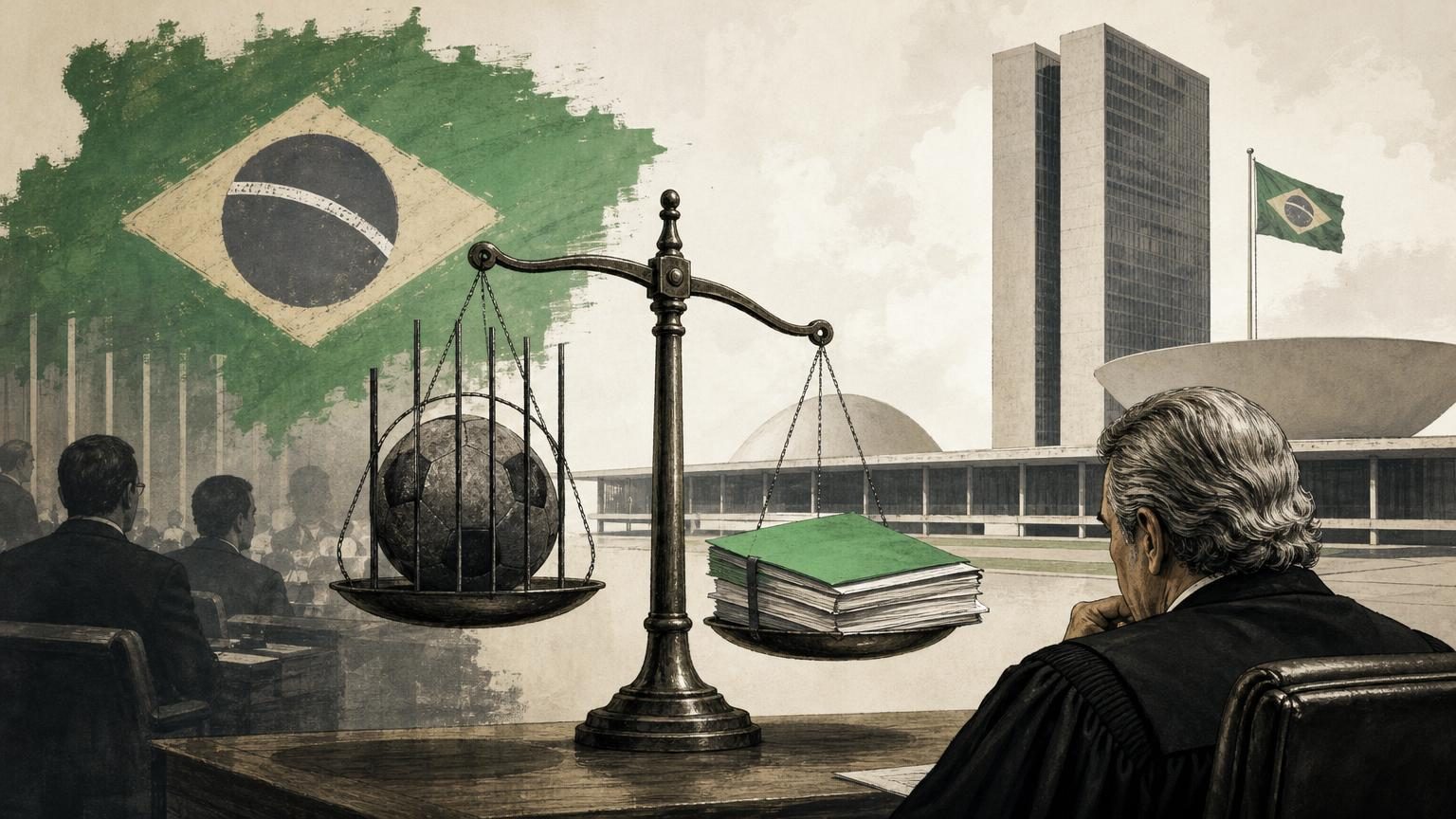
Brazil's Superior Electoral Court (TSE) confirmed on Sunday that President Lula had been re-elected, with almost 52% of the vote against just over 48% for Flávio Bolsonaro, iGaming Business reported.
The margin was narrow, at just over 4.3 million votes, underlining how close the contest was between the two candidates.
Lula's opposition to gambling helped build support for Provisional Measure 1,394, which banned betting in the country, and his campaign team described the election itself as a plebiscite on the industry, according to iGaming Business.
With the result confirmed, attention now turns to two separate battlegrounds where the measure's future will be decided: the Supreme Federal Court (STF) and the National Congress.
Lula had argued throughout the campaign that the ban was intended to protect indebted families, even as betting tax revenue remains significant for public finances. He told voters before the second round that gambling would not return, though the final decision does not rest with him.
The STF must first rule on whether the provisional measure is constitutional, following legal actions brought by sector entities and football clubs. The case's rapporteur, Minister Luiz Fux, has said he would issue a decision once the electoral process concluded.
iGaming Business noted that Fux, as a constitutional and legal expert, has the grounds to determine whether the measure breaks existing contracts, triggers mass layoffs and fails to actually end gambling activity, which is likely to continue in the illegal market regardless of the ban.
The provisional measure has already damaged Brazil's reputation among investors. Operators had paid BRL30 million ($6 million) for five-year concessions plus a further BRL5 million in reserves, only to halt operations for more than 30 days.
That suspension cost the sector an estimated BRL1.2 billion in revenue, iGaming Business reported, while the government itself lost more than BRL400 million in tax receipts, spanning direct GGR tax, Corporate Income Tax, Social Contribution on Net Profit, PIS/Cofins and social security contributions.
Licences expired on Sunday. Should the STF strike down the measure, the cancellation of those licences would lose its validity.
In Congress, a Joint Committee on Provisional Measure 1,394 has named 12 senators and 13 representatives as full members, with six senators and seven representatives as alternates, out of a total committee of 26 senators and 26 representatives. Neither a president nor a rapporteur has yet been appointed, and the committee has not been formally installed.
Congress has until 25 November to vote on the measure, with the option of a further 60-day extension if the collegiate body agrees. From 9 November, the legislative agenda will be blocked until the vote takes place.
Lula's capacity to manage that process is complicated by the balance of power in the chambers. The PL, the party of his election opponent, holds the largest blocs in both houses, limiting the leverage he previously used to secure favourable votes.
Early indications in Congress point towards betting being allowed to return only for sports wagering, without online casino products, according to iGaming Business. Whether operators would need to resubmit licence applications, given that permits are already invalid as of 25 October, remains a question for Congress to resolve.