Brazil revokes 85 sports betting licences under Lula decree
Nearly 190 brands lose authorisation to operate in Brazil as a provisional measure takes effect, with trade body IBJR warning of a surge in illegal betting sites.
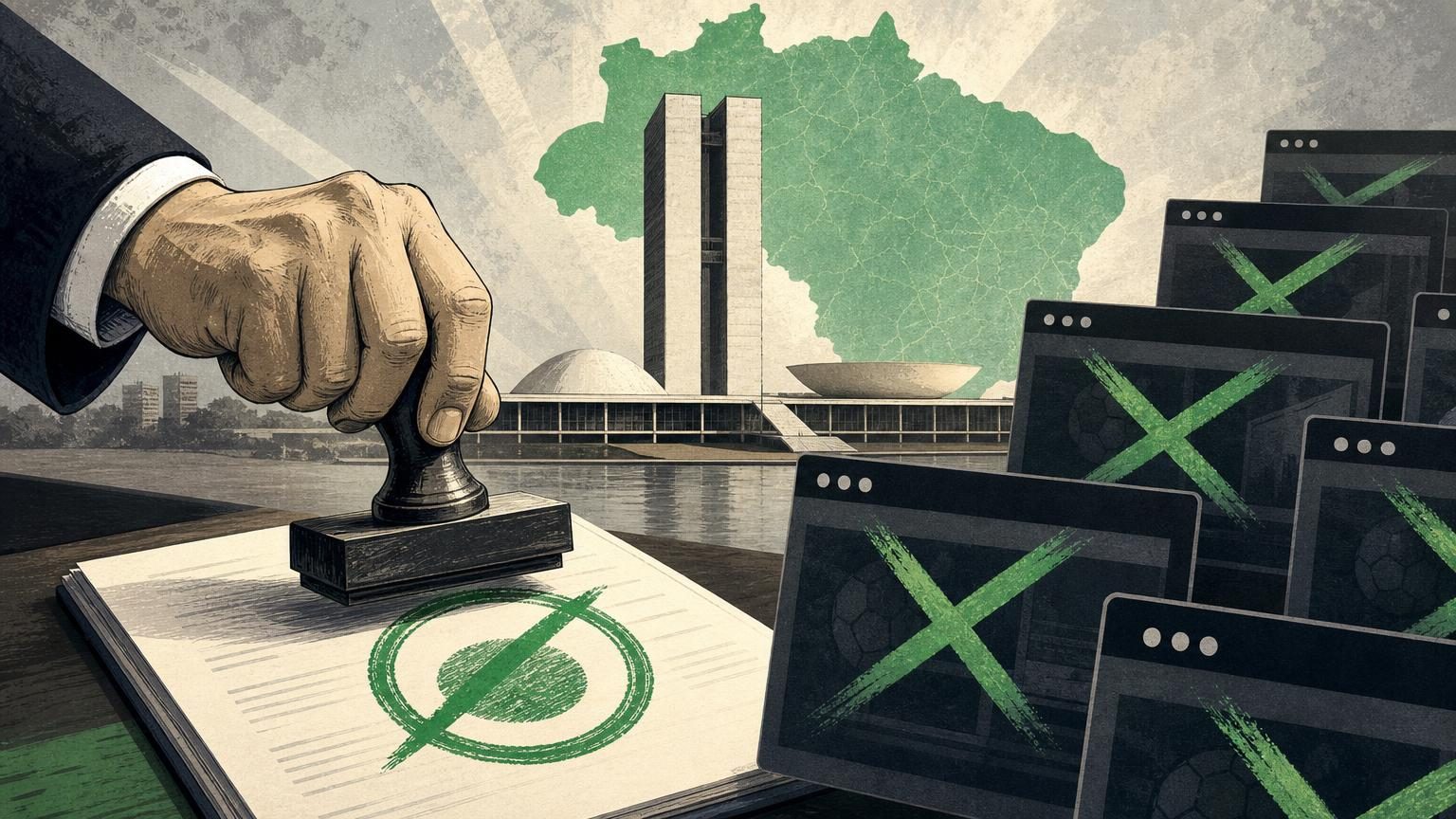
Brazil's sports betting operators woke up on 26 October without their licences, after 85 authorisations issued under the country's regulated market were revoked, according to iGaming Business.
The revocation affects almost 190 brands that had been trading legally. Operators had paid a BRL30 million ($6 million) grant fee plus a BRL5 million security deposit to enter the market, none of which will be refunded.
The licences fell under Provisional Measure 1,394, issued by President Lula on the night of 25 September and taking effect immediately. The measure, which bans online betting to "protect families from indebtedness," has been described by critics as an electioneering move. It gave operators a 30-day window before their authorisations expired and only days to return client deposits, while blocking them from accepting new bets or deposits from the moment it was signed.
The sector had been regulated for a year and nine months under rules set by the Secretariat of Prizes and Bets, including accredited international testing labs, biometric KYC checks and problem-gambling programmes, alongside an oversight fee funding supervision of the market.
Carlos Lima, president of the Brazilian Institute for Responsible Gaming, said the abrupt change undermines the basis on which operators invested. "Legal certainty translates into the predictability necessary for long-term investments," Lima said, noting that companies had structured operations for amortisation over 60 months.
"On 25 October, contractual agreements designed to last five years will be abruptly interrupted, without any maturation period or return on investment," Lima added. He put total grant payments at roughly BRL2.6 billion and capital contributions at around BRL7.5 billion, generating what he described as a BRL28 billion multiplier effect across the economy.
The Brazilian Institute for Responsible Gaming and the National Association of Games and Lotteries have filed lawsuits at the Supreme Federal Court challenging the measure's constitutionality, joined by the Brazilian Association of Radio and Television Broadcasters and several football clubs. The court has yet to rule.
Parliament must separately review the provisional measure by 25 November, with the option to extend scrutiny by 60 days to March 2027. A Joint Committee has had members appointed but still lacks a president or rapporteur, and from 9 November its absence will block the wider congressional agenda. Nearly 100 amendments have been tabled, most aiming to preserve betting activity while excluding online casino games.
Lima questioned what follows if the measure is ultimately rejected by Congress. "If Congress rejects the provisional measure, what happens to the expired authorizations?" he asked. "Will it be necessary to pay a new fee? The situation remains legally uncertain."
He warned that demand for betting will not disappear, pointing to a study by LCA Consultores estimating the illegal market already accounts for between 38% and 44% of total betting activity in Brazil, with more than 30,000 unlicensed sites now operating.
"These operations do not collect taxes in Brazil, do not require identity verification or facial recognition," Lima said. "They do not provide self-exclusion tools and operate completely outside the scope of oversight by the Council for the Control of Financial Activities (Coaf) and the Federal Police."
He added that regulated firms continue to back tighter rules rather than a ban, arguing that strengthening the legal framework, not removing it, is what protects consumers from being pushed toward unregulated operators.