Iowa Player Sues Louisiana Casinos Over Police ID Seizure
Eric Michael Temeyer alleges Golden Nugget Lake Charles and L'Auberge Lake Charles worked with police to force identification from him after he was flagged as a skilled blackjack player.
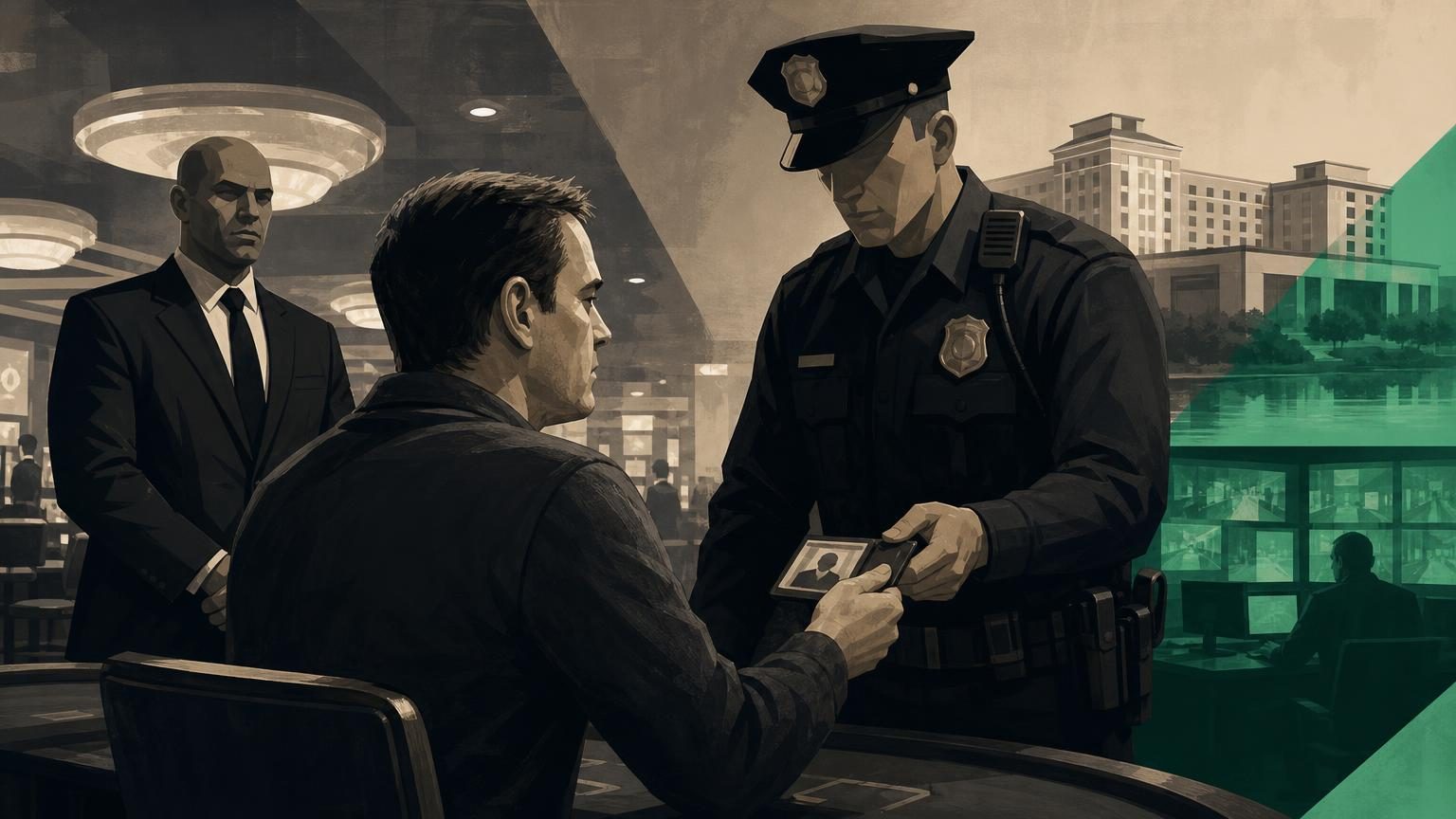
A blackjack player from Iowa has filed a federal lawsuit accusing two Louisiana casinos and several police officers of conspiring to obtain his identity after he was identified as a skilled, or "advantage," player.
Eric Michael Temeyer's complaint, filed Tuesday in the Western District of Louisiana, names Golden Nugget Lake Charles and neighbouring L'Auberge Lake Charles as defendants alongside the officers involved. It alleges Fourth Amendment violations, civil conspiracy and breaches of state law, as reported by Casino.org News.
The complaint states that Temeyer sat at the blackjack tables at L'Auberge from around 5pm on 2 November 2025 through to 2:40am the next morning. When security staff asked for identification, he declined. He then tried to cash out roughly $2,800 in chips, but a cashier allegedly refused to pay him without ID.
Temeyer then went to the adjacent Golden Nugget, where security again asked for identification. He again declined and was asked to leave, which he did.
Police confronted him in the parking lot as he stood by his vehicle. When an officer demanded ID, Temeyer pushed back, saying officers could not compel him to produce identification without reasonable suspicion that a crime had occurred. "That's not how it works here," the officer allegedly replied before placing him in handcuffs.
Temeyer's pockets were then searched and his identification taken, which the officer passed to a Golden Nugget security employee; that employee is alleged to have photographed the document along with his licence plate and vehicle. Temeyer also claims an officer entered his vehicle without consent to examine an obscured VIN while he sat confined in a police car. He was released at around 3:36am without being cited or charged.
Temeyer went back to L'Auberge later that same day to try to redeem his chips. A cashier again refused to pay him without ID, but after a phone call he was paid without one, with the cashier allegedly saying, "There you go, Eric." Temeyer says the remark led him to believe his information had already been shared between the two properties.
The lawsuit cites a Louisiana statute barring casinos from excluding patrons solely on the basis of their skill level, which states that "a person may not be excluded from a gaming establishment operated by a licensee or the casino operator for reasons based solely on the skill level of the person." The complaint claims the casinos were after his ID so they could bar him as a legitimate skilled player, not because they suspected him of cheating.
Card counting, the technique most commonly associated with advantage blackjack play, involves tracking dealt cards to judge when the remaining shoe favours the player. It is not illegal, but casinos routinely eject players suspected of using it. The complaint stops short of labelling Temeyer a card counter outright.
The complaint also raises broader concerns about surveillance databases that let casinos share information on suspected advantage players, potentially affecting their ability to gamble at other properties.
Among its nine counts, the lawsuit asks for compensatory damages, punitive damages against the individual defendants, and attorney's fees, though it does not specify a total monetary demand. Casino.org News said it had contacted L'Auberge for comment but had not received a response by the time of publication.