India's PROG Act closes skill-versus-chance route for real-money gaming
A new federal framework bans online money games in India regardless of skill or chance, while leaving esports and social gaming as the remaining legal pathways, lawyers say.
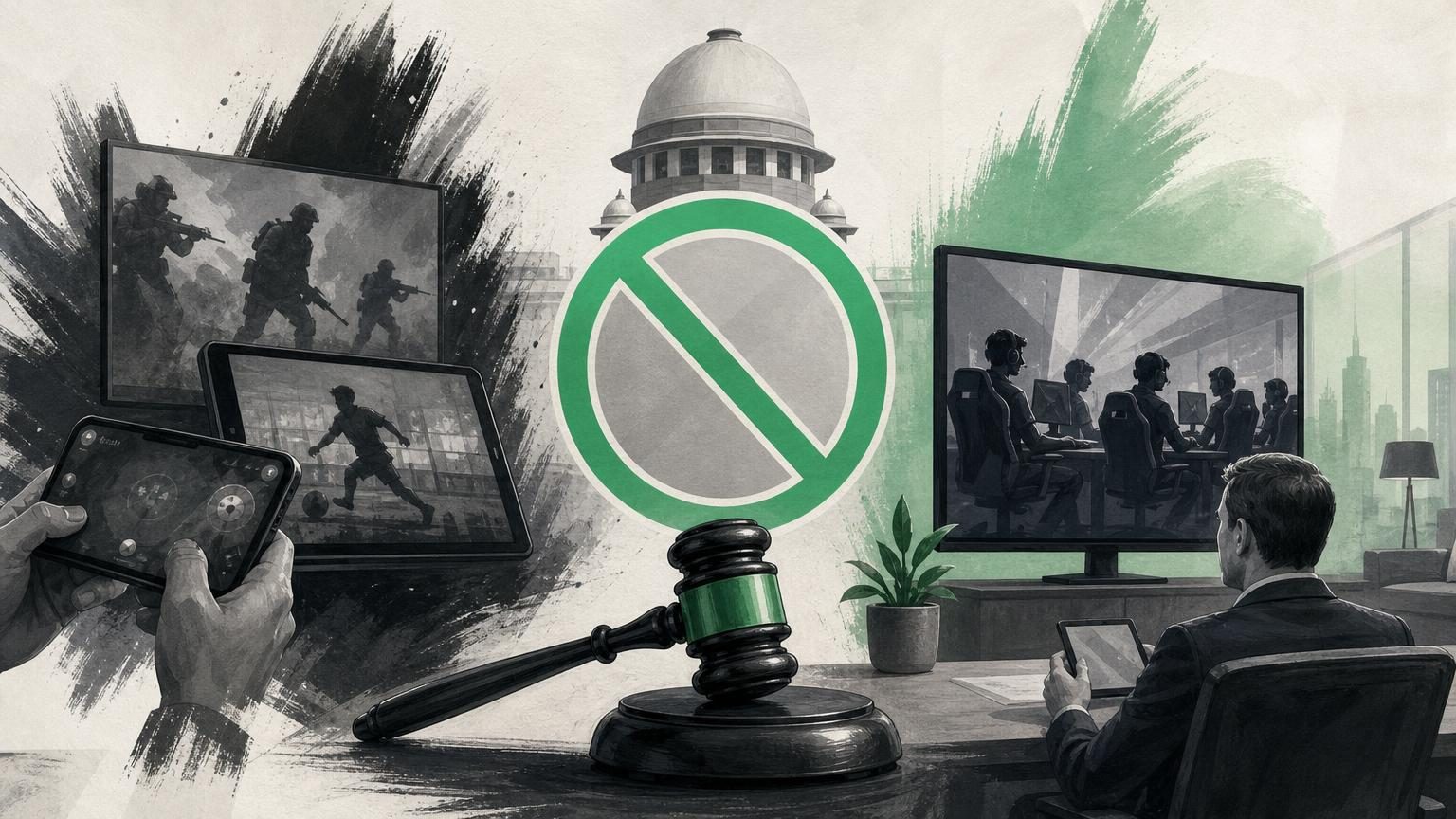
India's Promotion and Regulation of Online Gaming Act, 2025, together with the Online Gaming Rules 2026, took effect on 1 May, prohibiting online money gaming nationwide. The federal framework followed a Supreme Court ban handed down in August 2025 and marks the most significant overhaul of the country's gaming law in decades.
Section 2 of the Act splits digital gaming into three categories: online money games, esports and online social games. Aaron Kamath, co-head of the Tech, Digital and Commercial Law Practice at Nishith Desai Associates, told iGaming Business that the definition of an online money game is deliberately wide, covering any payment made with credits, coins, tokens or similar items, real or virtual, bought directly or indirectly with money.
"In practical terms, almost any format that combines a paid entry with a monetary or money-equivalent reward is now caught," Kamath said, adding that this is why "the long-running skill-versus-chance debate has lost its relevance for these products."
Under the Act, a game counts as an online real-money game if users pay, deposit or stake money or value with an expectation of monetary return or other enrichment, irrespective of skill, chance or both.
A doctrine the law has set aside
That marks a sharp break from the position Indian courts had taken since the Supreme Court's 1957 rulings, which held that competitions involving substantial skill could operate as protected business activity under Article 19(1)(g) of the Constitution, unlike gambling. The Punjab & Haryana High Court and the Bombay High Court later applied that reasoning to find that Dream11's fantasy sports format was predominantly skill-based rather than gambling, though those rulings never amounted to a blanket exemption for the sector. Under the PROG Act, that distinction no longer determines whether a real-money product is lawful.
The prohibition reaches beyond operators themselves. Advertising an online money game or facilitating payments for one is now a criminal offence, carrying imprisonment of up to three years and a fine of up to INR 1 crore (roughly $106,000), with tougher penalties for repeat offenders. The rules also apply to offshore operators serving Indian users, and the regulator can order banks and payment providers to halt related transactions and block non-compliant websites and apps.
Two categories remain open for commercial activity. Esports events require recognition under the National Sports Governance Act, 2025, must involve no betting, wagering or staking, and are subject to registration under the 2026 Rules; registered events can still charge entry fees and pay performance-based prize money. Online social games, offered for recreation or skill development without monetary stakes, can be monetised through subscriptions, one-off access fees, advertising and in-game purchases.
Kamath described this as a narrower but still "meaningful, commercial space" for operators willing to restructure their products. He noted that leading real-money operators including Dream11, MPL, Zupee and PokerBaazi suspended their cash-game offerings within days of the Act's passage in August 2025, well before the May commencement date, with several, including Dream11, shifting to free-to-play models supported by advertising and sponsorship.
Despite the clarity on real-money gaming's prohibition, analysts cited by iGaming Business point to unresolved questions, including how the boundaries of a regulated game will be drawn, who carries compliance responsibility across the supply chain, how esports recognition will operate in practice, and how payment arrangements and newer monetisation models will be treated. Further regulatory guidance is expected to narrow those gaps and reduce the risk of operators falling foul of the law inadvertently.