NFL Made Saquon Barkley Divest Polymarket Stake, League Confirms
The Eagles running back says the NFL's gambling rules forced him out of prediction market Polymarket, as the league pushes the Supreme Court to treat such platforms as gambling.
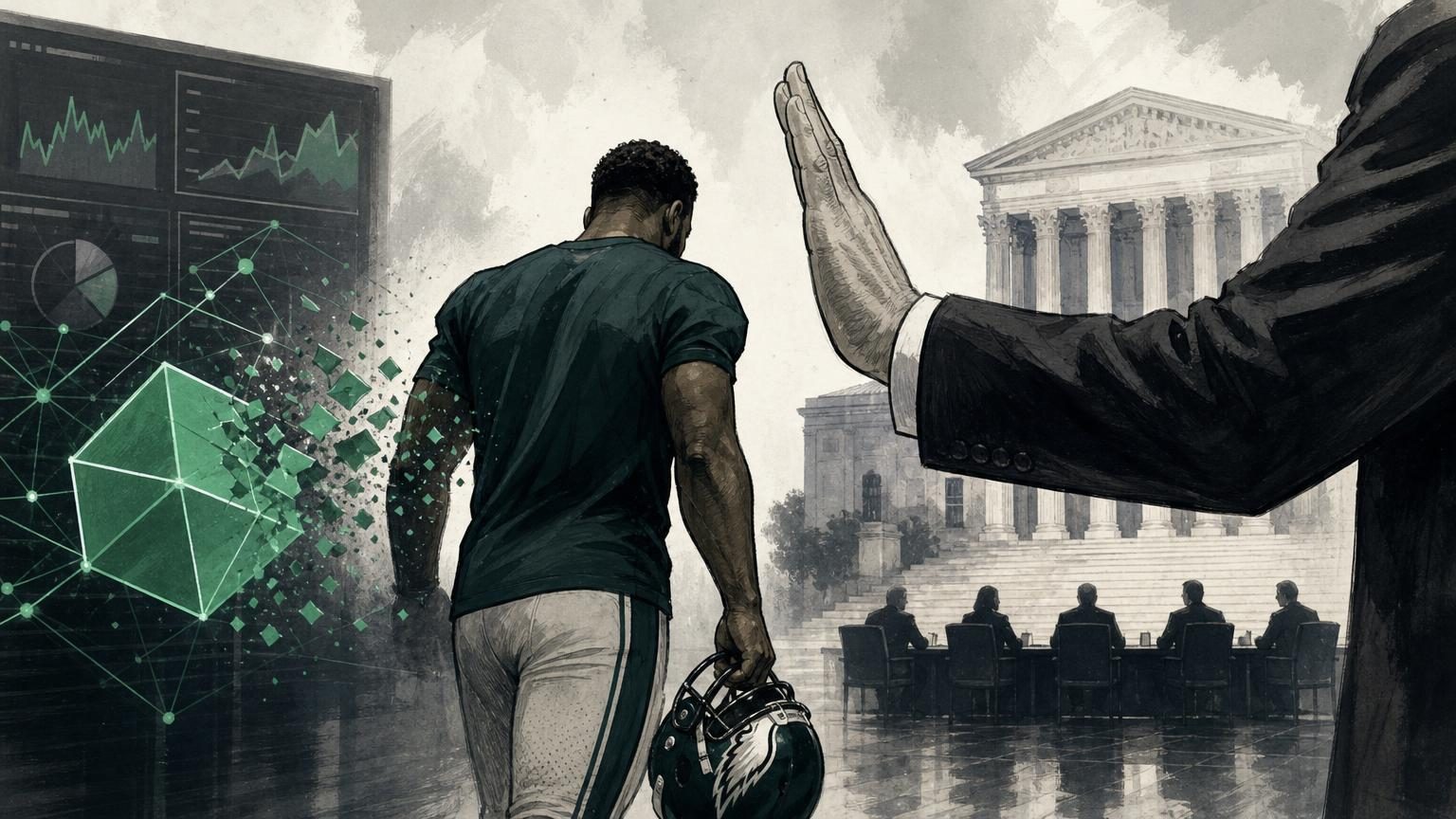
Philadelphia Eagles running back Saquon Barkley has confirmed he was required to sell his stake in Polymarket, the decentralised prediction market, after the NFL classified such platforms under its Gambling Policy.
Barkley told Front Office Sports that he had previously held a position in Polymarket but was told he could not remain invested. "I was in it before, but no bueno," Barkley said. "I am not allowed to be in that."
Barkley is an active investor in several technology ventures, including fintech company Ramp and defence manufacturer Anduril Industries, according to Casino.org News. He was first reported to hold a Polymarket stake by The Profile in September 2025.
The NFL's Gambling Policy generally bars players and other covered personnel from directly owning shares in publicly traded gambling companies, though index and mutual funds containing gambling stocks remain permitted.
Once Polymarket began offering sports contracts in late 2025, the league updated the policy to treat prediction markets as gambling enterprises falling under the same restrictions as casinos and sportsbooks.
An NFL spokesperson said the league views prediction markets as gambling entities and that players are not permitted to invest in or endorse a platform such as Polymarket under the policy.
The Gambling Policy itself states that covered personnel may not work for, own or operate, directly or indirectly, any casino or other gambling-related enterprise, regardless of whether that operation runs a sportsbook or simply accepts wagers on sport.
Barkley earned roughly $50 million during his time with the New York Giants before signing a three-year, $37.75 million contract with the Eagles in 2024, which included $26 million guaranteed, Casino.org News reported.
The episode comes as the NFL takes an increasingly firm public stance against sports prediction markets, even as it maintains commercial partnerships with licensed sportsbooks.
Earlier this month the league filed an amicus brief with the US Supreme Court backing New Jersey's push to have the court resolve whether states can apply their own gambling and sports betting laws to sports event contracts regulated federally by the Commodity Futures Trading Commission.
The NFL's filing argued that the CFTC is not equipped to regulate sports prediction markets or guard against manipulation of the kind state gaming authorities are designed to catch, stating that preserving the integrity of its games is the league's highest priority.
The Supreme Court has not yet said whether it will take up the case, which centres on whether prediction markets like Polymarket should be treated as a form of sports betting subject to state oversight rather than solely to federal commodities regulation.