CFTC Enforcement Chief Pushes Registration For Offshore Prediction Platforms
At New York's NEXTPredict conference, CFTC enforcement director David Miller called for offshore prediction market platforms to register with the agency as parlay-style contracts and league integrity concerns dominated discussion.
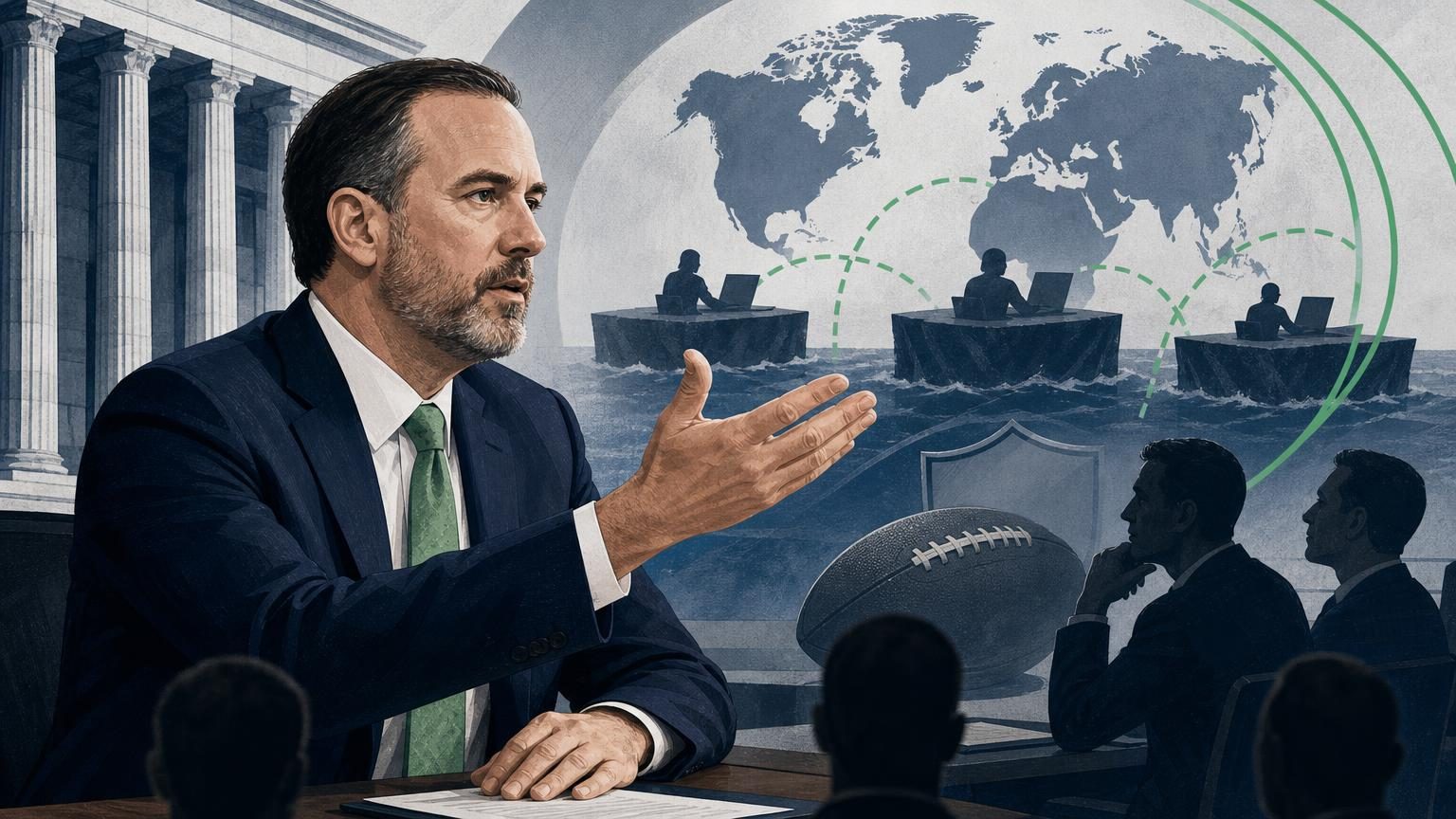
Federal regulators and executives from across the prediction market sector gathered in New York on Thursday for the NEXTPredict conference, where oversight, booming parlay volumes and sports integrity formed the bulk of the agenda, according to Legal Sports Report.
David Miller, the Commodity Futures Trading Commission's director of enforcement, said the agency is pressing large offshore platforms serving U.S. customers to register with the CFTC so their activity can be properly monitored.
Pressed on Polymarket's decision this week to pull a market tied to an alleged rape at Cornell University from its international platform, Miller would not discuss internal agency conversations. He pointed instead to advisories the CFTC has already issued warning that some event contracts risk breaching federal rules or inviting manipulation, naming injury-related sports contracts as an example of the concern.
“We want to make sure that the FTXs don’t happen again,” Miller said, invoking the collapsed cryptocurrency exchange.
On insider trading, Miller was asked a hypothetical about whether Venezuelan President Nicolás Maduro could place a trade on his own removal after spotting helicopters closing in on his compound. Miller said such a trade might not technically breach federal insider trading law, though it would likely fall foul of an exchange's own rulebook. The question echoed a live federal case accusing a U.S. Special Forces soldier of using classified details about the operation targeting Maduro to generate more than $400,000 on Polymarket.
Separately, Bernard Marantelli, chief executive of White Swan Predicts, told the conference that parlay-style combination contracts carried roughly $18 billion in industrywide risk exposure over the seven days to Tuesday. His firm alone quotes around 120 million parlays a day, he said, with weekly growth of about 20% through the opening five weeks of the NFL season. Marantelli projected exposure could hit $30 billion by Christmas or early January.
“The growth rate is out of control, really,” he said.
Marantelli noted the structure lets multiple market makers compete to price identical parlays, a dynamic that can sharpen pricing for customers while opening a new income stream for firms such as his own alongside established sportsbooks including DraftKings and FanDuel. Polymarket's RFQ technical lead, Jacob Meleka, said the platform fields thousands of quote requests and returns tens of thousands of quotes every second.
Integrity concerns ran through much of the day. Robinhood vice president JB Mackenzie said his firm has consulted directly with professional leagues and steered clear of certain player-focused contracts the NFL and NBA specifically asked operators to avoid, judging the possible revenue not worth the reputational exposure.
The remarks followed a Supreme Court filing two weeks earlier in which the NFL stated that the CFTC and prediction market operators, Kalshi among them, had pushed back against league requests to pull contracts it viewed as vulnerable to manipulation.
DraftKings chief executive Jason Robins used the panel to stress his company's standing with the NFL, suggesting the league trusts DraftKings' safeguards more than those of some rivals. “I do think that we built the collaborative relationship where they feel more comfortable that we’re taking the safeguard measures that are necessary and maybe don’t feel as much that way of some of the other participants in the market,” Robins said.
Jenni Kennedy, senior director of investigations at the International Tennis Integrity Agency, said her organisation has seen an anecdotal rise in courtsiders turning to prediction markets, where instant settlement removes the betting delays sportsbooks use to limit integrity risk. “More worryingly for us is we’re also seeing an increase in those courtsiders trying to engage with players,” Kennedy said.