Nebraska Study Ties Online Sports Betting to Savings Depletion
University of Nebraska research finds sports bettors often divert money from savings and debt repayments rather than discretionary spending, with lower-income households hit hardest.
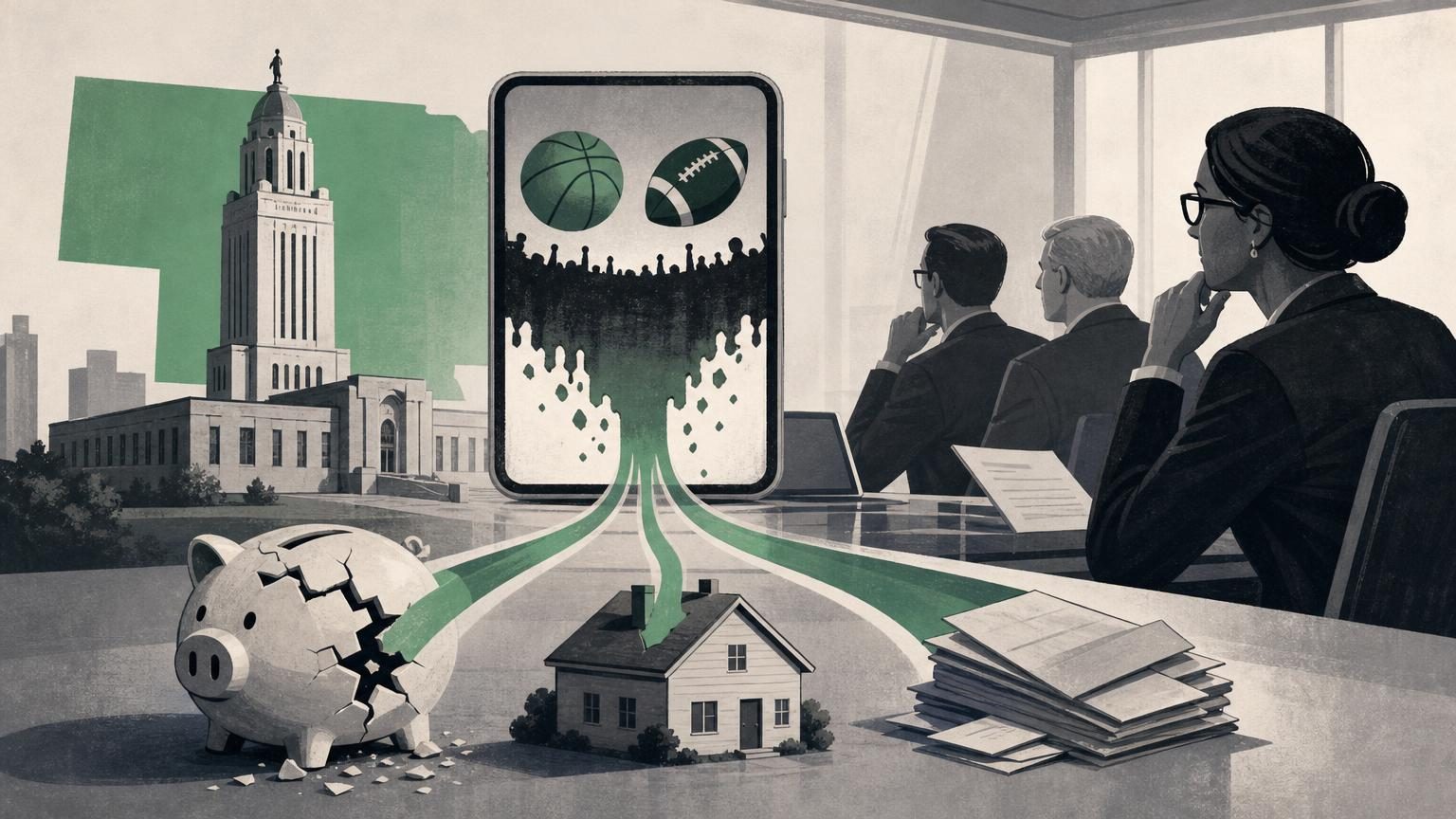
A study from the University of Nebraska has found that online sports betting can erode household savings and retirement accounts, rather than simply drawing on money that consumers had earmarked for entertainment.
The research, led by Justin Balthrop, an assistant professor of finance at the university's Lincoln campus, was published under the title "Gambling Away Stability: Sports Betting's Impact on Vulnerable Households," as reported by Casino.org News.
Balthrop's team examined financial transactions from 183,821 US households to track how spending patterns shifted after states legalised online sports betting. More than two dozen states have done so.
"Online sports betting does more than compete for consumers' entertainment dollars," Balthrop said. "It can lead to spending money they planned to invest, particularly among those already facing financial constraints."
The study found that money staked on sports wagering rarely substitutes for other consumer spending or other forms of gambling. Instead, bettors tend to redirect funds from savings, investments and debt obligations, with the most frequent bettors cutting their savings and debt payments by the largest margins.
Balthrop attributes part of this pattern to marketing from the sports betting industry, which he said fosters a belief among consumers that they can consistently outperform the bookmaker. "People can be fooled into believing they're an expert in this in a way that a lot of other forms of gambling can't do," he said.
"People are taking money out of their retirement and out of their savings," Balthrop added. "It is not synonymous with entertainment funds in practice. It's synonymous with money that you should be saving or putting to some more productive use."
Balthrop, who describes himself as an "experienced sports bettor," spent nearly two decades working in quantitative investment management before joining the Lincoln faculty, according to Casino.org News.
The study found the effect was not evenly distributed. Lower-income households were disproportionately likely to redirect savings into sports betting, and those with limited savings bore the greatest financial consequences, including higher credit card debt and smaller retirement balances.
Balthrop said the losses extend beyond the money wagered today. "It's the social cost that's going to show up 20 to 30 years from now. I don't want to abolish sports betting, but we need guardrails," he said.
The findings arrive against the backdrop of Nebraska's own ballot decision on the issue. Voters in the state rejected a measure to legalise online sports wagering in the 3 November election.
Supporters of the measure had argued that legal online sportsbooks would generate tax revenue that could ease property tax burdens, but opposition campaigns emphasising potential social and economic costs ultimately prevailed with the majority of voters.
As a result, sports betting in Nebraska remains confined to in-person wagers placed at the state's horse racetrack casinos, with no online or mobile betting option currently permitted.