Indiana Voters Reject Casino Referendums in Three Northeast Counties
Allen, DeKalb and Steuben county voters voted down ballot measures that would have authorised a new casino in Northeast Indiana, leaving the state's licensed gaming footprint unchanged.
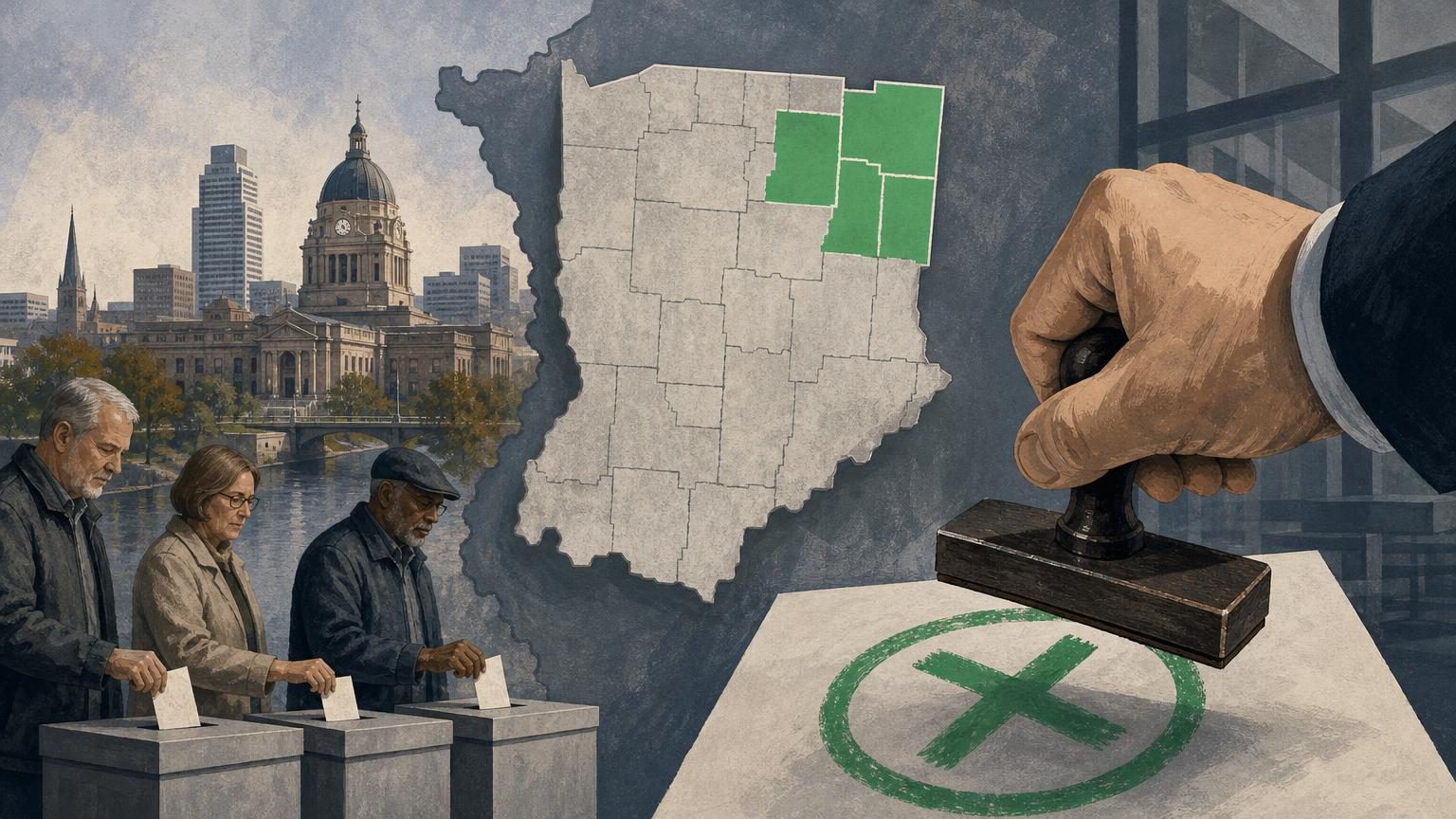
Voters in Allen, DeKalb and Steuben counties rejected local referendums on Election Day that would have permitted an inland casino with slot machines, table games and sports betting in Northeast Indiana, according to Casino.org News.
The ballot measures asked residents whether to authorise casino gambling in their county. Allen County voters rejected the measure by roughly 60%, DeKalb County opposed it by about 65%, and Steuben County voters turned it down by nearly 60%, Casino.org News reported.
The referendums followed House Bill 1038, legislation Indiana Governor Mike Braun signed in March after Full House Resorts lobbied lawmakers to let it relocate its gaming licence from its Rising Star Casino in Rising Sun to a more lucrative northeastern market.
As the bill moved through the General Assembly, lawmakers amended it to drop the exclusive development rights Full House had sought, opening the opportunity to any casino operator in the country. They also attached a $150 million licensing fee and a minimum investment requirement of $500 million, conditions that Casino.org News said largely erased Full House's interest in the project.
By the time Braun signed the legislation, Full House chief executive Daniel Lee said of the company's existing Rising Star property that it "makes money and we will continue to do that for our shareholders," according to Casino.org News.
No major casino developer backed the local campaigns in favour of the measures or provided financial support, the outlet reported. Opposition instead coalesced around a campaign called Save Fort Wayne, which ran advertising warning that a casino would bring increased addiction, divorce, bankruptcy, mental health problems, child neglect, human trafficking and poverty.
Fort Wayne, in Allen County, had been viewed as the most commercially attractive site for a new casino among the three. A study commissioned by the Indiana Gaming Commission and carried out by commercial real estate firm CBRE projected that a casino there would create close to 1,000 permanent jobs and generate $28.1 million a year in local tax revenue.
CBRE's analysis further put the project's annual benefit to local government at $13.1 million, drawn from taxes on food and beverage sales, hotel stays and property, and the firm concluded the project would offer "long-term value for the local community, with positive revenue generation and job creation," per Casino.org News.
Those projections did not sway voters in any of the three counties. With all three referendums defeated, Indiana's commercial casino market stays capped at 13 licensed properties.
Through September 2026, those 13 casinos generated $1.84 billion in gross gaming revenue from slot machines and table games, while the state's licensed sportsbooks produced $402.6 million in revenue over the same period, according to figures cited by Casino.org News.