Studios Warn Staff Off Betting on Film and TV Prediction Markets
Entertainment companies are threatening to fire employees who trade on prediction markets using inside knowledge of casting, earnings or release dates, Casino.org reports.
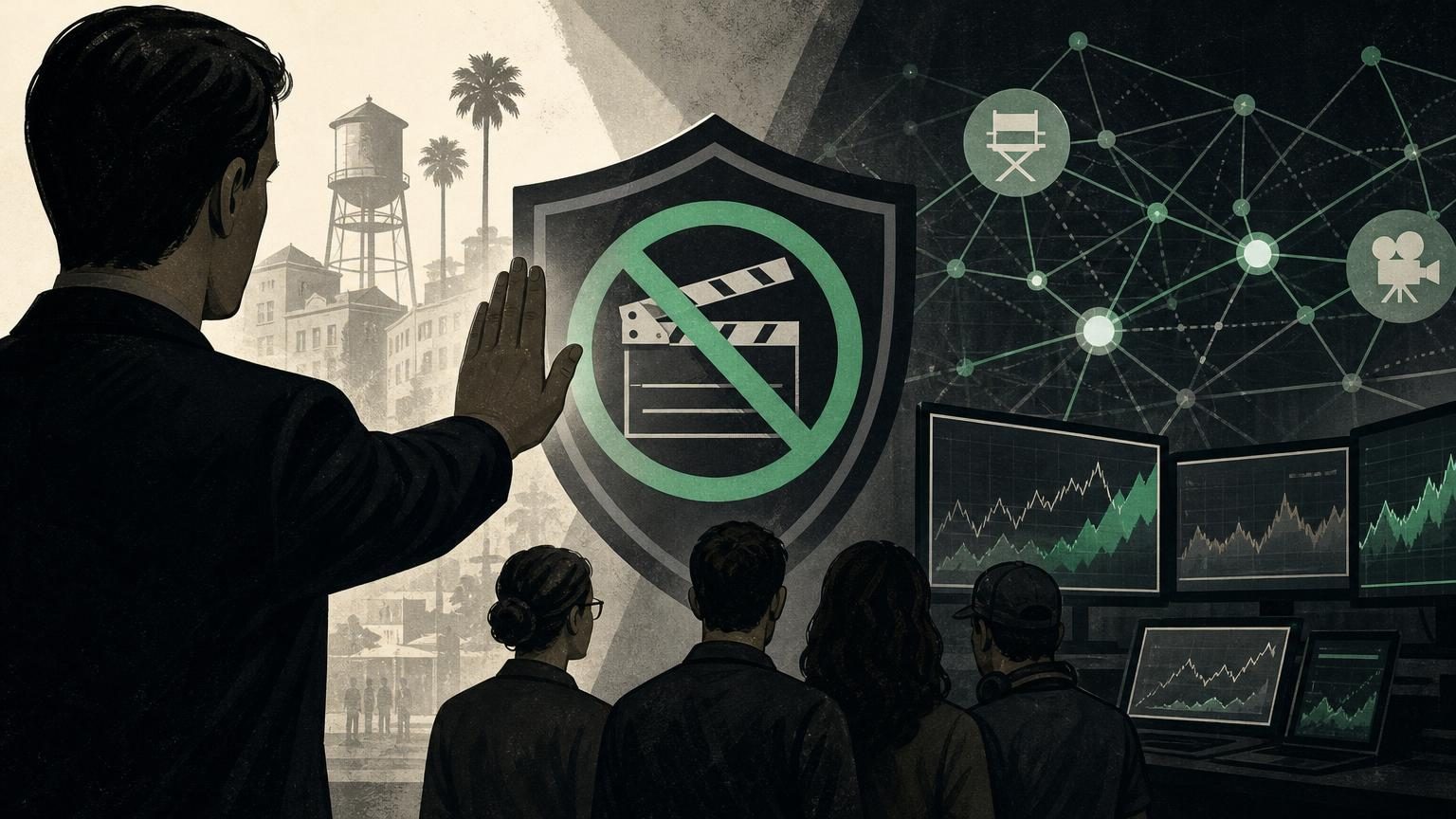
Film and television studios have begun formally warning production staff against trading on prediction markets, according to Casino.org News, which cited reporting from The Hollywood Reporter.
The warnings tell employees they risk losing their jobs if they place bets tied to non-public information such as studio earnings, casting decisions or release dates. Passing such details to friends or relatives so they can trade is also barred, Hollywood Reporter writer James Hibberd reported.
The crackdown follows a case in February in which a video editor working for YouTuber MrBeast was fired after making $5,000 trading shares on markets tied to the creator's content. The trades were flagged as statistically anomalous, prompting the dismissal.
Prediction markets on who will play the next James Bond were also pulled after a surge of money backed actor Callum Turner, even though most industry speculation had favoured Jack Lowden. Integrity monitors raised concerns that the betting pattern suggested a leak, though no casting decision has been confirmed.
Prediction markets let users stake money on the outcome of real-world events, and entertainment contracts have become some of the most heavily traded after sports and elections. Markets tracking the Best Picture Oscar currently favour "The Odyssey" at 60 cents, while Ezra French is priced at 58 cents to win season 35 of "Dancing with the Stars." A market asking whether "The Angry Birds Movie 3" will score above 50 on Rotten Tomatoes has "Yes" at 59 cents.
Other contracts cover whether Donald Trump will appear on "Saturday Night Live" (11 cents), whether Elon Musk will cameo in the next Superman film (5 cents), and whether Joe Rogan will join "60 Minutes" as a correspondent (3 cents).
Even as studios and networks impose bans, enforcement remains difficult. Columbia Law School professor Joshua Mitts, who studies securities law, told Casino.org that "the vast majority of informed trading activity is very difficult, if not impossible, to detect."
Mitts said platforms nonetheless have a commercial incentive to police insider trading themselves. "If you become known as the platform where all the insiders trade, then your average customer won't want to trade there," he said.
Mitts' research into markets regulated by the Commodity Futures Trading Commission found 210,000 suspicious bets placed between February 2024 and February 2026, generating $143 million in profit. Those accounts recorded a 70% win rate, which Mitts described as "well in excess of chance."
Trading volumes on prediction markets have grown sharply since late 2025, when platforms began adding sports contracts alongside political and cultural markets, a shift that has drawn wider scrutiny to how the sector monitors informed or inside trading across industries beyond entertainment.