Kalshi faces Supreme Court decision point after Ninth Circuit ruling
A circuit split over sports event contracts heads toward the Supreme Court just as a Democratic sweep in Congress threatens to reopen fights over the Court's composition.
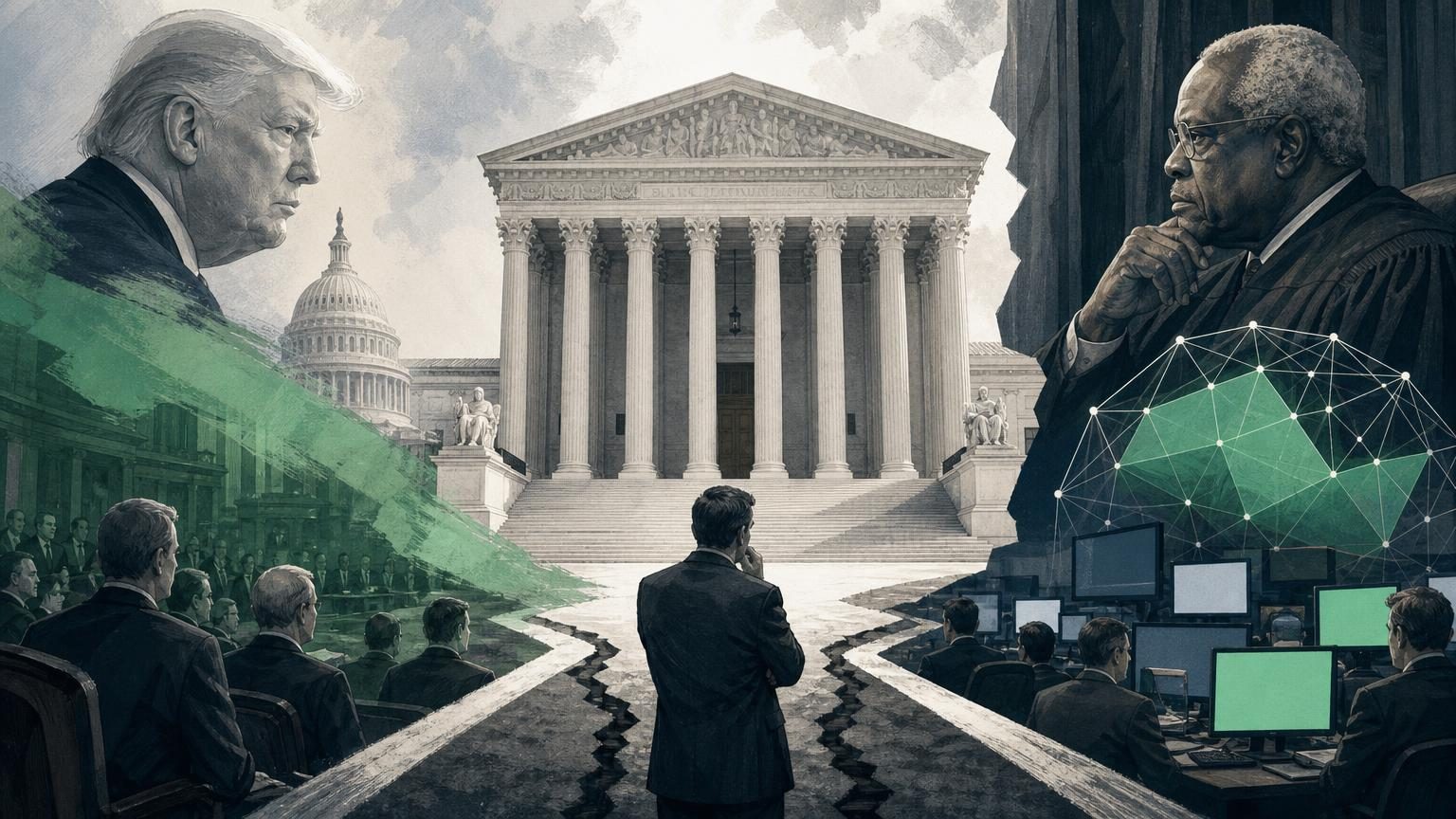
The US Court of Appeals for the Ninth Circuit has denied Kalshi's petition for a rehearing on whether sports event contracts can be lawfully classified as swaps, a ruling that gaming industry attorney Daniel Wallach says gives the prediction market operator 90 days to petition the Supreme Court for review, iGaming Business reported.
The denial deepens a circuit split that has built over recent months, as appellate courts have reached divergent conclusions on the legality of sports-linked event contracts. That split is widely seen as the kind of unresolved, high-stakes disagreement that increases the odds the Supreme Court will agree to hear a case.
On Polymarket, a contract tracking whether the justices will grant certiorari by the end of 2026 had peaked at 82% earlier in the year, with traders most confident in the window between the Super Bowl and March Madness. By Wednesday, those odds had slipped, according to iGaming Business.
The timing coincides with a political shift that could complicate the Court's eventual handling of the case. Tuesday's midterms delivered what iGaming Business described as a "Blue Sweep" of both congressional chambers, reviving the kind of partisan standoff over judicial appointments last seen after the 2016 death of Chief Justice Antonin Scalia, when then Senate Majority Leader Mitch McConnell blocked Merrick Garland's nomination for 293 days.
Florida Governor Ron DeSantis flagged the stakes on election night, writing on X that the chances of "confirming a worthy successor" to Justices Clarence Thomas and Samuel Alito during the remainder of Donald Trump's presidency are now virtually "zero." The post drew more than 3.1 million views.
Thomas, appointed by President George H.W. Bush roughly a year before the Professional and Amateur Sports Protection Act took effect in 1992, is the longest-serving member of the current Court. Alito was appointed by George W. Bush in October 2005. Trump has praised both justices for siding with him on major cases, including a ruling on international tariffs.
Any gridlock over replacing either justice before 2028 would leave ambiguity hanging over a case with direct consequences for how sports-linked derivatives are regulated in the United States.
The jurisdictional question sits at the centre of a broader regulatory dispute. Michael Selig, chairman of the US Commodity Futures Trading Commission and a Trump nominee, has repeatedly argued the CFTC holds exclusive jurisdiction over sports derivatives, drawing pushback from state and tribal gaming regulators defending their own authority.
Selig has also had to address criticism over potential conflicts of interest, given that Donald Trump Jr. sits on the boards of both Kalshi and Polymarket. Selig has denied that the Trump family's outside business interests influence CFTC rulemaking on event contracts.
The dispute unfolds against a backdrop of rapid growth in prediction markets. Notional volume surpassed $185 billion in the third quarter, iGaming Business reported, while operators handled at least $1.4 billion in activity around the midterms alone, well above volumes seen in prior non-presidential election cycles.
Former New Jersey Governor Chris Christie told iGaming Business during Super Bowl Week that he was satisfied with the Court's current composition on states' rights issues, though those comments predated Tuesday's results and were made when control of the Senate still appeared to be a toss-up.