Denmark reintroduces gambling bill with whistle-to-whistle ad ban
A new Danish reform package, due to take effect from July 2027, would restrict gambling advertising, end turnover-based affiliate deals and tighten responsible gambling duties on operators.
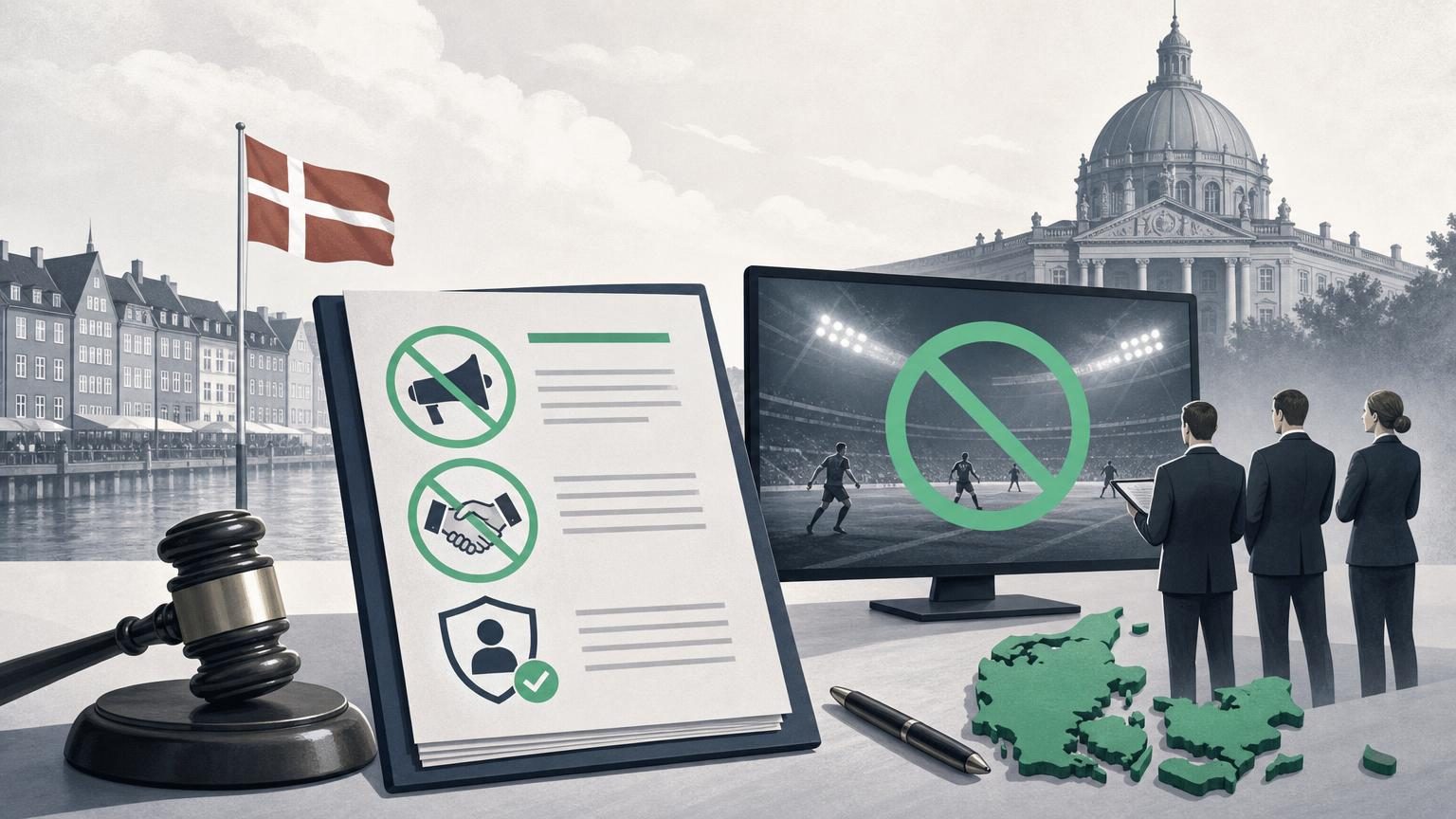
The Danish government reintroduced a major gambling reform bill on 7 October, with most of the new restrictions due to come into force from 1 July 2027, according to EGR, citing analysis from Morten Ronde of Spillebranchen, the Danish gambling trade body.
The stated aims of the bill are to cut gambling-related harm, protect young people and step up action against illegal operators, objectives Spillebranchen has said it backs even as it warns of a significant impact on the licensed industry.
Among the most consequential changes is a whistle-to-whistle advertising ban, which would prohibit gambling adverts from ten minutes before a live sporting event until ten minutes after it finishes.
The bill would also bar the use of celebrities, other authority figures and anyone under the age of 25 in gambling marketing, alongside tighter limits on advertising content and social media promotion.
Outdoor advertising faces heavy restriction too, with gambling adverts banned on public transport and within 200 metres of schools and youth education institutions, a change Spillebranchen says could all but eliminate outdoor gambling advertising in larger Danish cities.
Affiliate marketing is targeted directly: operators would no longer be permitted to pay affiliates based on player turnover or losses, effectively ending traditional revenue-share arrangements in favour of cost-per-acquisition models.
Spillebranchen estimates that around 25% of Danish online gambling gross gaming revenue is currently facilitated through affiliates, a channel it says smaller operators rely on more heavily than television advertising or sponsorship deals.
Operators would also face a clearer legal duty to monitor players for signs of problem gambling, intervene where necessary and assess whether those interventions worked, with further rules expected on loss limits, withdrawal cancellations, automatic logouts and specific online casino game features.
Suppliers may need to adapt games for the Danish market, coming shortly after the introduction of mandatory B2B licensing in the country.
Not every change tightens the rules: dice games and wheels of fortune would become permitted online casino products, and authorities would gain stronger powers to pursue illegal gambling, including websites promoting unlicensed operators.
Spillebranchen has raised concerns about how the new restrictions could affect licensed operators' ability to compete with the black market.
H2 Gambling Capital, commissioned by Spillebranchen, completed an updated study of the Danish market this year and, using a revised methodology, estimated that channelisation fell from 85% in 2021 to 70% in 2024, implying the offshore market's share doubled from 15% to 30% over three years.
H2 also estimated that offshore gambling revenue rose from DKK700m to DKK2.4bn over the same period, figures the Danish Gambling Authority has not published itself.
Ronde argued that the effects of the current reforms should be measured before further restrictions are considered, noting that some politicians are already pushing for additional measures ahead of the 2027 implementation date.
He said Denmark has spent 14 years building a regulated market that balances consumer protection with a competitive licensing system, and that future rules need to keep players within that regulated channel rather than pushing them towards unlicensed operators.