Denmark sets 2027 timetable for sweeping gambling advertising curbs
A bill tabled in parliament confirms a phased rollout of Denmark's gambling reform package, with a whistle-to-whistle betting ad ban due in July 2027.
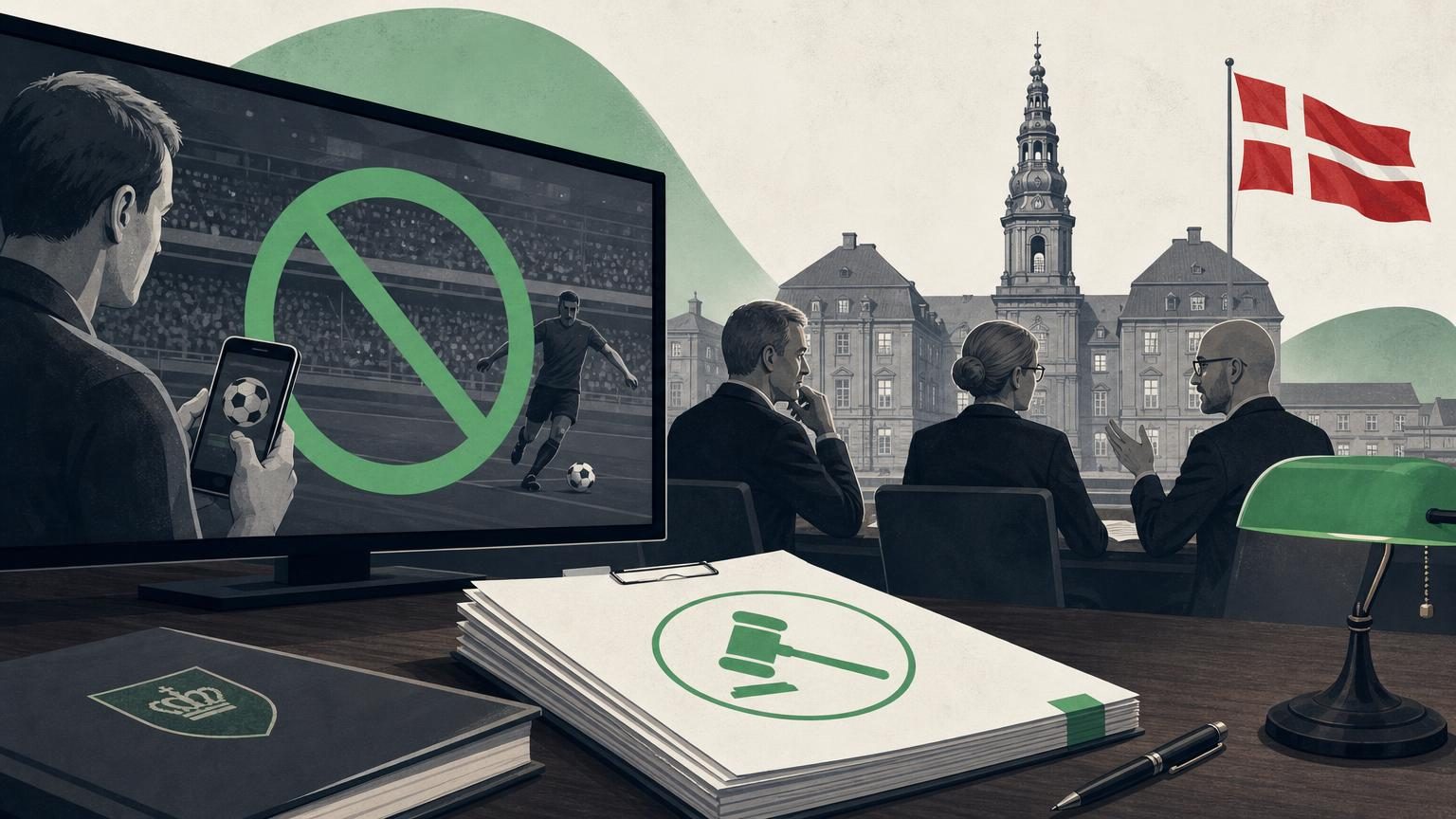
Denmark's government has put forward legislation to implement its gambling reform package, known as Spilpakken 1, setting a rollout between January and October 2027, according to iGaming Business.
Jakob Engel-Schmidt, Minister for Taxation and Growth, presented the bill to parliament on 7 October, almost a year after the reform package was first unveiled and triggered what one industry lawyer called shock across the sector.
The headline measure is a whistle-to-whistle ban on betting advertising during live sport, taking effect from July 2027. It will stop gambling ads appearing from ten minutes before an event starts until ten minutes after it finishes, covering live odds shown on screens and streaming platforms.
The bill estimates this single restriction could cost the Danish state DKK15 million ($2.25 million) in 2027 and DKK25 million annually thereafter, with the Danish Gambling Authority, Spillemyndigheden, forecast to lose DKK1-2 million in licence fee income as a result.
Other marketing provisions bar gambling ads from targeting under-18s or featuring anyone under 25, and prohibit advertising in public transport and within 200 metres of most schools and youth education institutions.
Licence holders, apart from small charitable land-based lotteries, will be required to monitor player behaviour on an ongoing basis and intervene promptly where signs of problem gambling emerge.
Spillemyndigheden will also gain explicit powers to inspect suspected illegal gambling operations without a court order. Providing unauthorised gambling will carry fines or, in aggravated cases, imprisonment of up to one year, while marketing of unlicensed gambling will become a criminal offence. Fines will be calculated according to company size, based on annual gross gaming revenue.
The bill also overhauls land-based retail regulation. The existing "bestyrer" approval system will be replaced by new licences, known as "forhandlere", covering lotteries, bingo, betting, casino games and gaming machines. Definitions of "spillebutik" and "spillehal" gambling arcades are updated to require physical separation of premises, staff presence during opening hours and a ban on minors entering.
Fast-paced games will be restricted to operating between 7am and midnight, while combination or novel game variants will need explicit regulator approval after assessment of their responsible gambling implications, market impact, and any conflict with monopolised lottery products.
Morten Rønde, managing partner at Nordic Legal, told iGaming Business he had been "shell shocked" when the package was first announced last October.
"In all the proposals that are made, there's no link to any evidence that this is something that will help gambling addiction. And I am pretty sure that it won't," he said.
Rønde added that an outright advertising ban had been under discussion at one stage. "It looked worse at one point; a complete advert ban was discussed, but it's still not great where we've landed."
He noted continued political support for tougher action, saying "there are several political parties in Denmark who are in favour of a full advertisement ban."
Rønde said the new bill replaces an earlier version, L-127, which lapsed when an election was called, and that its substance has not changed since then.