UIGEA at 20: Sportingbet, 888 and PartyGaming recall 2006 market rout
Executives from Sportingbet, 888 and Sun Poker tell EGR how the 2006 US internet gambling ban forced mass layoffs, a $1 asset sale and a pivot to European players.
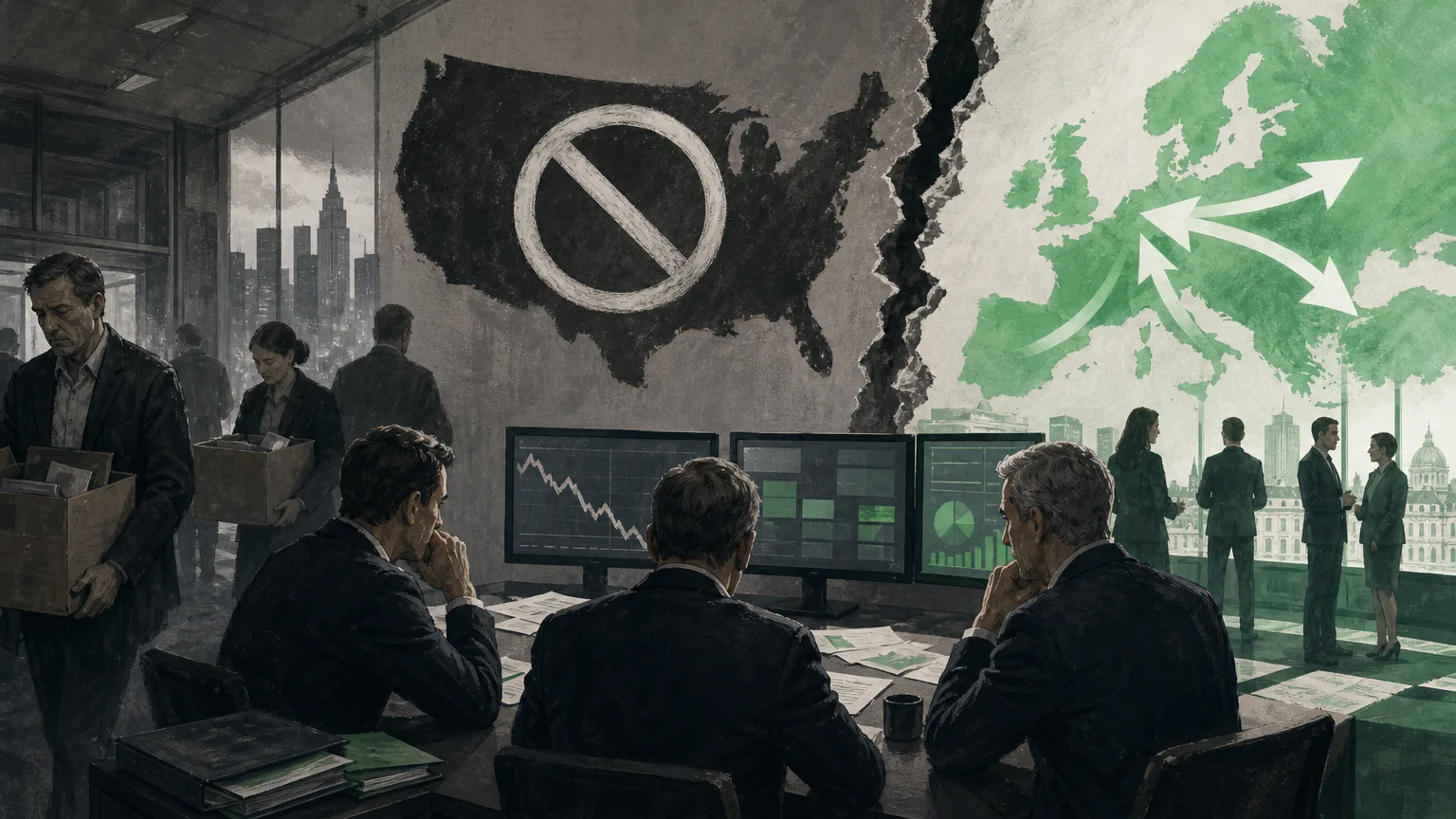
Shares in publicly traded gambling companies collapsed on the London market on Monday 2 October 2006, two trading days after the Unlawful Internet Gaming Enforcement Act was attached to the must-pass SAFE Port Act late on Friday 29 September, according to EGR.
888 lost 47% of its value that day, Sportingbet fell 67%, and PartyGaming, then the sector's best-known listed name, dropped 60%, wiping more than £2bn from the company in a single session, EGR reports. Across the week, listed gambling firms shed a combined £4bn, and PartyGaming was relegated out of the FTSE 100 into the FTSE 250.
Sportingbet founder Mark Blandford told EGR the collapse was gruelling even as his firm's share price slid from a May peak above 440p to roughly 70p around the time President George W Bush put the law into effect. "It was definitely stressful," he said, adding that the company was "working all sorts of hours" rather than idly watching the stock fall, and had to overhaul its budget, cut costs and let staff go.
Sportingbet's US-facing operation had employed more than 500 people before the law passed, including around 300 in Costa Rica running its sportsbook and Paradise Poker brand, plus roughly 20 managing servers in Antigua. Winding the unit down was projected to cost about $14m in severance and closure expenses.
Instead, management agreed to sell the business to Antigua-based Jazette Enterprises for a nominal $1, a disposal announced on 13 October. "By selling it for $1 we were able to save $14m," Blandford said. He added that he had previously been "an advocate of being in the US market" and stepped down from Sportingbet's board in early 2007.
Rob Gallo, founder of Sun Poker and Omni Casino, learned by phone that his software supplier Cryptologic was pulling out of the US and drove in from his newly built 4,000 sq ft beachfront home at Jolly Harbour on Antigua to face what he called "some serious decisions", having just spent $250,000 fitting out a new office for 40 staff.
"The timing couldn't have been worse," Gallo said. More than 20 employees were laid off as the operation was scaled back, and in a conference room with his chief technology officer he asked simply: "What are we going to do?"
The answer, as with its listed rivals, was Europe. "We found a good bulk of our poker players were coming from Europe, high-value super grinders out of Scandinavia," Gallo said. Sun Poker committed $1.2m to a promotion handing out 100 seats to the 2007 World Series of Poker Main Event, its $10,000 buy-in event. "It put Sun Poker on the map," he said, crediting cash reserves built up in advance: "it was helpful we had good money in the bank – we had been saving for a rainy day, and it obviously poured on 1 October."
At 888, then-COO Gigi Levy, 36 at the time and a former Israeli Air Force attack helicopter pilot, described having "almost no sleep for two to three weeks" after the vote. 888 cut headcount by 210, against 736 employees at the end of 2006, with job losses concentrated at its Gibraltar headquarters and Antigua hub.
Levy said the company had to adjust its spending culture, telling staff that "not everybody's flying business class anymore". 888 also "went very hard on localisation", hiring country managers and building capability in multiple languages and regulatory regimes where it had previously run a single-language call centre, he said.
The strategy showed results quickly: 888's net gaming revenue rose 24% year on year to $96.8m in the first half of 2007, with pre-tax profit quadrupling to $18.9m. Chair Richard Kilsby said at the time that losing the bulk of 888's 26 million customers and over half its revenue "could have potentially delivered a lethal blow", but that the company's infrastructure and plans were in place "to ensure our survival".
Levy recalled the chairman phoning him days after the law passed to check he would stay on. "I want to make sure you're not running away and leaving," Levy said he was told, and when he asked why, the chairman replied, "l would probably have left." Levy said rebuilding the business from scratch was difficult but ultimately rewarding, even if "it was definitely not what I signed up for".
PartyGaming's retrenchment was the heaviest of the three: around 950 jobs, 40% of its workforce, were cut. The company swung to a pre-tax loss of $47.1m in the first half of 2007, against a $320.5m profit in the same period a year earlier. Nigel Birrell, then group director of mergers and acquisitions, told EGR the business was left with "a much smaller balance sheet" and "much smaller firepower" after the US market closed off.