Senegal minister blames betting tax rise for revenue shortfall
Senegal's budget minister says a doubled levy on licensed operators and a flight of bettors to informal sites have gutted expected gambling tax receipts for 2026.
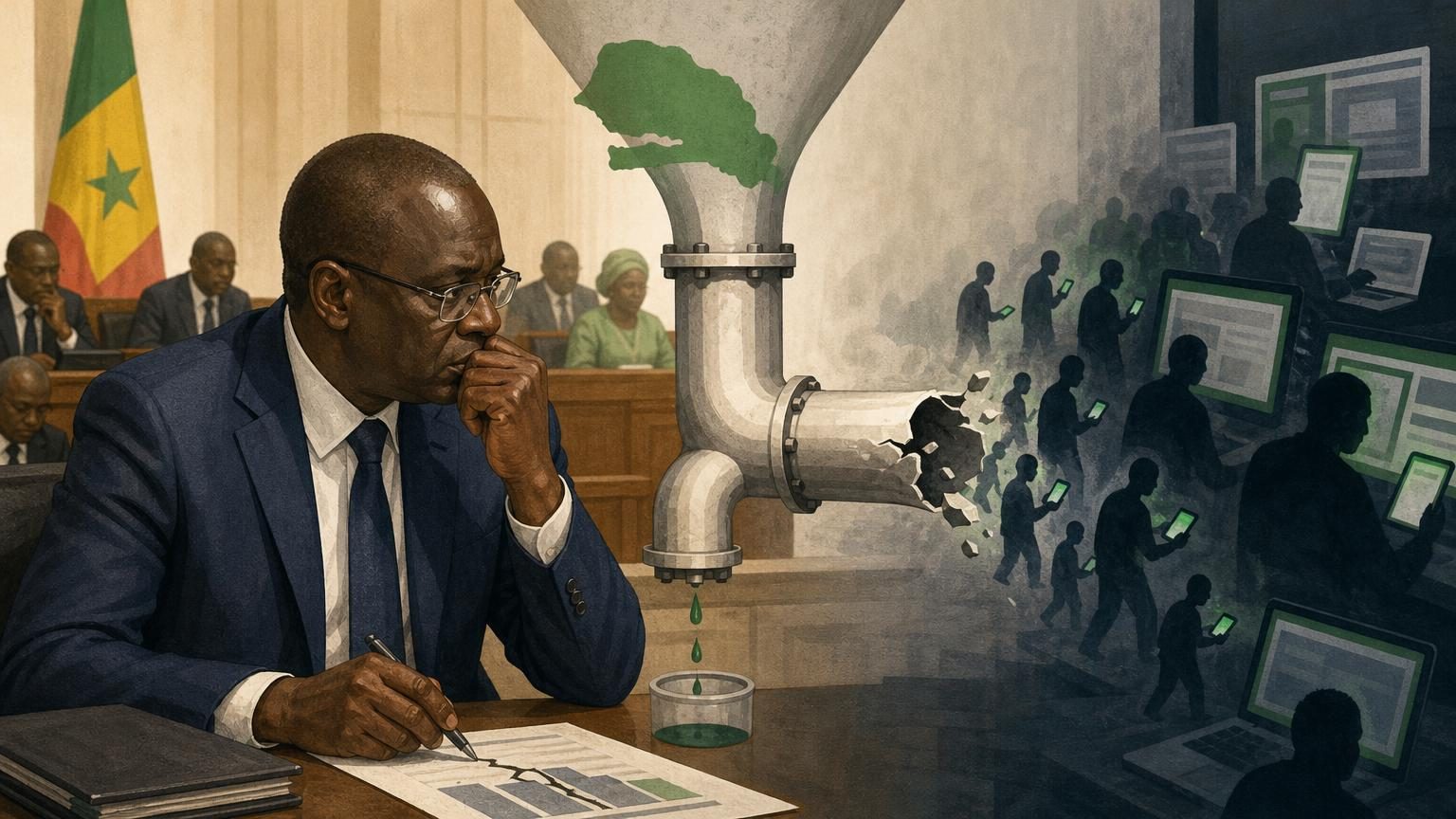
A doubled fee on authorised betting operators, combined with players migrating to unlicensed sites, explains why gambling tax receipts have fallen far short of target, Senegal's budget minister told the National Assembly.
Bassirou Sarr made the case during the plenary debate on the 2027 finance bill on 18 November, according to iGaming Business. "We are keeping our ambitions. But we cannot ignore reality," he said.
Under the government's Economic and Social Recovery Plan, known by its French acronym PRES, gambling taxes had originally been projected to bring in CFA300 billion for 2026. That figure was slashed to CFA120 billion in a supplementary budget put forward in September.
Sarr told MPs that deposits on licensed betting platforms fell 23% in the first seven months of 2026, while the number of deposits made halved, figures first reported by Seneweb. He attributed the drop largely to small-stakes bettors switching to around 20 unauthorised operators.
He also said LONASE, the state body that collects betting tax on behalf of the government, had struggled since July to pass part of the levy on to operators. "We cannot invent revenue," Sarr said, describing the reduced forecast as realistic rather than pessimistic.
Gambling was one of several revenue streams under the PRES programme to underperform. Sarr put total PRES revenue at CFA171 billion by the end of September, with CFA311 billion expected by year-end.
MPs went on to reject the revenue, spending and borrowing section of the 2027 finance bill the same day, with 128 of 165 deputies voting against it, the state news agency APS reported. Deputies had voted down the supplementary budget itself on 3 November, before President Bassirou Diomaye Faye pushed it through by decree on 19 November.
At the centre of the dispute is Law 2025-17, passed in September 2025, which set a 20% tax on the portion of revenue that LONASE pays out to betting operators, alongside a separate 20% levy on players' winnings. Both are withheld by LONASE before being passed to the state.
A finance committee meeting on 7 November heard that an economic study had put the optimal tax rate at close to 7.9%, warning that receipts were likely to fall once the rate climbed above 11%, according to the committee's report. Ministers floated a range of 8% to 11%, alongside tougher enforcement against unlicensed operators, but stressed these remained options rather than agreed reform.
Licensed operators have objected to the tax burden since early in the year. In March, a collective of authorised platforms including Betclic and Service Online International said the fee increase and new levy had been imposed "unilaterally, without consultation or negotiation".
Seydi Barkham Thiam, who heads the operators' collective, used a Dakar press conference to put the combined weight of the levies at 128%, APS reported. "We are not seeking privileges or special treatment. We are simply asking for a viable, clear, fair and sustainable economic framework," he said.
A 1987 law gives LONASE exclusive control over lotteries and betting in Senegal. In a statement dated 30 June, it listed 17 authorised online betting platforms and warned that operators of unlisted sites, along with payment providers that process transactions for them, could face prosecution.