Polymarket agrees to halt Michigan sports contracts after court order
QCX LLC, trading as Polymarket US, becomes the fourth prediction market operator to withdraw sports event contracts from Michigan under a federally approved deal.
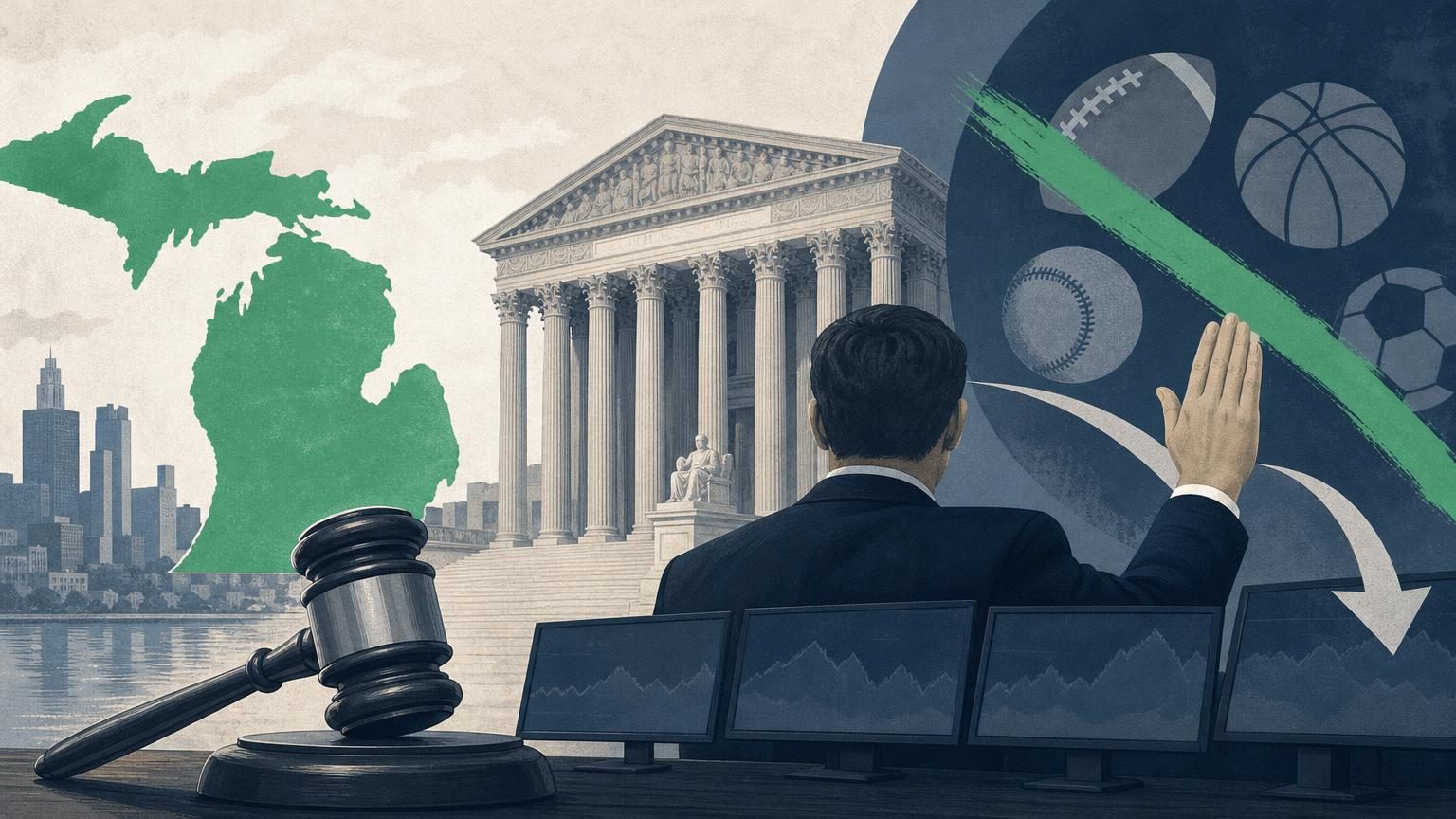
Polymarket US has agreed to stop taking new sports-related event contracts from Michigan customers and to wind down existing positions by the end of 25 November, under a stipulation approved by the U.S. District Court for the Western District of Michigan.
The Michigan Gaming Control Board announced the agreement on Wednesday, confirming that the company, which operates as QCX LLC, will avoid state enforcement action provided it sticks to the terms. The deal makes Polymarket the fourth major prediction market platform to retreat from sports contracts in the state this year, following Kalshi, Robinhood and Coinbase.
MGCB executive director Henry Williams said the move showed the state's approach was working, adding that any company wanting to offer sports wagering to Michigan residents needs a Michigan licence. Attorney General Dana Nessel said the agreement continued a pattern of holding national sports-contract firms to Michigan law, pointing to the earlier actions against Kalshi, Robinhood and Coinbase.
Polymarket told customers of the change by email on Monday. SBC Americas, which first reported the stipulation, said it had sought comment from the company but had not received a response by publication.
Polymarket had tried to pre-empt Michigan's enforcement by suing state officials in federal court in March, seeking to block the gaming laws from applying to its contracts. A judge rejected its request for a temporary restraining order that month and denied a preliminary injunction in June. An appeal over that injunction is still pending before the Sixth Circuit Court of Appeals, and the Michigan Attorney General's office warned in September that it would pursue legal action if Polymarket kept serving state residents.
Michigan's first win in this run of cases came against Kalshi. Nessel sued the company in Ingham County Circuit Court in March, and Judge Rosemarie Aquilina issued a temporary restraining order in June before converting it into a preliminary injunction on 1 September. In her ruling, she described Kalshi as a sports betting operation disguised as an investment product, barred it from offering sports contracts to Michigan residents and ordered it to notify every futures commission merchant distributing its products. Breaching the geofencing requirement carries a $500,000 daily penalty.
Robinhood Derivatives struck its own agreement soon after, committing to stop new Michigan sports contracts by 9 September and close out client positions within a month, an arrangement that stays in force until the federal appeals, including any Supreme Court review, are resolved or the Kalshi state injunction lapses. Coinbase Financial Markets reached a similar settlement in October after a federal court rejected its bid for a preliminary injunction in August; its own Sixth Circuit appeal remains on hold behind the other pending cases.
None of the four companies has abandoned its underlying legal position that contracts registered with the Commodity Futures Trading Commission sit outside state gambling law.
That argument now faces a split among federal appeals courts. The Sixth Circuit ruled against Kalshi in Ohio and Tennessee cases on 25 September, and the Ninth Circuit reached a similar conclusion on Nevada in August. The Third Circuit went the opposite way in April, finding that Kalshi's sports contracts count as federally regulated swaps that pre-empt New Jersey's gambling statute. New Jersey has since asked the Supreme Court to resolve the conflict, backed by a brief from 39 states and the District of Columbia, while the NFL and more than 140 tribes have urged the justices to leave the matter to state regulators. Kalshi's response in that case is due on 9 November.