Pennsylvania skill games ruled illegal as legislative deadline lapses
Tens of thousands of unregulated slot-like machines across Pennsylvania became unlawful this week after lawmakers failed to pass oversight legislation within a court-ordered window.
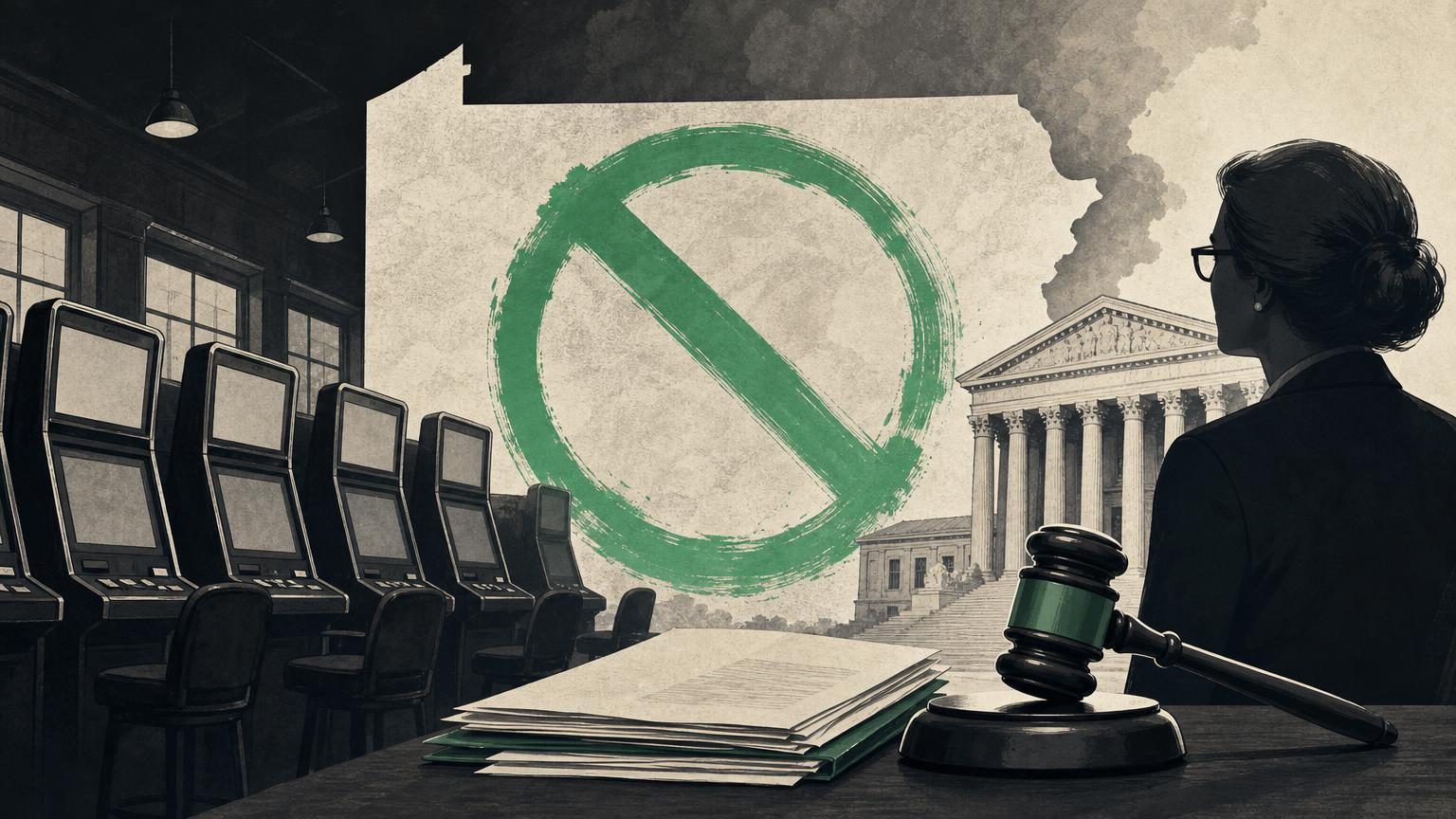
Pennsylvania's skill games became illegal as of Wednesday, after a 120-day window for lawmakers to pass regulating legislation expired without action on Tuesday, according to iGaming Business.
The deadline followed a June ruling by the Pennsylvania Supreme Court that classified the machines as illegal slots rather than games of skill, reversing earlier lower court decisions that had favoured manufacturers. The judgment closed out a years-long legal fight between skill game operators and the state's licensed casino industry, which had argued the machines undercut both consumer protections and gambling tax collections.
Casino slots in Pennsylvania are taxed at 54%, while skill games had operated outside that framework entirely, untaxed and unregulated by the Pennsylvania Gaming Control Board.
The Supreme Court built in the 120-day stay specifically to give the legislature room to bring the machines under PGCB regulation. No bill passed in that window, and state police have now warned that businesses still running the games face seizure of equipment and criminal charges.
A statement on the state's website spells out the legal position: "Under the Gaming Act, only licensed casinos and qualifying licensed 'truck stop establishments' may legally possess and operate slot machines or video gaming terminals," adding that only machines inspected and approved by the PGCB may be sited at licensed locations.
Some local reporting had suggested casinos and truck stops might retain or install skill games if inspected by the board. A PGCB spokesman told iGaming Business that this is incorrect — every skill game in the state is now illegal, regardless of location, and only board-approved slots and video gaming terminals remain lawful.
Skill games mimic the visual format of casino slots, with spinning reels and symbols, but add a skill-based second phase of play that often lets players attempt to recoup losses. Pennsylvania had become one of the largest markets for the machines nationally. Against roughly 25,000 regulated casino slots in the state, estimates of skill game numbers ranged from 50,000 to more than 70,000.
The scale of the regulated market is considerable. In the first two months of the 2026-27 fiscal year, Pennsylvania slots generated $427 million in gross revenue and $145 million in state taxes, PGCB figures show. Video gaming terminals at licensed truck stops added a further $6.7 million in revenue and $2.8 million in taxes over the same period.
Two bills aimed at bringing skill games into the regulated fold, HB 2213 and SB 1079, would have imposed a $500 monthly fee per terminal and capped the statewide total at 50,000 units. Proponents estimated the framework could raise $300 million a year in tax revenue. Neither bill advanced, and the state's two-year legislative session is due to close on 30 November.
Susan Hensel, a Pennsylvania gaming attorney and former PGCB director of licensing, told iGaming Business in July that regulation of skill games "had long been discussed" in the state, but that manufacturers had little reason to push for change given the status quo. She had predicted at the time that a legislative compromise would ultimately be reached.
"There are very few parts of Pennsylvania that don't have these games in them and so we anticipate that right now state representatives are receiving calls from establishments that are in their districts saying 'What can you do to keep the money flowing?'" Hensel said. "In a lot of cases these businesses have really come to rely on the revenue stream from these games for profitability and in some cases survival," she added.
With the legislative session running out in weeks and no bill currently gaining traction, the thousands of small businesses that had relied on skill game income now face operating without it, or risking enforcement action under the Gaming Act.