Pennsylvania lawmakers file bills banning micro bets, capping casino losses
Reps. Tarik Khan and Jamie Flick introduced a three-bill package targeting VIP programs, prop parlays, credit card funding and loss limits for online gambling in Pennsylvania.
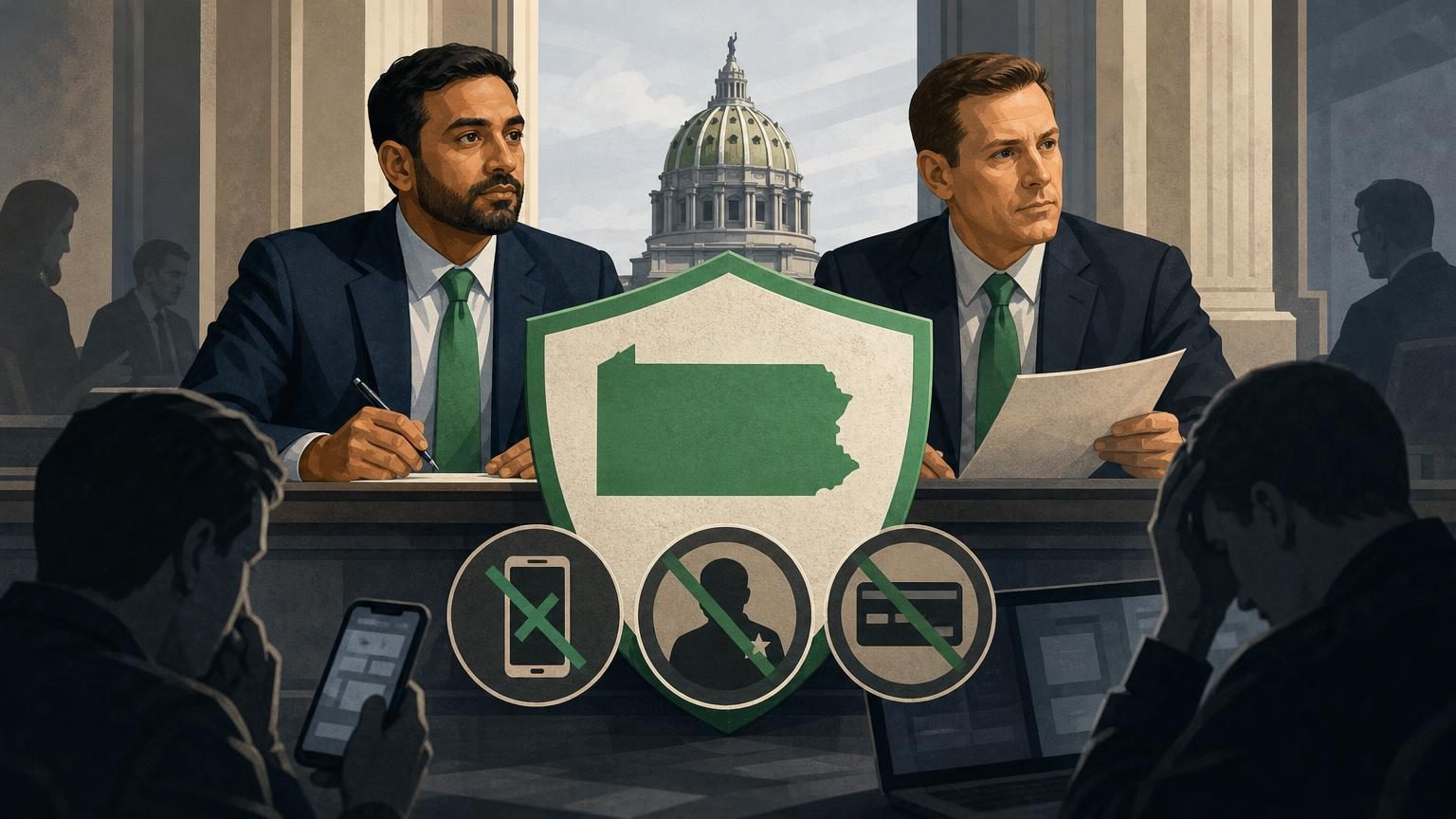
Pennsylvania state Representatives Tarik Khan, a Philadelphia Democrat, and Jamie Flick, a Republican representing Lycoming and Union counties, introduced three bills last week aimed at tightening consumer protections across the state's online gambling market, according to Legal Sports Report.
The centrepiece, HB 2879, is a 34-page measure called the Pennsylvania Online Consumer Protection Act. It would ban micro bets on single in-game moments, eliminate parlays built from proposition bets, prohibit VIP loyalty programs, and impose daily and monthly loss limits that tighten for younger players.
Two companion bills fill out the package. HB 2875 would bar the use of credit cards to fund online gambling accounts, while HB 2874 would strengthen protections for Pennsylvanians already on the state's self-exclusion list.
The bills were filed on the same day lawmakers launched a bipartisan Problem Gambling Caucus, which both sponsors have joined. Pennsylvania's legislative session closes on 30 November and bills do not carry over into 2027, leaving a narrow window for the package to advance this year.
Pennsylvania is one of seven states running both legal sports betting and online casino games, making it among the largest regulated gambling markets in the country.
Khan said in a statement that the goal is not to stop people gambling but to curb exploitation. "People should be free to enjoy an occasional bet," he said. "But the gambling industry shouldn't be allowed to exploit addiction for profit."
HB 2879 sets per-play wager caps of $2 for online casino players aged 21 to 25 and $5 for those older. Players in the younger bracket would be locked out for 24 hours after losing $750 in a day, or for 30 days after losing $2,500 in a month. Older players would face thresholds of $1,500 daily and $5,000 monthly before the same cutoffs apply.
The bill would also stop operators advertising to anyone under 21 or using athletes, celebrities and social media influencers likely to appeal to minors, and would ban gambling ads near schools, on college campuses, between 8am and 10pm, and during live sports broadcasts. Flick said the aim is to shield young adults who are "particularly vulnerable" as gambling advertising becomes more visible to younger audiences.
The legislation would also restrict the use of artificial intelligence and behavioural data to build individualised promotions, a provision that lands amid scrutiny of DraftKings. The Massachusetts Gaming Commission is reviewing all its licensees after the New York Times reported DraftKings used AI-driven promotions to target losing customers, and the Michigan Gaming Control Board told Legal Sports Report it is reviewing the issues the report raised, without committing to a DraftKings-specific inquiry.
The package draws on a Joint State Government Commission study that Khan requested through a 2025 resolution passed 189-14 by the House. Released in July, the study found that 5.7% of online sports bettors accounted for 80% of gambling expenditure, and that at one sportsbook, 0.5% of customers generated more than 70% of VIP-programme revenue. Its recommendations, including bans on micro bets and credit card funding and tighter VIP restrictions, are reflected directly in the new bills.
Khan said the findings from the study underpinned the legislative push, describing problem gambling as something that "ruins lives and destroys families."