Nebraska sports betting ballot drive leans on property tax pitch
With $14.65m raised and the Nov. 3 vote weeks away, the push to legalise online Nebraska sports betting is being fought almost entirely over whether it would meaningfully cut property taxes.
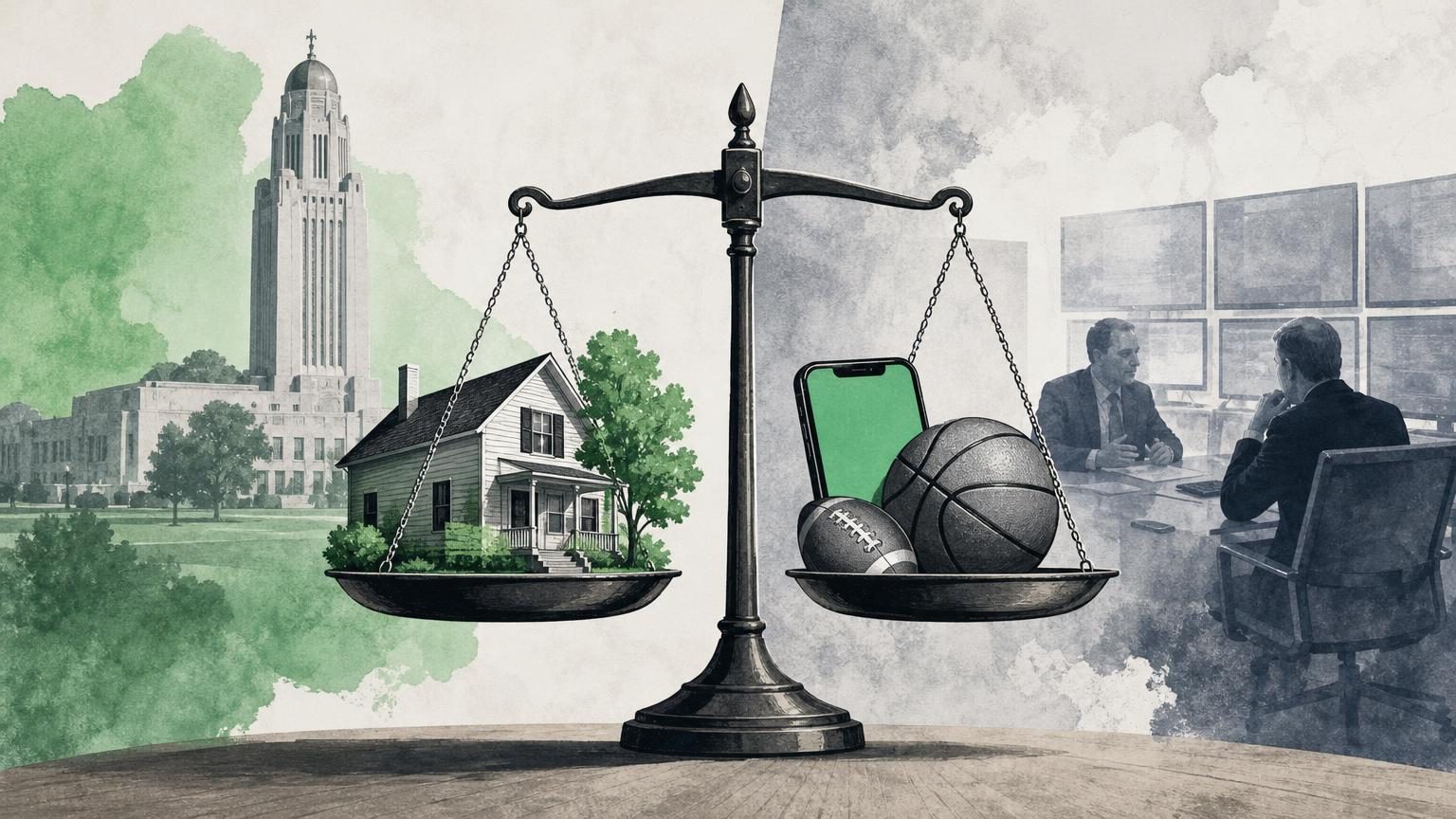
Nebraska's campaign to legalise online sports betting is entering its final three weeks before the Nov. 3 election having raised $14.65m, according to SBC Americas. Whether the measure passes may hinge less on gambling policy than on how firmly voters link it to relief from property taxes.
FanDuel and DraftKings remain the campaign's dominant backers. Filings with the Nebraska Accountability and Disclosure Commission show each operator contributed more than $3.5m between late July and late September, bringing their totals for the cycle to $7,037,500 apiece.
The committee behind the effort, Tax Relief Nebraska, raised $7.25m over that same stretch and reported $5.43m in cash on hand as of Sept. 29. Roar Digital, BetMGM's parent company, has given $250,000 on top of an earlier contribution of the same amount, while Fanatics has put in $75,000.
Opponents, organised as Save Nebraska Sports, cannot compete financially and are instead leaning on local credibility. Nebraska Public Media reported that University of Nebraska assistant football coach Ron Brown appeared alongside State Treasurer Joey Spellerberg and State Auditor Mike Foley at the coalition's Capitol launch in September.
Tax Relief Nebraska gathered more than 350,000 petition signatures to qualify for the ballot ahead of the July 2 deadline. The push follows two failed legislative attempts, in 2024 and 2025. Gov. Jim Pillen had pushed for mobile betting as a property tax measure in 2025, and Sen. Eliot Bostar withdrew his bill that year once it lacked support.
Even opponents inside the legislature anticipated a ballot fight. Sen. John Cavanaugh said at the time he had "got a lot of heartburn about mobile sports betting, but if we don't do this, they will put it on the ballot." He added, "And it will be more expansive than this."
Betting in Nebraska is currently confined to in-person wagers at the state's casinos, a market that opened in 2023 after voters approved broader casino gambling in November 2020 with 65% support. Brendan Bussmann, managing partner at B Global Advisors, told SBC Americas the outcome will turn on how directly voters tie mobile wagering to property tax savings: "This is going to come down to how much Nebraskans believe they get in property tax relief, and if sports betting is the panacea for it."
The ballot carries two linked measures that must both pass. Initiative 440 would amend the state constitution to permit online wagering by people in Nebraska through licensed operators tied to racetrack casinos. Initiative 441 lays out the statute, letting each of the state's five racetrack casinos run up to two online platforms. WarHorse Casino, which is spearheading the campaign, is also building a sixth casino.
Betting would be taxed at the 20% rate already applied to casino gambling, and the restrictions on college wagering already in place would remain: no player props or in-game bets on contests involving Nebraska college teams, and no bets on athletes under 18 competing professionally or internationally. If voters approve both measures, the Nebraska Racing and Gaming Commission would need to finalise rules by June 1, 2027.
The property tax framing dominates both sides of the campaign. Tax Relief Nebraska commissioned a study from Eilers & Krejcik Gaming projecting roughly $87m in additional state tax revenue over five years, with about $61m of that directed to property tax credits.
Critics argue the sum is negligible. Sen. Brad von Gillern, who chairs the legislature's Revenue Committee, put the annual figure at roughly 1% of the state's existing property tax relief program. He told 1011 Now, "If people are voting for the online gambling initiative believing that it's going to substantially change their property tax bill, they're going to be sadly disappointed."
Spellerberg has noted that reaching the projected $87m would require Nebraskans to lose more than $435m in wagers. Foley, for his part, told voters they were "being scammed on a false promise of property tax relief," according to Nebraska Public Media.
The Nebraska Secretary of State will hold public hearings on the two measures Thursday at the Capitol in Lincoln, followed by sessions Oct. 22 in Kearney and Oct. 24 in Omaha, ahead of the Nov. 3 vote.