NBA signs Kalshi, Polymarket and DraftKings for prediction markets
The league becomes the fourth major US sport to partner with prediction market operators and signs an integrity memorandum with the CFTC.
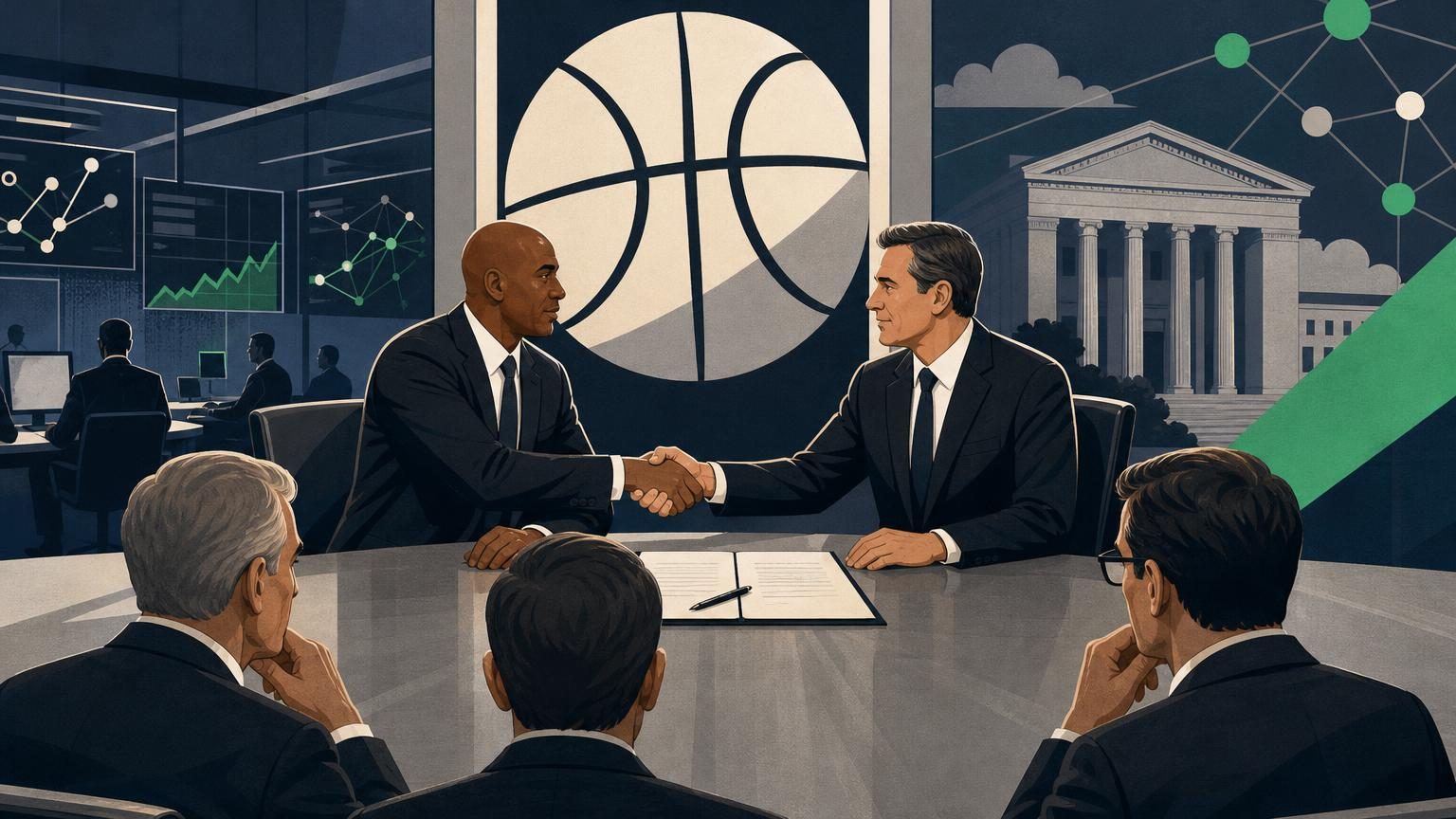
The NBA has struck partnerships with Kalshi, Polymarket and DraftKings Predictions, and signed a memorandum of understanding with the Commodity Futures Trading Commission covering integrity in basketball-related event contracts, Legal Sports Report reported.
The league becomes the fourth major US professional sports body to align with prediction markets, following the MLB, MLS and NHL. It is also the first to extend an existing sportsbook relationship into the prediction market space, building on its sponsorship deal with DraftKings to bring in DraftKings Predictions.
NBA executive vice president Scott Kaufman-Ross told ESPN the league had deliberately waited before entering the sector. He said the NBA wanted "all of the proper pieces in place" before it felt ready to proceed.
Under the arrangements, Kalshi and Polymarket are each designated a "Preferred Prediction Market Exchange of the NBA," giving both platforms access to official league data and rights to use NBA branding. The NBA said the deals establish an integrity framework giving it greater say over which markets are listed and enabling information-sharing between the parties.
Kalshi will rely on official NBA data supplied through Sportradar to run and settle authorised NBA markets, according to the league's announcement. The two sides will also set up direct lines of communication to flag suspicious trading and cooperate on investigations. The agreement limits the types of markets that can be offered and bars NBA and team staff from trading on NBA-related contracts.
Kalshi pointed to safeguards already built into its platform, including market surveillance carried out with IC360 to flag suspicious activity and identify barred traders, a partnership with Signify to detect online abuse directed at athletes and coaches, and a nationwide self-exclusion option that, through IC360's SelfExclude programme, lets users opt out across multiple participating platforms with a single enrolment.
Kalshi's announcement also referenced earlier comments from NBA commissioner Adam Silver, who said a consistent national policy would serve the league's interests, and argued that a single national framework would let leagues, exchanges and regulators take a more unified approach to integrity and consumer protection rather than navigating separate state-by-state regimes.
The exchange's legal position remains contested. Kalshi lost rulings at the Sixth and Ninth Circuit courts affecting Ohio, Tennessee, Nevada and three tribal jurisdictions in California, while Massachusetts, Michigan, Nevada, New York, Utah and Washington have obtained injunctions blocking it from offering sports event contracts.
DraftKings, already an official NBA betting partner, said in a post on X that the expanded agreement would let it reach eligible customers around NBA event contracts across its wider platform, building on the continued growth of DraftKings Predictions.
The memorandum with the CFTC commits the NBA and the regulator to regular communication on integrity matters and to supporting fair, transparent markets. CFTC chairman Michael Selig said the move put the NBA alongside the MLB and NHL in guarding against abuses such as insider trading and fraud in prediction markets.
The document describes itself as a statement of intent rather than a legally binding agreement. Neither party is obliged to share information, sharing is discretionary, and the CFTC's enforcement powers under the Commodity Exchange Act are unaffected. Material shared is presumed confidential; the NBA may pass CFTC information to its Board of Governors but needs the CFTC's written approval to share it with individual teams, approval both sides expect would be granted during an active integrity investigation. Either party can terminate the MOU with 30 days' notice.
Kaufman-Ross said the league does not intend to weigh in on how prediction markets should ultimately be regulated, telling ESPN the NBA would leave jurisdictional questions to the courts and focus instead on how its competitions are affected.
That stance contrasts with the NFL, which filed an amicus brief to the Supreme Court this month arguing sports event contracts should fall under state jurisdiction. The NFL remains the only major US league without a prediction market partnership. Commissioner Roger Goodell told CNBC before the season began that the league was in no hurry to strike a deal, saying it preferred to get the approach right rather than move first.