Ireland leaves EU gambling levy out of first Budget 2028 draft
The Irish Presidency's opening negotiating text for the EU's 2028-2034 budget drops a proposed common tax on online gambling, despite European Parliament support for the idea.
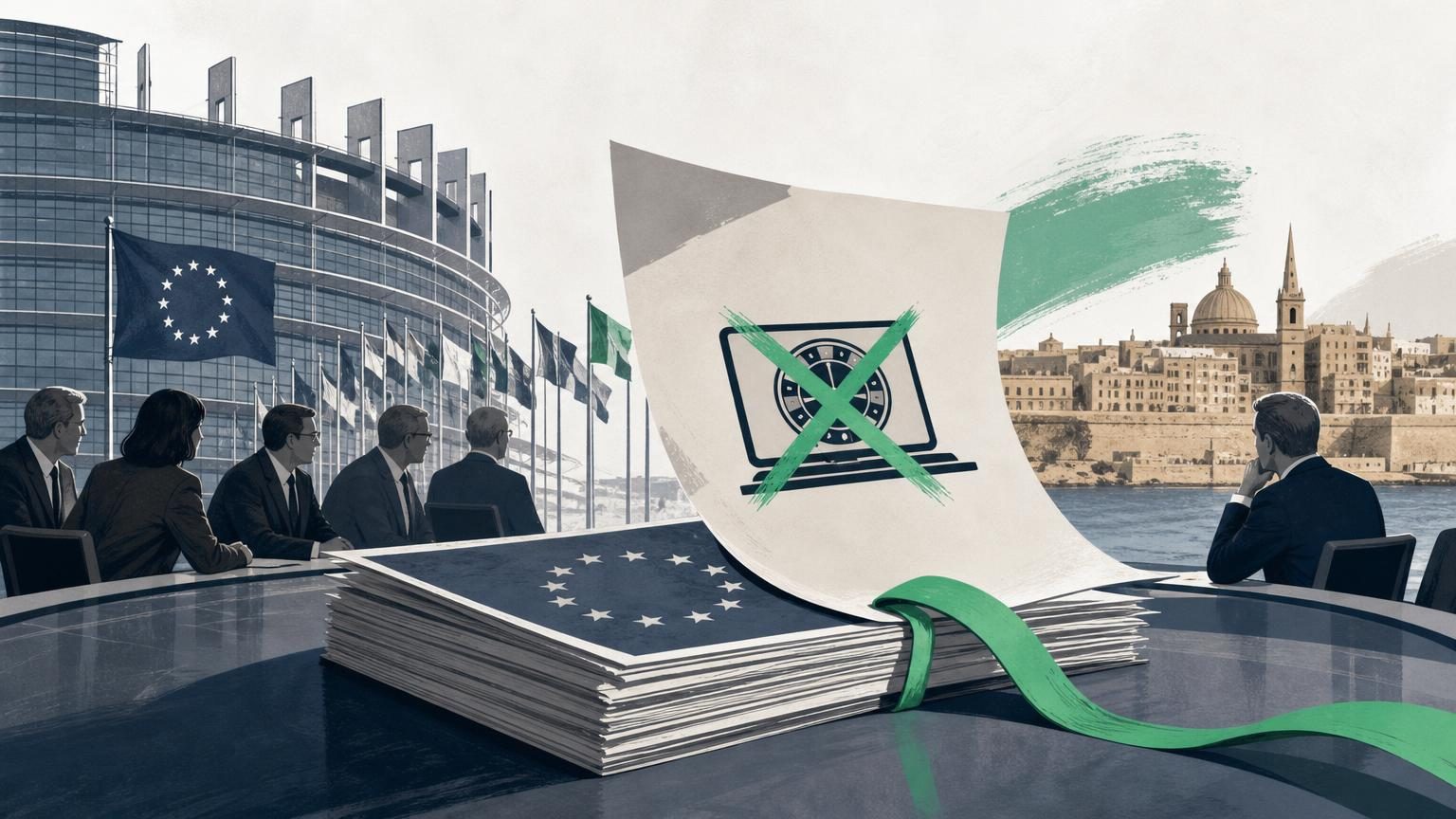
Ireland's presidency of the EU Council has excluded a proposed common tax on online gambling from its first draft of the bloc's 2028-2034 budget, according to SBC News.
Ireland took over as chief negotiator of the Multiannual Financial Framework (MFF) in July. Member states are working towards a minimum spending plan of roughly €2trillion to fund the EU's economic programme, with priorities including defence, energy security, technology and workforce retraining.
The Irish draft sets a spending ceiling of €1.62trillion in constant 2025 prices, equivalent to about €1.85trillion in current prices. SBC News notes these figures remain subject to negotiation and do not guarantee specific contributions from the EU's 27 member states.
As drafted, the budget contains no mechanism for a shared levy on licensed gambling revenue across the bloc. That measure had been pushed by the Socialists and Democrats group in the European Parliament, led by Romanian MEP Victor Negrescu, a vice-president of the Parliament.
Negrescu's proposal called for a 1% unified tax on licensed gambling income EU-wide. The S&D projected it could generate between €2billion and €4billion a year, or roughly €14billion across a full budget cycle, earmarked for education, youth programmes, mental health services, addiction prevention and child protection measures.
The idea drew swift opposition from the European Gaming and Betting Association, which was joined by Malta's government in objecting to the proposal. Malta argued the levy would undermine member states' sovereign control over their own gambling markets.
The draft budget does retain reviews of four other common revenue sources: emissions trading, electronic waste, tobacco and carbon offsetting. It also preserves the Corporate Resource for Europe (CORE) scheme, a flat-rate annual levy on EU businesses with revenues above €100million, designed to help pay down debt accumulated during the Covid-19 era.
For tobacco specifically, the draft proposes that each member state contribute 15% of an amount calculated from products released for consumption and applicable minimum duty rates. Early projections cited in the source material suggest the non-gambling common taxes combined could raise up to €55billion annually for the EU budget.
Malta's prime minister, Robert Abela, has backed the wider Budget 2028 common tax framework while continuing to oppose any levy on gambling, an industry that remains a significant economic contributor to the country. European Commission President Ursula von der Leyen and European Council President António Costa have both argued that new, independent revenue sources are needed for the coming budget cycle.
The European Parliament has continued to back new EU revenue streams and has flagged an online gambling levy as a possible funding option, which could put pressure on the Irish Presidency to revisit the idea during negotiations.
The current negotiating text is non-binding. Adoption of the final Multiannual Framework will require unanimous agreement among Council member states and the consent of the European Parliament.