Greece defends higher tax on gambling winnings as revenue grows
Greek finance officials say a July rise in tax on online casino winnings is justified by sharp growth in gambling revenue, as the regulator expands its fight against unlicensed operators.
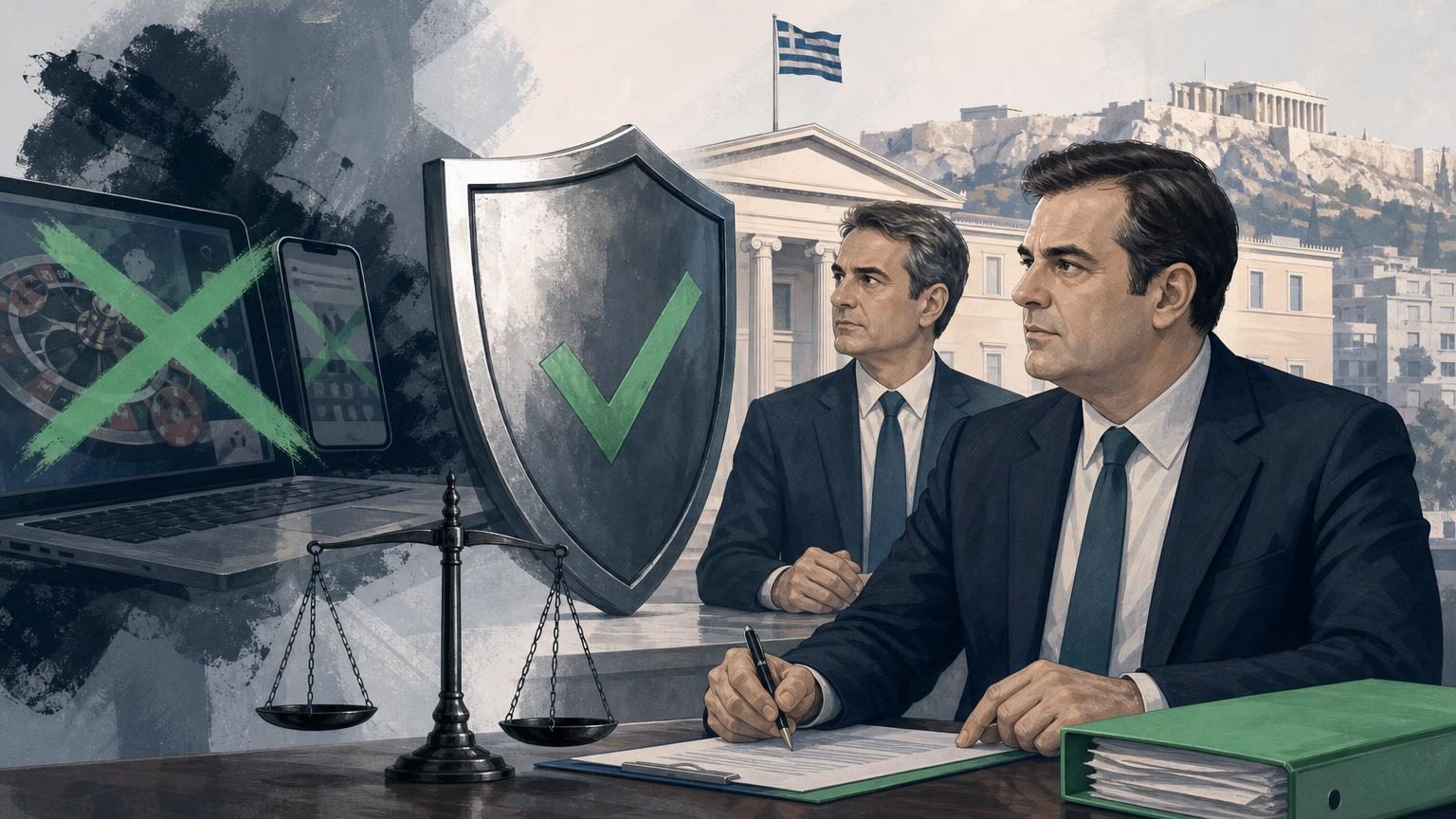
Greece's Finance Minister, Kyriakos Pierrakakis, has defended the government's decision to raise tax on online casino winnings, arguing the move helps fund public services as the wider gambling market continues to expand.
Figures published in October and reported by SBC News show that tax withheld from gambling winnings reached €369m (£307m) between January and August 2026, up 27.3% on the €290m recorded over the same period the previous year. Total gross gaming revenue rose 4.2% to €2.06bn, while state participation receipts from operators climbed 7.9% to €484.5m. These figures cover the broader gambling market and do not isolate the specific impact of July's tax change.
Under the change, which took effect on 1 July, the levy on casino winnings in the €100-€500 bracket climbed from 15% to 20%, while winnings exceeding €500 are now taxed at 30% instead of 20%. Sums of €100 or less still escape taxation. Pierrakakis first announced the policy on 23 March.
According to the Finance Ministry's official transcript, Pierrakakis said the change "will increase public revenue by about €100m a year," framing the measure as a way to support households and businesses facing higher energy costs.
Deputy Finance Minister Thanos Petralias offered the government's fuller justification, telling a press conference that rapid growth in online casino gaming and poker warranted a larger contribution to public finances. He said the sector could become a permanent source of state revenue and described a bigger public share of that growth as socially fair, since the proceeds flow back to citizens.
Asked whether the higher rates might push customers toward unlicensed gambling sites, Petralias said revenue projections had accounted for demand elasticity and that operator data had been analysed. He pointed to accompanying legislation targeting illegal gambling as a further safeguard, and clarified that only casino-style games such as slots and poker were affected, with sports betting and other OPAP products remaining under separate tax rules.
Regulator builds enforcement capacity
The tax changes sit alongside a broader push to strengthen the Hellenic Gaming Commission's enforcement powers. An October recruitment drive sought 40 staff on secondment, including seven IT specialists, to bolster the regulator's inspection capability. It is not stated whether this expansion is funded through the higher player tax.
Under the published framework, penalties vary by offence but can reach €2m in administrative fines, with custodial terms of ten years or more available for certain illegal gambling crimes. Those convicted as individuals face criminal consequences, companies face financial and administrative sanctions, and separate penalties target influencers, affiliates and digital advertising networks implicated in promoting unlicensed gambling.
The Hellenic Gaming Commission estimates Greek state gambling revenue reached €1.17bn in 2025, split between €737m from online activity and €433m from land-based gambling.
Speaking to the Commission on 6 October, Pierrakakis warned that illegal gambling diverts money from the state and disadvantages businesses that comply with regulation, adding that government has a responsibility to supply the personnel, technology and legal framework needed for effective supervision.
For Athens, the balance now being struck is between preserving gambling's substantial contribution to the state budget and ensuring that higher taxation does not hand an advantage to operators working outside the licensed market.