Brazil trade bodies ask Supreme Court to halt betting ban
ANJL and IBJR have asked Justice Luiz Fux to suspend Provisional Measure 1,394, which immediately barred online betting operators in Brazil, according to iGaming Business.
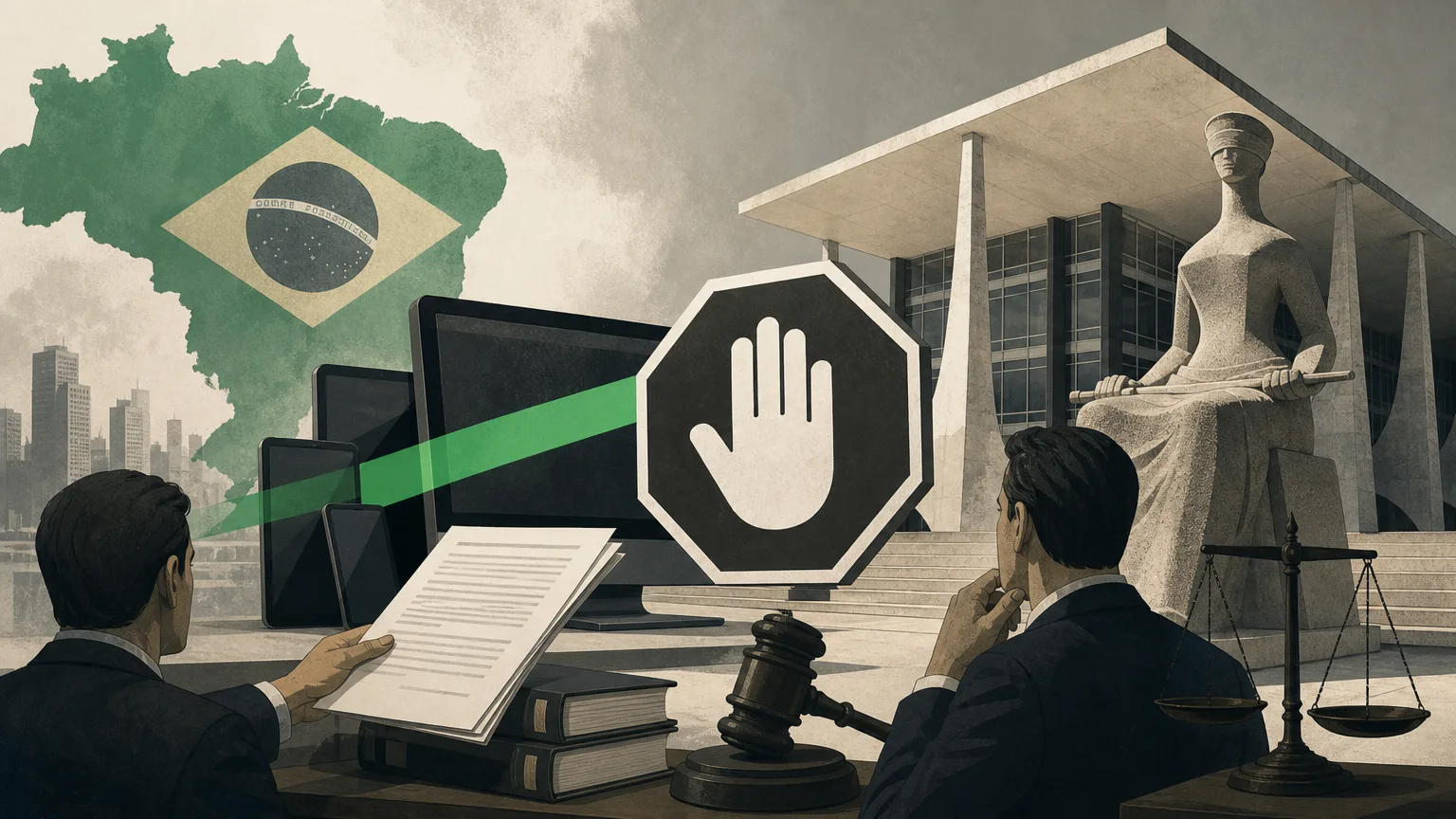
The National Association of Games and Lotteries (ANJL) and the Brazilian Institute of Responsible Gaming (IBJR) have submitted a statement to Supreme Federal Court Minister Luiz Fux seeking the immediate suspension of a ban on online betting, according to iGaming Business.
The ban stems from Provisional Measure 1.394, introduced on Friday, which the two trade bodies described as an "opportunistic and extremely serious" act that violates constitutional principles and risks irreversible harm to the sector, iGaming Business reported.
ANJL and IBJR are participating as amici curiae in three direct actions of unconstitutionality, ADIs 7.721, 7.723 and 7.749, which concern the legal status of Law 14.790/2023, the legislation underpinning Brazil's regulated betting market.
Their central argument is that the provisional measure lacks the constitutional urgency required to justify its use. The organisations said data from the Secretariat of Prizes and Bets shows no surge in betting activity that would explain emergency intervention, noting that financial volume in the market fell by 42% between October 2025 and June 2026, according to iGaming Business.
The trade bodies also noted that the government had previously supported regulation during the passage of Law 14.790/2023, including advising against amendments restricting access for vulnerable groups, which they argue makes the sudden ban a political shift without technical grounding.
On regulatory certainty, ANJL and IBJR said the measure dismantles a market the state itself authorised and supervised from January 2025, after operators paid BRL30 million ($5.7 million) for licences and invested in technology, security and responsible gambling systems. Ending those authorisations abruptly, without transition or compensation, would breach legal certainty and legitimate expectation, the organisations said, adding that "the Brazilian state invited private agents to enter the market […] and now, a short time later, it intends to empty the economic content of the authorisations that it itself granted."
The statement also flags a fiscal gap: the provisional measure, it says, did not include a budgetary impact estimate as required under Article 113 of the Transitional Constitutional Provisions Act. iGaming Business reported that the sector generated BRL9.95 billion in federal taxes and BRL2.5 billion in grants in 2025, alongside BRL95.5 million in inspection fees, revenue the trade bodies say an immediate ban would eliminate while potentially triggering severance obligations under Article 486 of Brazil's labour code.
ANJL and IBJR further warned that shutting down licensed platforms could push bettors toward illegal operators, which they said already account for between 41% and 51% of the market according to cited studies. Unlicensed platforms lack identification checks, deposit limits, self-exclusion tools, anti-money laundering controls and advertising restrictions, reducing protection for consumers and problem gamblers, the statement said.
The two bodies have asked Fux to suspend Provisional Measure 1.394 in full until Congress or the Supreme Court rules on the underlying ADIs, or failing that, to extend its deadlines by at least six months. They also requested that federal agencies be barred from freezing assets, revoking authorisations or seizing funds while any suspension is in place.
A fourth organisation, the National Association for the Legal Security of Games and Betting (Anseja), has separately filed its own ADI against the measure and sought an urgent precautionary order. Anseja argued the measure was issued without proven urgency and called the shutdown of platforms and cancellation of pending bets the "first irreversible effect of the provisional measure", according to iGaming Business, also citing a lack of fiscal impact assessment among its formal objections.